
Ford Fathom vs. Slate: Infotainment and Grid Power Define Sub-$30k EV Truck Race
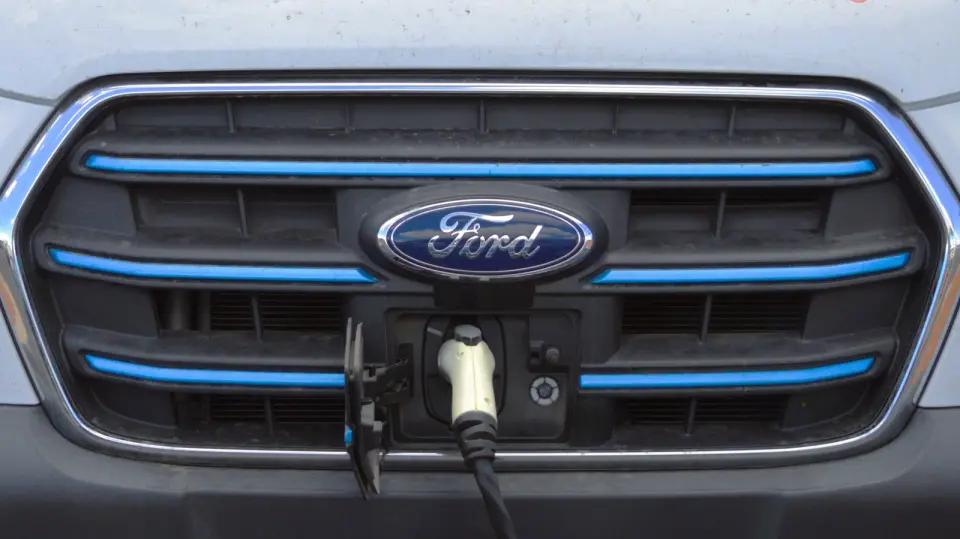
Ford and Slate are competing for the sub-$30,000 electric pickup segment with distinct strategies. Ford’s Fathom, starting at $28,350, retains traditional infotainment with CarPlay and Android Auto, while Slate’s $24,950 truck relies on phone mounting. Ford’s vehicle features a built-in inverter for home power, a capability Slate lacks. Ford CEO Jim Farley praised the Fathom’s performance and hands-free driving, calling it a breakthrough product for the mass market.
Key points
- Ford Fathom starts at $28,350 plus a $1,595 destination fee; Slate’s Blank Truck starts at $24,950 plus a $1,450 fee.
- Ford includes a large touchscreen with CarPlay and Android Auto; Slate uses phone mounting and charging, with optional tablet brackets.
- Ford’s Fathom features a built-in inverter for bidirectional power, delivering over 10 kW to homes without a separate wall unit.
- Ford’s Home Power Station costs about half as much as previous generations, and backup hardware is 60% cheaper.
- Ford CEO Jim Farley described the Fathom’s 0-60 acceleration and hands-free ADAS as 'completely blew me away' during Q3 2026 earnings.
- Ford is investing $2 billion to retool the Louisville Assembly Plant for the Universal EV Production System, which uses 20% fewer parts.
Background
Ford previously offered bidirectional power with the F-150 Lightning, which ended production in 2025. The new Fathom is the first vehicle built on Ford’s Universal EV Platform, designed to cut manufacturing costs. Slate’s approach reflects a minimalist philosophy, questioning the necessity of embedded infotainment hardware. Ford’s strategy focuses on simplifying engineering while retaining familiar cabin features to appeal to mainstream buyers.
How outlets are covering it
Engadget highlights the infotainment divide, noting Slate’s phone-centric approach versus Ford’s traditional display. Fox Business and Ford From the Road emphasize the cost savings of Ford’s built-in inverter, which eliminates the need for expensive external hardware. Yahoo Finance focuses on CEO Jim Farley’s enthusiasm for the Fathom’s performance and its potential to reach more Americans. Deloitte’s 2025 study, cited by Engadget, found that 63% of US consumers consider smartphone connectivity important, suggesting Ford’s approach may align better with mainstream expectations.
Why it matters
The Fathom and Slate represent two different philosophies for affordable EVs: one prioritizing familiar features and grid integration, the other minimizing hardware to cut costs. Ford’s bidirectional power capability could make EVs more valuable as energy storage, potentially influencing utility regulations and consumer adoption. The success of these vehicles will determine whether sub-$30,000 EVs can compete with traditional internal combustion engines in the US market.
What to watch
Ford preorders begin in early 2027, with production starting in the fourth quarter of 2027. Ford aims to bring 20 gigawatt hours of annual battery storage capacity online by the end of 2027, with 2028 capacity fully committed by Q1 2028. Ford and five major utilities, including American Electric Power and PG&E, are working to define scalable interconnection processes for bidirectional EVs.
- The Slate Vs Ford Fathom Debate Might Be Settled By This One Key Tech Feature Engadget
- Ford’s new electric truck can do more than drive – and it could save owners money Fox Business
- Bidirectional EVs at a New Scale: Working With Utilities to Get Interconnection Ready Ford From the Road
- Ford CEO Jim Farley Says $28K Fathom EV ‘Completely Blew Me Away:’ ‘Like Something I’ve Never Experienced’ Yahoo Finance
- Ford’s Fathom EV Is Betting on Price, Not Tax Credits Autoweek
Want the full story? Read the original reporting
Read on Engadget