
Musk Predicts Post-Money Economy Based on Physics Metrics
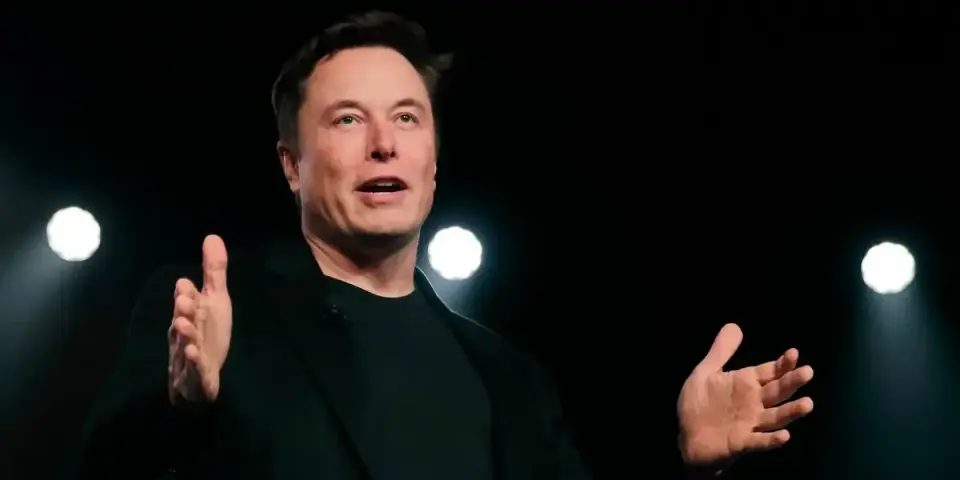
Elon Musk predicts that conventional currency will become irrelevant in a future defined by robotics and multiplanetary expansion. He argues that value will instead be measured by physical metrics such as mass, power, and energy. Musk expects his own wealth to diminish over generations due to taxes, while advocating for a future of technological abundance where human labor is less critical.
Key points
- Musk stated in an interview with biographer Walter Isaacson that 'conventional currency will not matter' once robotics and space travel advance sufficiently.
- He proposed that future economies would measure wealth using 'fundamental physics metrics' like wattage, tonnage, and energy rather than fiat currency.
- Musk believes AI and robots will eventually outperform humans in all tasks, leading to an age of abundance where people focus on hobbies like gardening or art.
- He expects his personal fortune to be heavily taxed and reduced to a 'tiny fraction' for his descendants within a few generations.
- Musk pledged to gift a share of SpaceX to every child in the US next year, a contribution valued at over $10 billion.
Background
This prediction follows Musk's earlier advice to stop saving for retirement, citing AI-driven productivity. It also comes amid SpaceX's recent financial success, with the company reporting its first quarterly profit as a public entity, posting $4.4 billion in net income for Q3 2026. Additionally, Musk has been actively involved in US politics, having served as a special government employee in 2025 and recently pledging significant financial support to Republican candidates in the 2026 midterms.
How outlets are covering it
Business Insider and HuffPost focus on the philosophical shift toward a post-money society and Musk's personal wealth trajectory. Interesting Engineering highlights the specific technical metrics Musk cited, such as watts and mass, and notes his argument that AI is the only solution to the US national debt, which reached $40 trillion in August 2026. While all sources agree on the core prediction, Interesting Engineering emphasizes the practical challenges of measuring value through physical quantities, noting that neither power nor mass independently captures scarcity or demand. The Commonwealth Club source provides broader context on AI abundance but does not directly cover Musk's specific financial predictions.
Why it matters
Musk's vision challenges the foundational role of currency in global economics, suggesting a future where resource allocation is based on physical constraints rather than financial markets. This perspective could influence long-term policy discussions regarding automation, wealth distribution, and the role of government in a high-productivity economy. His pledge to distribute SpaceX shares also signals a potential shift in how ultra-wealthy individuals engage with public welfare and political influence.
What to watch
Investors and economists will monitor SpaceX's continued financial performance and Musk's execution of his charitable pledges. The debate over whether AI can truly replace human labor and resolve economic issues like national debt will likely intensify as technology advances. Additionally, the impact of Musk's political spending on the 2026 midterms will be closely watched, given his recent involvement in Republican campaigns.
- Elon Musk says money could become 'irrelevant,' descendants may be 'tiny fraction' as wealthy Business Insider
- World's Richest Man Predicts Future Where Money Becomes Irrelevant HuffPost
- Elon Musk predicts money's demise as watts and energy define value Interesting Engineering
- The Humanist Review of AI: Abundance & Scarcity Commonwealth Club World Affairs
- Elon Musk says ‘people will find ways to be happy’ if AI makes money and work obsolete in future Hindustan Times
Want the full story? Read the original reporting
Read on Business Insider