
Cheese Experts Urge Shoppers to Check Labels for Anti-Caking Agents
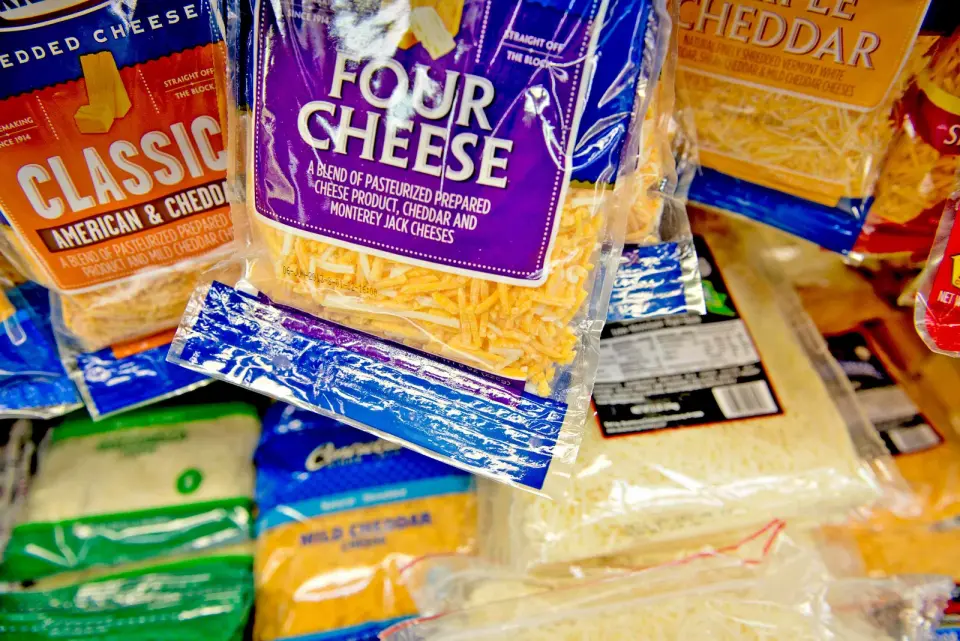
Cheese experts advise consumers to inspect ingredient lists on shredded cheese packages to identify anti-caking agents and preservatives that can negatively impact melting quality and flavor.
Key points
- Pre-shredded cheese often contains cellulose, potato starch, or corn starch to prevent clumping, along with natamycin to inhibit mold growth.
- These additives, while practical for storage, can hinder the smooth melting process and alter the taste compared to cheese grated from a block.
- Experts recommend selecting brands with shorter ingredient lists and avoiding products labeled as vague 'cheese blends' to ensure better quality.
- Visual and tactile checks, such as looking for supple shreds and avoiding dusty textures, can help identify products with excessive anti-caking agents.
Background
This advice follows broader consumer discussions on food quality and safety, such as recent warnings regarding cyclospora outbreaks in lettuce and the impact of extreme heat on food preservation, highlighting a growing focus on ingredient transparency and product integrity in the grocery sector.
Why it matters
Understanding the impact of anti-caking agents on shredded cheese allows consumers to make informed choices that enhance cooking outcomes, particularly for dishes requiring smooth melting, while also promoting awareness of food processing practices.
What to watch
Consumers are encouraged to apply these label-reading strategies when purchasing shredded cheese, potentially driving demand for products with minimal additives and clearer ingredient disclosures from manufacturers.
Want the full story? Read the original reporting
Read on AOL.com