
Beijing Expands State Financial Recapitalization to Insurers and Policy Banks
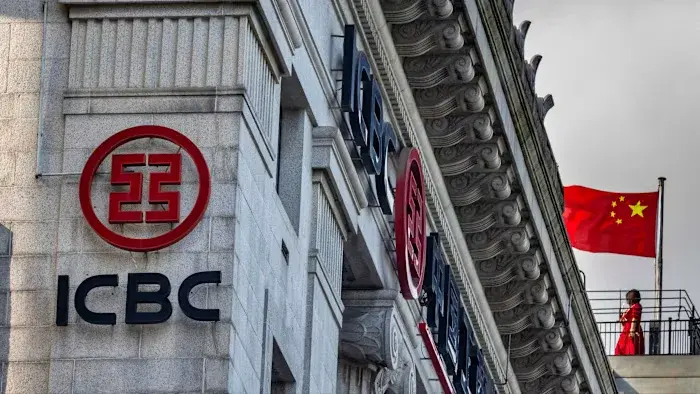
China is injecting Rmb360bn ($53bn) into eight state-controlled financial institutions, including major banks and insurers, to bolster capital reserves and support economic growth amid slowing margins and property sector weakness.
Key points
- The Ministry of Finance and state tobacco companies are providing Rmb300bn and Rmb60bn respectively to eight institutions, including ICBC, Agricultural Bank of China, and China Life.
- The plan extends previous recapitalization efforts to include insurers and policy lenders like the Export-Import Bank of China, marking the first major capital boost for the insurance sector in two decades.
- Net interest margins for Chinese commercial banks have fallen to 1.41% due to low rates and weak credit demand, while insurers face eroding profits from long-term investment challenges.
- Shares of ICBC and Agricultural Bank of China dipped approximately 2% in Hong Kong following the announcements, reflecting investor concerns over dilution despite promises of improved operating performance.
Background
This move follows a Rmb520bn funding initiative announced last year for major state-owned banks. Earlier coverage in September 2026 highlighted similar stimulus measures aimed at reigniting growth amid external headwinds, including trade tensions and currency volatility. The current expansion addresses broader structural issues, such as a five-year property slowdown and an aging population, which have pressured financial stability.
How outlets are covering it
The Financial Times emphasizes the strategic shift to a 'full spectrum' recapitalization, noting that low interest rates are weakening insurers' financial buffers and that the move allows more capital to flow into stock markets. The BBC frames the injection as a measure to enhance risk resistance and support the real economy amid global financial uncertainty and trade tensions. The Guardian highlights the specific mechanisms, such as private placements to the Ministry of Finance and China National Tobacco Corp, and notes that the stimulus aims to bolster state insurers' ability to support the stock market and manage smaller, higher-risk insurers. All sources agree on the total amount and the involvement of key institutions but differ in emphasis: the FT focuses on profitability and market integration, the BBC on stability and external shocks, and the Guardian on the structural challenges of the insurance sector and the specific funding mechanisms.
Why it matters
This recapitalization is critical for maintaining financial stability and supporting economic growth in China, the world's second-largest economy. By strengthening the capital positions of major banks and insurers, Beijing aims to ensure these institutions can continue lending to the real economy and investing in the stock market, despite weak consumer spending and a prolonged property slump. The move also signals Beijing's commitment to using state-controlled financial institutions as tools for economic management, potentially influencing global financial markets and trade dynamics.
What to watch
Investors will monitor how the injected capital is utilized, particularly whether it leads to increased lending to the real economy or greater investment in the stock market. The performance of the recapitalized institutions will be closely watched to assess the effectiveness of the stimulus in boosting economic growth and financial stability. Additionally, the impact on smaller, higher-risk insurers and the broader financial sector will be evaluated as Beijing continues to manage the challenges posed by low interest rates and weak credit demand.
- China pumps $53bn into banks and insurers Financial Times
- China to pump $54bn into state banks and insurers to boost economy BBC
- Beijing to Inject Billions Into Banks, Insurers to Boost Growth WSJ
- China to pump $54 billion into state banks, insurers in capital-boosting push Reuters
- China prepares £40bn stimulus for financial sector amid fears over sluggish growth theguardian.com
Want the full story? Read the original reporting
Read on Financial Times