
Lagarde’s Early ECB Exit Sets Stage for Leadership Transition Amid French Fiscal Stress
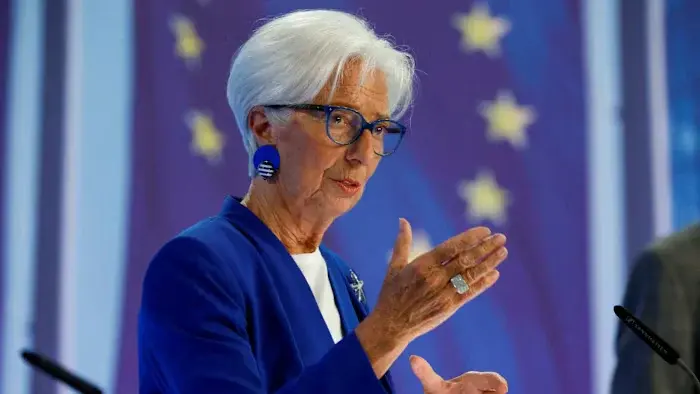
Christine Lagarde will step down as European Central Bank president on February 7, 2027, cutting her term short by eight months. The early departure accelerates the search for a successor ahead of a critical leadership transition in 2027. The move occurs as the ECB faces rising bond market volatility and fiscal concerns in France, complicating its monetary policy transmission.
Key points
- Christine Lagarde announced her resignation as ECB president, effective February 7, 2027, well before her scheduled term end in October 2027.
- The early exit triggers an immediate search for a new president, chief economist, and executive board member, with European leaders expected to agree on nominations before the spring 2027 French presidential election.
- The ECB faces a dual challenge: maintaining smooth monetary policy transmission amid widening sovereign bond spreads in France, while avoiding moral hazard by not intervening in French debt without strict conditions.
- Klaas Knot and Pablo Hernández de Cos are identified as strong candidates for the presidency, both having managed previous economic and fiscal crises.
- The ECB’s Transmission Protection Instrument (TPI) remains unused, and its activation for France is considered politically toxic, making verbal intervention and constructive ambiguity the preferred strategy.
Background
Lagarde’s leadership has spanned multiple crises, including the pandemic and energy shocks. The early departure resolves months of speculation about her future and accelerates the transition process amid European political uncertainty.
How outlets are covering it
The Financial Times emphasizes the ECB’s need for a smooth transition and transmission amid French fiscal stress, highlighting the risks of moral hazard and the importance of constructive ambiguity. The New York Times and CNBC focus on the early departure and its timing relative to the French presidential election, noting Lagarde’s standing ovation and the immediate start of the successor search. CNBC also notes Lagarde’s potential move to the World Economic Forum. The Financial Times and CNBC both highlight the political sensitivity of the transition, with the FT stressing the need for balance between principles and pragmatism in the next leadership.
Why it matters
The early departure of the ECB president amid rising bond market volatility and French fiscal concerns creates a critical juncture for the euro area. The transition must ensure monetary policy transmission remains effective without fueling moral hazard, while navigating the political risks of a potential far-right victory in France. The choice of successor will shape the ECB’s approach to future crises and its relationship with member states.
What to watch
European leaders will agree on nominations for the ECB executive board in the coming months, before the spring 2027 French presidential election. The ECB will continue to monitor bond market spreads and may use verbal intervention to manage stress, while avoiding activation of the TPI for France. The new leadership will face the challenge of balancing monetary policy transmission with fiscal and political constraints.
- The ECB needs a smooth transmission and a smooth transition Financial Times
- ECB President Lagarde resigns at time of mounting challenges for Europe Reuters
- Christine Lagarde to Step Down as Chief of European Central Bank The New York Times
- President of the European Central Bank Christine Lagarde to stand down in February CNBC
- ECB president Lagarde to step down early Axios
Want the full story? Read the original reporting
Read on Financial Times