
AI Debt Fears and Oil Spike Trigger Global Market Sell-Off
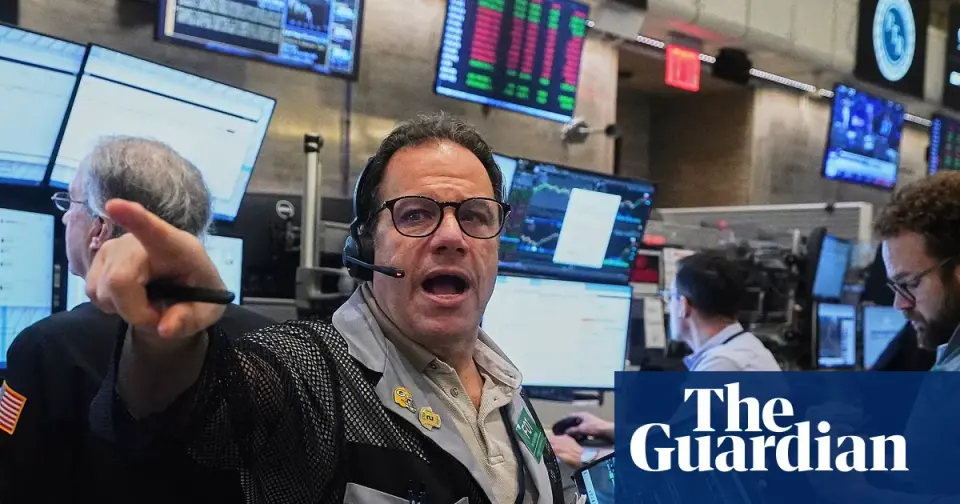
Global equity markets tumbled on Thursday as fears over artificial intelligence spending and rising oil prices overwhelmed positive earnings reports. The S&P 500 fell 1.2%, its worst day since July, while the Nasdaq dropped 2.6%. Brent crude hit a five-month high at $113.17 per barrel due to renewed tensions with Iran. Despite strong corporate profits, tech giants like Nvidia and Meta fell sharply, driving bond yields lower as investors sought safety.
Key points
- The S&P 500 closed at 7,663.43, down 1.2%, while the Nasdaq Composite fell 2.6% to 26,008.86, marking its steepest decline since June.
- Brent crude oil prices jumped 4% to $113.17, their highest level since May, driven by reports of planned US and Israeli attacks on Iran.
- Nvidia fell 4.4% and Meta Platforms dropped 7% despite reporting revenue beats, as investors worried about the cost of AI infrastructure and rising borrowing costs.
- The 10-year US Treasury yield fell to 4.97% from 5.13%, indicating a flight to safety as tech stocks sold off.
- Asian markets also declined, with South Korea’s Kospi down 3.5% and Japan’s Nikkei 225 falling 2.7%.
Background
This volatility follows a period of instability in late September and early October, where AI stocks experienced sharp sell-offs and rebounds. In mid-October, the Nasdaq had already dropped 4.5% in a single week, its steepest decline since June. Recent archive coverage noted that oil prices had briefly eased to $108.54 after US sanctions waivers on Russia, but geopolitical tensions have since resurged. The current market stress contrasts with earlier rallies driven by Federal Reserve rate hikes and falling oil prices in September.
How outlets are covering it
The Guardian and The New York Times both emphasize the disconnect between strong corporate earnings and falling stock prices, highlighting that tech stocks dragged down the broader market despite two-thirds of S&P 500 companies rising. CNBC adds color by quoting Nvidia CEO Jensen Huang, who described a 'scarcity of capital' in the AI buildout, and analyst Ed Yardeni, who called the AI trade a 'bubble' but suggested some depressurization is healthy. While The Guardian notes the Dow Jones rose slightly, CNBC highlights that US equity futures were flat after the close, suggesting uncertainty persists. All sources agree that oil price spikes due to the Iran conflict are a major secondary driver of market anxiety.
Why it matters
The sharp decline in AI stocks signals a potential shift in investor sentiment regarding the sustainability of massive technology spending. As borrowing costs remain high, companies like CoreWeave and Meta face pressure to fund datacenters and chips, leading to a flight to safer assets like government bonds. This volatility could impact broader economic confidence and influence future monetary policy decisions, especially as oil prices rise and inflation concerns persist.
What to watch
Investors will closely watch the University of Michigan consumer sentiment report for signs of economic resilience. The market may continue to fluctuate as companies navigate high borrowing costs and geopolitical risks. If oil prices remain elevated due to the Iran conflict, inflationary pressures could persist, potentially delaying any easing of monetary policy. Tech companies may need to adjust their capital expenditure plans if the 'scarcity of capital' cited by Nvidia executives becomes a lasting constraint.
- Sharp drops for AI stocks overwhelm markets worldwide as oil prices jump The Guardian
- Stock futures trade mixed after tech sector sell-off: Live updates CNBC
- S&P 500, Nasdaq end sharply lower as revived AI doubts ignite tech selloff Reuters
- Stocks See Steepest Decline in Months Amid A.I. Worries The New York Times
- Tech Stocks Fall on AI Concerns WSJ
Want the full story? Read the original reporting
Read on The Guardian