
Merck and Moderna Report Phase 3 Success for Personalized Melanoma Vaccine
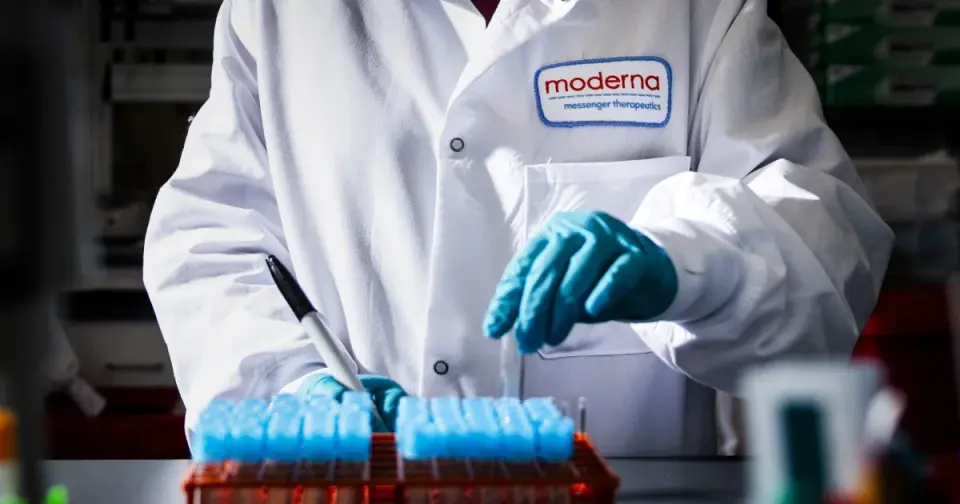
Merck and Moderna announced that their personalized mRNA cancer vaccine, intismeran, successfully met its primary endpoint in a Phase 3 trial for high-risk melanoma. When combined with Merck’s immunotherapy Keytruda, the treatment significantly extended the time before cancer returned or spread in patients who had already undergone surgery. This marks the first randomized late-stage trial to prove the benefit of a neoantigen-based cancer vaccine. While detailed data remain unreleased, the results suggest a potential new standard of care for melanoma and possibly other cancers, though regulatory approval timelines are not yet confirmed.
Key points
- The Phase 3 trial involved 1,137 patients with resected melanoma, the deadliest form of skin cancer.
- Intismeran is a personalized vaccine that targets abnormal proteins (neoantigens) unique to a patient’s tumor, working alongside Keytruda to boost immune response.
- The combination therapy met its primary endpoint of improving recurrence-free survival, though specific duration data were not disclosed.
- Moderna shares surged 106% in premarket trading, while Merck shares rose 7% following the announcement.
- The companies plan to present full data at an upcoming medical meeting and have not yet submitted for FDA approval.
Background
Merck and Moderna have collaborated on this mRNA cancer vaccine technology for approximately a decade, well before the pandemic accelerated mRNA vaccine development. In June 2026, the companies presented earlier Phase 2 data at the American Society of Clinical Oncology meeting, showing the treatment halved the risk of recurrence after five years. This new Phase 3 success builds on those findings, aiming to establish a new class of cancer immunotherapy. The development occurs amid political scrutiny of mRNA technology under the Trump administration, which previously cut $500 million in research contracts and initially rejected Moderna’s mRNA flu vaccine application.
How outlets are covering it
NBC News emphasized the financial impact, noting Moderna’s stock jumped 106% in premarket trading, and highlighted the political context of mRNA skepticism under Health Secretary Robert F. Kennedy Jr. The Washington Post focused on the scientific mechanism, explaining how the vaccine sequences a patient’s tumor to identify up to 34 unique mutations, and noted that experts see this as a potential model for treating lung, kidney, and bladder cancers. STAT News framed the announcement as a definitive proof of concept for neoantigen vaccines, stressing that this is the first randomized Phase 3 trial to validate the approach, though it noted that detailed data has not yet been independently reviewed. All sources agree that the results are promising but caution that full data and long-term survival outcomes are still pending.
Why it matters
This trial represents a potential paradigm shift in cancer treatment, moving from generic therapies to personalized vaccines that train the immune system to attack specific tumor mutations. If approved, intismeran could become the first mRNA-based cancer treatment, offering hope for patients with high-risk melanoma and potentially paving the way for similar treatments in other cancers. The success also validates the long-term investment in mRNA technology beyond infectious diseases, despite recent political and regulatory challenges.
What to watch
Merck and Moderna will present the full trial data at an upcoming medical conference and share it with regulators. The companies have not disclosed a timeline for FDA approval but indicated they will move 'as fast as possible.' The trial will continue to monitor overall survival rates to determine if the protection against recurrence holds over time. Experts are watching for potential expansion of the treatment to other cancer types, including lung, kidney, and bladder cancer.
- Merck and Moderna say cancer vaccine shows promise in preventing recurrence of melanoma NBC News
- Cancer treatment could face landmark moment with promising vaccine The Washington Post
- Moderna and Merck say mRNA cancer vaccine succeeded in late-stage melanoma trial statnews.com
- Merck and Moderna Announce Phase 3 INTerpath-001 Trial of Intismeran Autogene Plus KEYTRUDA® Met Endpoints of Recurrence-Free Survival (RFS) and Distant Metastasis-Free Survival (DMFS) in Patients With Completely Resected Stage IIB-IV Melano Business Wire
- Moderna, Merck mRNA cancer vaccine prevents melanoma from returning thehill.com
Want the full story? Read the original reporting
Read on NBC News