
Sellas Life Sciences reports Phase 3 success for AML vaccine, showing 41% lower death risk
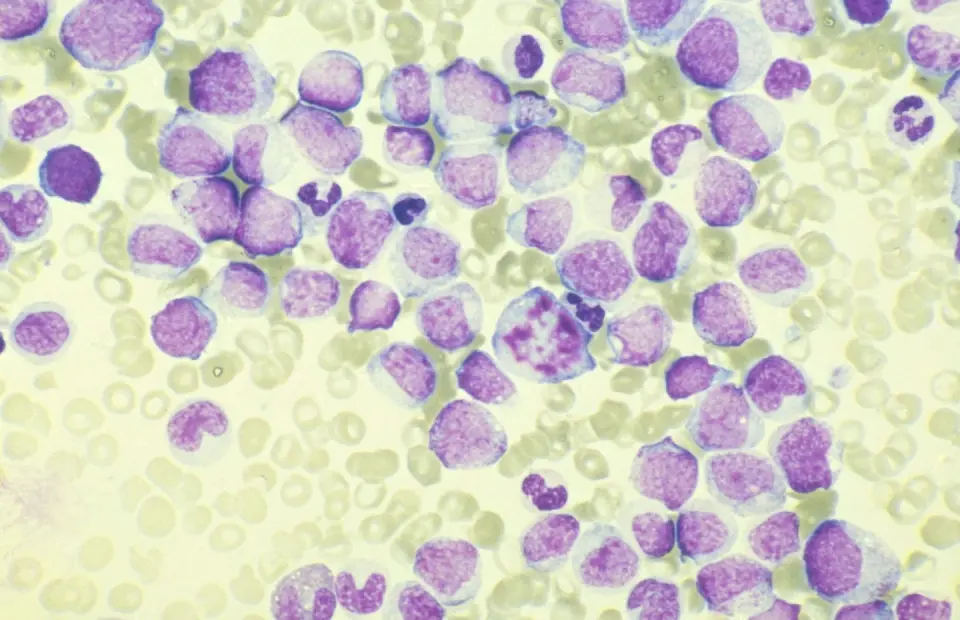
Sellas Life Sciences and Memorial Sloan Kettering Cancer Center announced that their experimental vaccine, galinpepimut-S, met the primary endpoint of a Phase 3 trial for acute myeloid leukemia. The study showed a 41% reduction in the risk of death and a median survival extension of 9.3 months compared to standard care. The company plans to seek accelerated FDA approval in early 2027.
Key points
- The Phase 3 trial included 126 patients with acute myeloid leukemia who were in remission but lacked platelet recovery or were ineligible for stem cell transplants.
- Patients receiving the vaccine had a median overall survival of 24.0 months, compared to 14.7 months for those receiving standard treatments, including chemotherapy and Venclexta.
- The vaccine, developed over two decades by Dr. David A. Scheinberg, targets the WT1 protein found in over 95% of AML cases and is designed as an off-the-shelf therapy rather than a personalized treatment.
- Sellas Life Sciences plans to file for accelerated FDA approval in the first half of 2027, following a delay in reaching the required number of patient deaths for final analysis until late October 2026.
- The therapy showed minimal side effects, with most common reactions occurring at the injection site, and is being tested in other cancers including mesothelioma and ovarian cancer.
Background
This development follows a mixed year for cancer vaccines, including BioNTech’s Phase 3 failure in head and neck cancer in October 2026. It also contrasts with earlier preclinical research in November 2026 on metabolic disruption therapies for AML. The success of galinpepimut-S adds to a broader trend of immunotherapy advancements, despite previous skepticism from analysts like STAT’s Adam Feuerstein, who had predicted the trial would fail in September 2026.
How outlets are covering it
The Washington Post and Memorial Sloan Kettering Cancer Center emphasize the vaccine’s potential as a first-of-its-kind off-the-shelf therapy that could transform maintenance immunotherapy for AML. STAT’s Adam Feuerstein acknowledged his earlier prediction of failure, highlighting the unexpected positive outcome. Fierce Biotech focused on the clinical details, noting the delay in reaching the endpoint and the company’s plans for accelerated FDA approval. All sources agree on the 41% reduction in death risk and the 9-month survival advantage, but differ in emphasis: MSK highlights the 20-year development effort, while Fierce Biotech notes the broader pipeline including combinations with Opdivo and Keytruda.
Why it matters
The success of galinpepimut-S offers a new treatment option for acute myeloid leukemia, a cancer with limited post-remission therapies. The off-the-shelf design could enable mass production and wider access, potentially reducing costs and improving outcomes for a high-risk patient population. The result also validates the WT1-targeted immunotherapy approach, which may be applicable to other cancers like ovarian cancer and mesothelioma.
What to watch
Sellas Life Sciences plans to submit a Biologics License Application to the FDA in the first half of 2027. The company will present additional response and survival outcomes at the American Society of Hematology meeting in December 2026. Further clinical trials are underway for mesothelioma and in combination with other immunotherapies.
- Leukemia vaccine passes key trial, adding to breakthrough year for cancer drugs The Washington Post
- Vaccine Improves Survival in People with Acute Myeloid Leukemia (AML) Memorial Sloan Kettering Cancer Center
- Sellas vaccine extends survival in blood cancer trial, shares surge Reuters
- Sellas’ experimental blood cancer immunotherapy reduced risk of death in clinical trial STAT
- Sellas marks 9-month survival benefit in late-stage leukemia vaccine study Fierce Biotech
Want the full story? Read the original reporting
Read on The Washington Post