
Supreme Court poised to resolve federal-state clash over prediction market sports bets
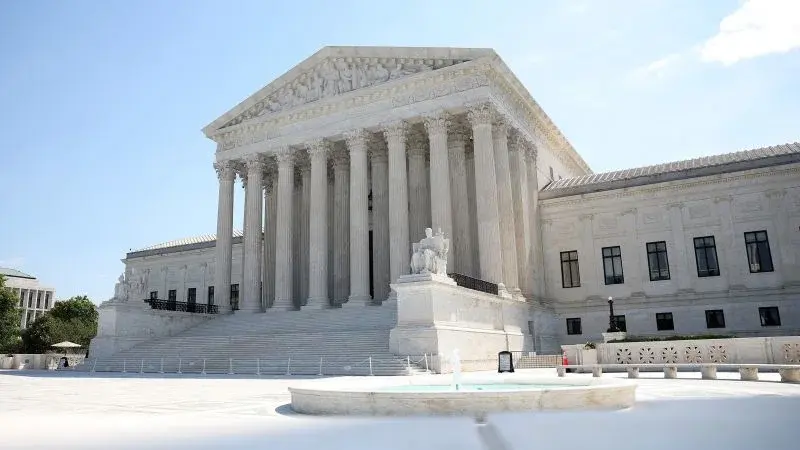
New Jersey has petitioned the U.S. Supreme Court to resolve a conflict between federal and state authority over prediction markets. The case follows a split in federal appellate courts: the Third Circuit ruled that the Commodity Futures Trading Commission (CFTC) has exclusive jurisdiction over sports event contracts, while the Ninth Circuit ruled that such contracts are gambling subject to state laws. This legal divide creates inconsistent regulations for platforms like Kalshi across different jurisdictions.
Key points
- New Jersey filed a Supreme Court appeal after the Third Circuit ruled in April that the CFTC, not states, regulates sports-related event contracts on platforms like Kalshi.
- The Ninth Circuit issued a conflicting ruling on August 28, 2026, stating that sports event contracts are not 'swaps' under federal law and must comply with Nevada’s gaming regulations.
- The Ninth Circuit panel, appointed by President Trump, unanimously rejected Kalshi’s argument that federal law preempts state gambling laws, citing the lack of a limiting principle in the broad definition of swaps.
- New Jersey Attorney General Jennifer Davenport argued that states must be able to enforce consumer protections and age restrictions, noting that dozens of states oppose unregulated sports betting.
- The CFTC has supported the industry’s position that prediction markets fall exclusively under federal jurisdiction, while 44 state attorneys general previously argued the agency oversteps its powers.
Background
This dispute follows a series of lower-court rulings in 2026, including a July decision where a federal judge blocked Minnesota’s ban on prediction markets, suggesting federal jurisdiction likely prevailed in that specific case. Earlier in July, 44 state attorneys general sent a letter to the CFTC challenging its authority to regulate sports-related event contracts, arguing that such products should be governed by state gambling laws. The current Supreme Court petition seeks to establish a uniform national rule, as the existing circuit split leaves the legal status of these contracts inconsistent across the country.
How outlets are covering it
Outlets highlight the stark contrast between the Third and Ninth Circuit decisions. PYMNTS emphasizes the regulatory battle and the CFTC’s support for the industry under the current administration. Ars Technica focuses on the legal reasoning, noting that the Ninth Circuit judges rejected the broad definition of 'swap' used by the Third Circuit, calling the latter’s approach 'cursory.' Sportico analyzes the implications of the circuit split, noting that while the Supreme Court rejects most petitions, a split in federal courts significantly increases the likelihood of review to ensure national uniformity. All sources agree that the core issue is whether sports event contracts are financial swaps or gambling wagers.
Why it matters
The outcome will determine whether prediction market platforms like Kalshi can operate nationally without complying with state-specific gambling licenses, age restrictions, and consumer protections. A Supreme Court ruling could either solidify federal preemption, allowing these platforms to bypass state regulations, or affirm state authority, forcing platforms to obtain licenses in all 50 states or cease operations in certain jurisdictions. This decision also sets a precedent for how federal financial regulations interact with state gambling laws, potentially affecting other industries that operate at the intersection of federal and state jurisdictions.
What to watch
The Supreme Court is expected to decide whether to grant certiorari in the coming months. If accepted, the case could be heard in the 2026-2027 term. Meanwhile, the CFTC is considering a proposal that would explicitly permit sports betting contracts on designated contract markets, which could alter the regulatory landscape regardless of the court’s decision. Lower courts will also continue to apply the conflicting rulings from the Third and Ninth Circuits until a final Supreme Court decision is issued.
- First challenge to prediction markets reaches Supreme Court CNN
- CPI | New Jersey Takes Kalshi Sports-Betting Fight to US Supreme Court PYMNTS.com
- Are Sports Prediction Markets Legal? The Supreme Court Is Asked to Weigh In. Barron's
- Court rules Kalshi sports bets aren’t “swaps,” just gambling with a different name Ars Technica
- Kalshi Creeps Closer to Supreme Court Docket With Nevada Ruling Sportico.com
Want the full story? Read the original reporting
Read on CNN