
AI Debt Fears Drive Global Credit Spreads to 17-Month Peak
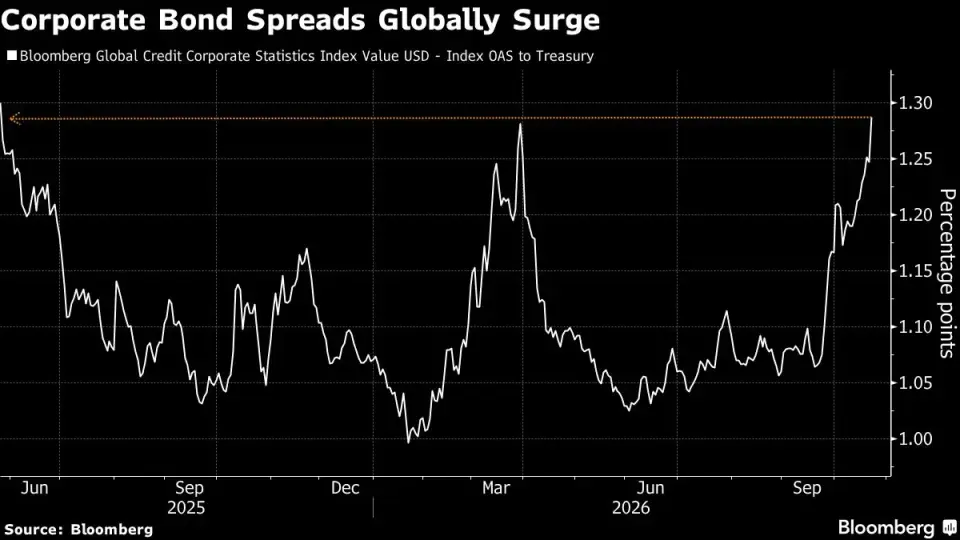
Global credit spreads have widened to their highest levels in 17 months, driven by a selloff in AI stocks and geopolitical tensions. Investors are fleeing risky assets for safe havens, causing US Treasuries to rally. The move reflects anxiety over the rapid pace of debt-funded AI spending and fears that profits will not materialize quickly enough to service the debt.
Key points
- Asian corporate bond spreads hit their highest levels since July 2025, mirroring a global surge in corporate bond yield premiums to 129 basis points.
- US Treasuries experienced their best day in over two years as investors rushed to cover short positions and seek safety.
- Asian credit-default swaps widened by approximately 1.5 basis points, with China technology spreads widening by 3 to 5 basis points.
- The market turmoil is fueled by concerns that AI infrastructure spending is outpacing revenue generation, leading to a sharp unwinding of AI bets.
Background
This latest spike follows a series of recent events highlighting AI sector volatility. In late October, South Korean AI firm Elice saw its stock drop 32% on its debut amid broader tech sell-offs. Earlier in the month, SpaceX credit default swap spreads hit record highs after the company announced plans to raise $40 billion for AI infrastructure. Additionally, Meta Platforms faced scrutiny over $825 billion in future AI spending commitments, which drove its credit default swap costs to record levels. These events have collectively heightened investor anxiety regarding the financial leverage and repayment capacity of major tech firms investing heavily in AI.
Why it matters
The widening of credit spreads signals a significant shift in global risk appetite, potentially tightening financing conditions for corporations across various sectors. If the AI investment bubble deflates further, it could trigger broader market instability and force companies to cut costs or delay projects. The flight to safety in US Treasuries indicates that investors are prioritizing capital preservation over growth, which could impact interest rates and borrowing costs globally in the near term.
What to watch
Market participants will likely monitor whether the current risk-off sentiment persists or if a stabilization occurs. Key indicators to watch include further movements in Asian credit spreads, the performance of major AI stocks, and any shifts in geopolitical tensions that may continue to drive safe-haven demand. The debate between investors like Citadel's Ken Griffin, who warns of a bubble, and Blackstone's Jon Gray, who sees robust demand, will likely influence future market positioning.
Want the full story? Read the original reporting
Read on Yahoo Finance