
AI Market Pullback: Liquidity Shock vs. Structural Demand
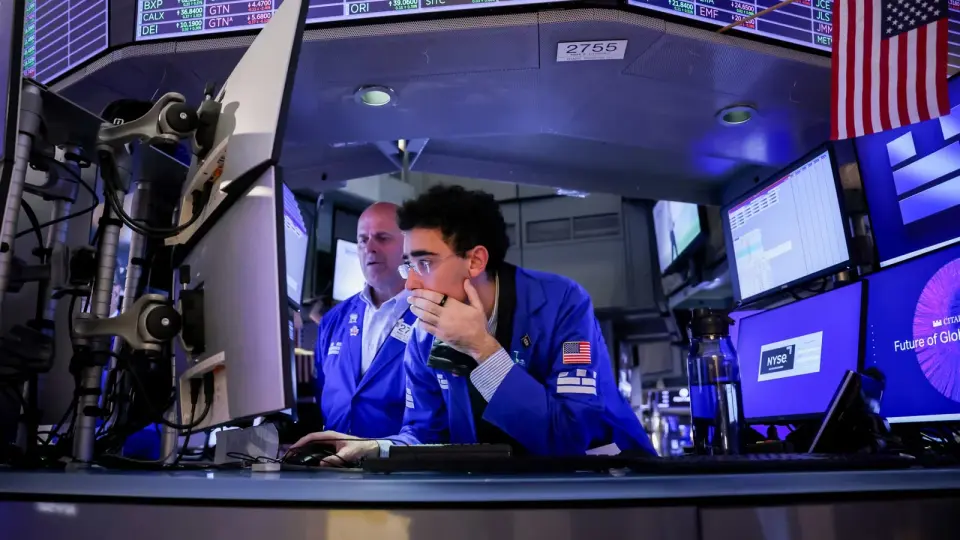
The recent decline in AI stocks is attributed by some to a temporary liquidity shock from an oil-driven rate spike, while others argue it signals a structural shift where capital, not hardware, is the primary constraint. Defensive stocks have outperformed as investors rotate away from high-capex tech names.
Key points
- The Nasdaq-100 fell nearly 11% from its record high, closing near its 200-day moving average, while the S&P 500 remained resilient due to a rotation into defensive stocks like Apple and Walmart.
- Real Vision's Raoul Pal attributes the AI pullback to a temporary global liquidity slowdown caused by an oil shock that raised the dollar and short-term interest rates, not a collapse in AI fundamentals.
- CNBC's Mike Santoli argues that the AI bull market requires the AI narrative to recover, noting that a prolonged outperformance of the equal-weight S&P 500 over the market-cap-weighted version typically signals a bear market.
- Pal cites $2.49 trillion in signed cloud-provider contracts and rapid revenue growth at Anthropic as evidence that AI demand outstrips supply, with hardware constraints remaining the primary bottleneck.
- Santoli notes that capital is now the limiting factor for AI buildout, raising the cost of capital broadly as mega-cap companies face free-cash-flow-negative pressures.
Background
This follows a period of market volatility in late 2026, where the S&P 500 reversed a record breakout in October, and analysts warned of a likely correction before the bull run's fifth year. Bond yields had recently spiked to 25-year highs, raising concerns about Fed policy shifts and rising debt costs.
How outlets are covering it
CNBC's Mike Santoli emphasizes the structural risk to the AI trade, arguing that the market's reliance on AI stocks is a vulnerability and that the current rotation into defensive stocks may signal a broader bear market. In contrast, Real Vision's Raoul Pal, covered by Seeking Alpha and TokenPost, views the pullback as a temporary liquidity event driven by an oil shock, asserting that AI fundamentals remain strong with demand outpacing supply. KuCoin's coverage of Pal's views highlights the argument that AI is a product with infinite demand, where falling prices expand usage, and that hardware constraints, not demand, are the primary issue. The outlets differ on whether the current market action reflects a fundamental shift in the AI thesis or a cyclical liquidity pause.
Why it matters
The debate over whether the AI market pullback is a temporary liquidity shock or a structural shift has significant implications for investor positioning and the broader market's trajectory. If the AI trade fails to recover, it could destabilize the broader market, while a rotation into defensive stocks may signal a broader bear market. The resolution of this debate will influence capital allocation and the future of AI infrastructure investment.
What to watch
Investors will watch for signs of a bottoming process in AI stocks, as advised by JPMorgan's Jason Hunter, and monitor the impact of the midterm elections on market sentiment. The recovery of AI stocks will depend on whether the liquidity shock subsides and whether the AI narrative can reassert its leadership in the market.
- Santoli: AI bull market almost surely needs tech stocks to recover to keep advancing CNBC
- ""Everyone has decided the AI trade is finished. " Seeking Alpha
- How AI trade is influencing markets WANE 15
- Raoul Pal Says Oil Shock Drove Temporary AI Market Pullback TOKENPOST
- Raoul Pal: AI Trading Has Just Begun, Demand Outpaces Supply KuCoin
Want the full story? Read the original reporting
Read on CNBC