
Asian tech rout deepens as AI spending fears override Nvidia leadership return
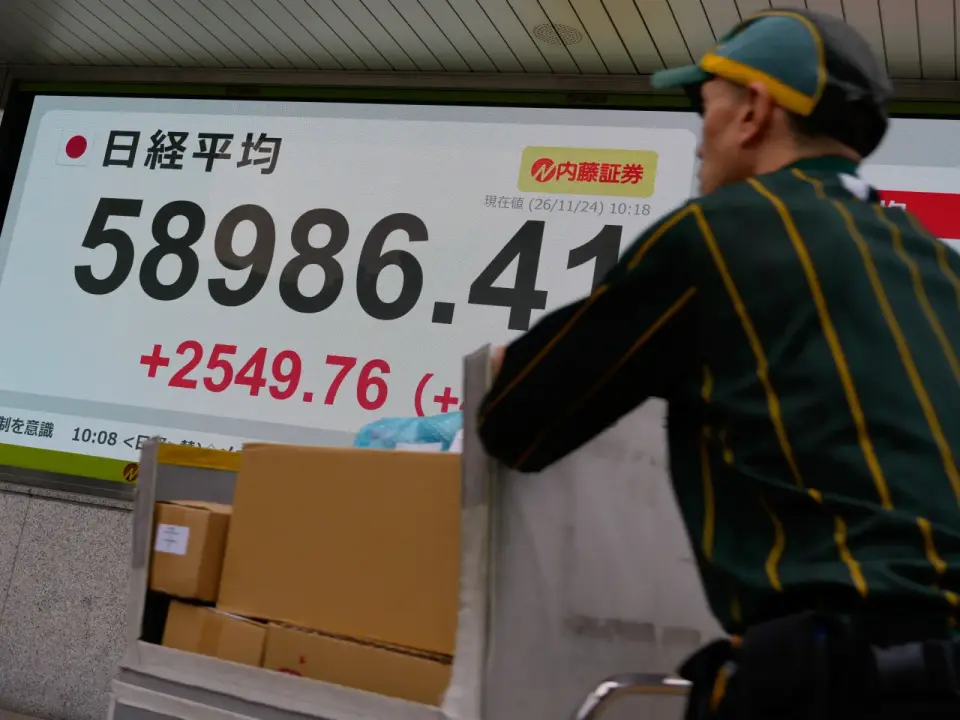
Asian stock markets plunged on Wednesday, led by a 6.2% drop in South Korea and a 4.8% fall in Taiwan, as investors rejected the brief rally triggered by Jensen Huang’s return as Nvidia CEO. The sell-off, which hit chipmakers like Samsung and TSMC, reflects persistent doubts about the sustainability of massive AI infrastructure spending and potential regulatory scrutiny, despite a previous 31% surge in Nvidia shares following Huang’s reinstatement.
Key points
- South Korea’s Kospi index fell 6.2%, while Taiwan’s Taiex dropped 4.8% and Japan’s Nikkei 225 declined 2.8%.
- Semiconductor equipment makers Tokyo Electron and Advantest in Japan fell over 12%, while Samsung Electronics and SK Hynix in South Korea dropped nearly 10% and 11% respectively.
- The volatility follows Jensen Huang’s reinstatement as Nvidia CEO, which initially caused a record 31.5% single-day gain in Nvidia shares but failed to stabilize broader tech sentiment.
- Investors remain concerned about the $2.7 trillion global AI investment forecast for 2026 and the ability of tech firms to sustain returns on these expenditures.
- European markets rose, with London, Paris, and Frankfurt indices gaining, as investors rotated away from high-risk tech assets into defensive sectors like healthcare and utilities.
Background
This market turbulence follows a month of extreme volatility in the AI sector. In late November 2026, Nvidia shares had previously plunged 14% amid a leadership crisis after Huang resigned over a personal scandal and federal chip-export probes. Although Anthropic’s record $81 billion IPO initially stabilized some sentiment, it subsequently crashed, failing to halt the broader tech rout. The current sell-off marks the eighth decline in ten sessions for the global equities gauge, reflecting deepening skepticism about the AI boom’s durability.
How outlets are covering it
Al Jazeera emphasizes the broad regional sell-off, noting that Huang’s return failed to quell doubts about the AI boom. CNBC highlights the specific vulnerability of Japanese semiconductor equipment makers, with analyst Rolf Bulk suggesting that while memory chipmakers in South Korea may be insulated by supply shortages, equipment suppliers face cyclical risks if AI demand slows. Yahoo Finance points to macroeconomic factors, including high inflation and potential US interest rate hikes, as additional drivers of the tech retreat. Bloomberg frames the event as part of a broader global equity decline, with the MSCI All Country World Index on track for its eighth drop in ten sessions. While all sources agree on the severity of the tech sell-off, they differ on the primary drivers: Al Jazeera and Yahoo focus on AI spending sustainability and macro fears, while CNBC and Bloomberg emphasize the cyclical nature of the semiconductor supply chain and global rotation into defensive assets.
Why it matters
The sharp reversal in Asian tech markets signals that investor confidence in the AI sector remains fragile, despite high-profile leadership changes. The volatility underscores the risks associated with the massive capital expenditure required for AI infrastructure, with forecasts of $3.6 trillion in 2027. If the current sell-off continues, it could trigger a broader market correction and force a reassessment of valuations for major tech firms, potentially impacting global economic growth and investment strategies.
What to watch
Investors will closely monitor the US Federal Reserve’s preferred inflation gauge, released later in the day, as it could influence interest rate decisions. Additionally, Jensen Huang is scheduled to testify before Congress in early December regarding the chip-export probes, which could further impact Nvidia’s stock and broader tech sentiment. The market will also watch for signs of a rotation into defensive sectors or a potential rebound in tech if AI spending concerns are alleviated.
- Asia’s markets dive as return of Nvidia’s Huang fails to quell AI doubts Al Jazeera
- Tech rout deepens globally; Softbank falls 15%, Nvidia down 4.5% premarket CNBC
- Tech stocks slide as confidence in AI trade fades Financial Times
- Tech firms back in crosshairs as Huang rally reverses Yahoo Finance
- Asian Stocks to Slide as AI Trade Doubts Resurface: Markets Wrap Bloomberg
Want the full story? Read the original reporting
Read on Al Jazeera