
Strategists Forecast S&P 500 to Reach 8,150 by End-2027 Despite AI Volatility
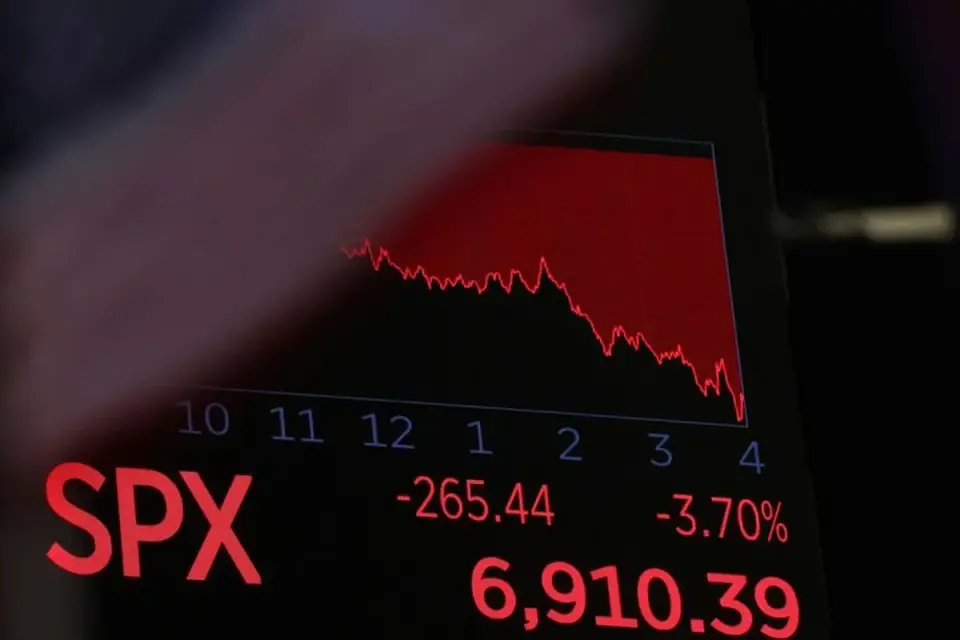
A Reuters poll of 42 strategists projects the S&P 500 will close 2027 at 8,150, representing a 12.6% gain from current levels. This optimism persists despite recent market corrections driven by AI concerns, Nvidia leadership turmoil, and fears regarding interest rates and data center scrutiny.
Key points
- The median estimate from 42 analysts polled between November 16 and 24 places the S&P 500 at 8,150 by the end of 2027.
- The Dow Jones Industrial Average is forecast to finish the year at 53,800, an 8.5% increase from Monday's close.
- S&P 500 earnings are projected to grow 16.4% in 2027, down from an estimated 37.1% growth in 2026.
- Nvidia reinstated Jensen Huang as CEO on Monday, a move strategists credit with improving investor sentiment and reducing uncertainty around AI infrastructure.
- The Federal Reserve is widely expected to raise interest rates in December to combat inflation, though recent stock volatility has complicated the outlook on economic resilience.
Background
Recent market turbulence has seen the Nasdaq approach bear market territory before rebounding, while the S&P 500 and Dow confirmed corrections. This follows a period where Morgan Stanley previously raised its 12-month S&P 500 target to 8,700, citing resilient AI-driven growth. The current volatility contrasts with earlier optimism, as investors now weigh AI capital expenditure sustainability against rising borrowing costs and political scrutiny of data centers.
How outlets are covering it
While both sources agree on a bullish long-term outlook, they differ on the magnitude and drivers of the recovery. The Reuters poll, representing a broad group of 42 strategists, cites a median target of 8,150, emphasizing that the near-term correction has largely played out due to Nvidia's leadership stability. JPMorgan, however, sets a higher target of 8,200, arguing that AI demand is being underestimated and that the current downturn is a normal part of a steepening adoption curve. JPMorgan also highlights the risk of higher interest rates dampening AI sentiment, whereas the broader poll emphasizes solid earnings growth and valuations below historical averages as primary support for the rally. JPMorgan categorizes the AI trade into upstream, midstream, and downstream segments, favoring momentum in upstream hardware, while the general consensus focuses on broad market resilience despite inflationary pressures.
Why it matters
The consensus that double-digit gains are likely despite significant volatility suggests that current market dips may be viewed as entry points rather than signs of a broader recession. The divergence in targets and the emphasis on AI integration into daily workflows indicate that the market is shifting from speculative hype to evaluating sustainable earnings growth. Investors must navigate the tension between rising interest rates and AI-driven earnings, with the reinstatement of Jensen Huang serving as a key signal for reduced uncertainty in the tech sector.
What to watch
The Federal Reserve is expected to announce interest rate decisions in December, which will likely influence how much further tightening the economy can withstand. Investors will watch for continued volatility in semiconductor stocks and the broader AI sector as the market tests the resilience of the current earnings growth. The performance of upstream AI infrastructure companies will be a key indicator of whether the adoption curve continues to steepen or flattens in the coming year.
- Bruised S&P 500 seen gaining more than 12% by end-2027 Yahoo Finance
- JPMorgan Sets Below Consensus S&P 500 Target of 8,200 for 2027 Bloomberg
- The S&P 500 is headed to 8,200 — and downturns like this one are actually part of the reason why, says JPMorgan MarketWatch
- POLL Bruised S&P 500 seen gaining more than 12% by end-2027: Reuters poll Reuters
- Stock market correction? This chief investment officer sees the S&P 500 soaring 45% to 10,000 Fortune
Want the full story? Read the original reporting
Read on Yahoo Finance