
Forced selling triggers feedback loop as US 10-year yields hit 2007 highs
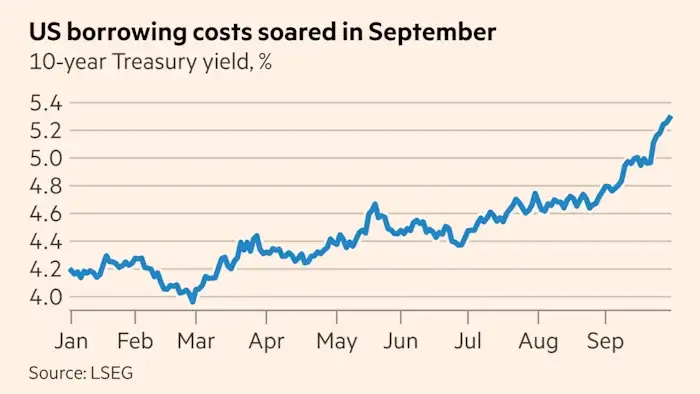
US government bonds experienced their worst monthly performance in four years in September, with 10-year Treasury yields rising by more than 50 basis points to reach 5.3%. This surge marks the highest level since 2007 and approaches rates last seen in 2002. The sell-off in the $32 trillion market has evolved into a self-reinforcing cycle where rising yields force institutional investors to divest long-term debt, further pushing borrowing costs higher. While initial concerns stemmed from inflation and public debt, technical factors now dominate, with no significant buyers stepping in to stabilize prices.
Key points
- Yields on 10-year US Treasuries climbed to 5.3% in September, representing a half-percentage point increase and the worst monthly performance in four years.
- A feedback loop has emerged where rising yields trigger mandatory selling by funds, which in turn pushes yields higher, creating a 'vicious cycle' that has not yet been broken.
- Hedge funds and real estate investment trusts are major forced sellers, as rising mortgage rates reduce prepayments, extending the duration of mortgage-backed securities and requiring them to offload Treasuries.
- August personal consumption expenditure inflation held steady at 3.4%, missing the expected rise to 3.7%, but this did not calm investor nerves or halt the sell-off.
- Treasury Secretary Scott Bessent’s decision to expand government bond purchases in August failed to stop the decline, while the 'marginal buyer' has not appeared to stabilize the market.
Background
This development follows the US national debt surpassing $40 trillion in August, a milestone reached months earlier than forecast due to lost revenue from invalidated tariffs. The rapid accumulation of debt, combined with chronic deficits and political gridlock over fiscal choices, has heightened market anxiety. The current bond rout exacerbates these concerns, as higher borrowing costs threaten to accelerate a debt spiral if fiscal reforms stall before the upcoming debt ceiling fight.
Why it matters
The stability of US Treasury bonds is critical for global finance, as they serve as the benchmark for interest rates worldwide. A sustained sell-off increases borrowing costs for governments, corporations, and consumers, potentially slowing economic growth. The lack of a stabilizing buyer suggests that the market may continue to deteriorate, posing risks to financial stability and inflation control efforts by the Federal Reserve.
What to watch
Market participants are watching for a 'marginal buyer' to step in and halt the feedback loop. Investors will closely monitor upcoming inflation data and Federal Reserve policy decisions, as well as any further actions by the Treasury Department to support bond prices. The resolution of this sell-off will depend on whether technical selling pressures ease or if fundamental concerns about debt and inflation persist.
- US government debt rout triggers ‘vicious loop’ of selling Financial Times
- A brutal September for bonds points to an even darker October MarketWatch
- Could There Be a Run on the Bond Market? WSJ
- Global Bonds Face Worst Quarter Since 2024 on Inflation Fears Bloomberg.com
- Why the Bond Market Sold Off in Q3—Will the Losses Continue in Q4? Morningstar
Want the full story? Read the original reporting
Read on Financial Times