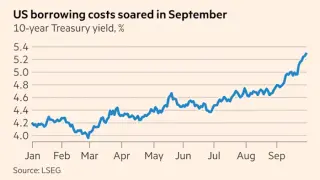
US Treasury yields have surged to levels unseen in over two decades, with the 10-year yield at 5.23% and the 30-year at 5.61%. Analysts identify four key signs that the bond market may face further volatility: rising demand for rate protection, increased hedging by AI firms, mortgage-related selling, and a steepening yield curve.
US government bonds experienced their worst monthly performance in four years in September, with 10-year Treasury yields rising by more than 50 basis points to reach 5.3%. This surge marks the highest level since 2007 and approaches rates last seen in 2002. The sell-off in the $32 trillion market has evolved into a self-reinforcing cycle where rising yields force institutional investors to divest long-term debt, further pushing borrowing costs higher. While initial concerns stemmed from inflation and public debt, technical factors now dominate, with no significant buyers stepping in to stabilize prices.
Trump expands executive interventions to steer prices and markets, pressuring the Fed and pursuing bold actions—including a $200 billion mortgage-backed securities purchase, limits on single-family home buyers, a cap on credit-card interest, and Venezuela-linked energy moves—to deliver quick relief before the election, challenging traditional policymaking and raising concerns about market stability and Fed independence.
Pulte reassures that their mortgage underwriting is secure and criticizes concerns about Fannie Mae and Freddie Mac's liquidity, while also addressing political allegations related to mortgage fraud referrals against various politicians.
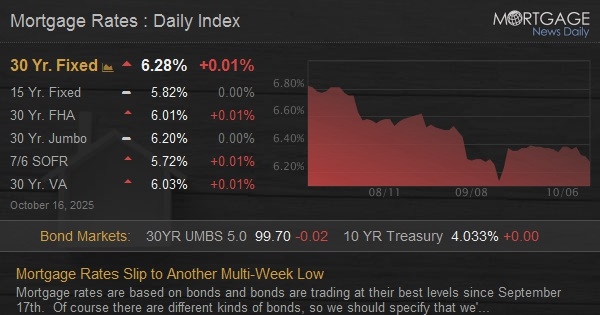
Mortgage rates have decreased to their lowest levels since September 17th, driven by bond market rallies and timing effects among lenders, reflecting improved bond yields tied to mortgage-backed securities.
Annaly Capital Management, a mortgage real estate investment trust (REIT), offers a 13.2% yield and specializes in "agency MBS," which are considered low-risk investments. Despite recent market challenges, the company has been strategically buying more agency MBS as prices have declined, positioning itself for future gains when interest rates eventually decrease. This approach aligns with the concept of being paid to wait, as the company's dividend payments provide income while investors patiently hold their shares.
Mortgage rates have surged to a new multi-decade high, with the average lender increasing rates at least once during the day. The underlying bond market started stronger but weakened significantly, leading to the rise in rates. The reasons for this weakness are debated, but the market seems to believe that interest rates will remain higher for longer. Traders are being cautious ahead of next week's economic data, preferring to err on the side of higher rates. The mortgage-backed securities market has also contributed to the pain of today's rate adjustment. The average lender's rates have risen from 7.50% to 7.65%, with even higher rates for those with less-than-perfect scenarios.
AGNC Investment Corp (NASDAQ: AGNC) is a mortgage real estate investment trust (REIT) that specializes in investing in agency mortgage-backed securities (MBS). These MBS are guaranteed by agencies like Fannie Mae or Freddie Mac, which eliminates credit risk. While the prices of these MBS can fluctuate, AGNC offers a high yield of 14.8% and is well-positioned to benefit from increased investor demand during a recession. Despite recent declines in MBS prices, AGNC's book value is not permanently lost capital, and the potential for MBS prices to recover presents upside potential for the company. AGNC provides investors with a diversified portfolio of mortgages, allowing them to earn a steady and reliable income stream through dividends.
UBS has agreed to pay a $1.435 billion settlement to the U.S. Department of Justice (DOJ) to resolve civil claims related to its alleged misconduct in dealing with residential mortgage-backed securities (RMBS) prior to the 2008 financial crisis. The settlement, announced by the DOJ, concludes a civil action filed against UBS in 2018. The bank confirmed the payout, stating that it had already provisioned for the settlement. This settlement brings the total amount of civil penalties paid by financial entities over the 2008 crisis to over $36 billion.
UBS has agreed to pay $1.4 billion in civil penalties to settle a case brought by the Justice Department over fraud and misconduct in its offering of mortgage-backed securities dating back to the 2008 financial crisis. The settlement concludes the final case against major financial institutions, bringing the cumulative recoveries to $36 billion. UBS, along with other banks, sold mortgage-backed securities that did not comply with underwriting standards, despite being aware of the issues. The Justice Department has secured settlements with 18 other financial institutions over similar issues.
BlackRock, chosen by the Federal Deposit Insurance Corporation (FDIC) to sell mortgage backed securities (MBS) from failed banks, faces a dilemma between flooding the market and risking higher costs to hold the debt. While the FDIC hasn't given a timeline for the sales, it can't wait forever as it's paying the Federal Reserve interest on credit lines to hold the securities. The longer the assets are held, the less liquid and more off-the-run they become, and the FDIC needs the cash to pay for things like reimbursing depositors from the receiverships. The amount of supply is formidable, with roughly $90 billion in market value of the securities that BlackRock now needs to dispose of, far more than the gross supply of agency MBS last month at $56 billion.
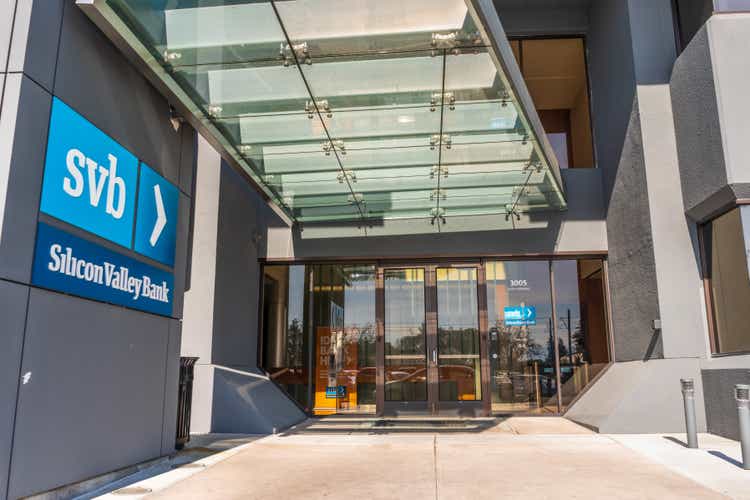
BlackRock has been hired by US regulators to sell $114 billion in securities it amassed from failed lenders Signature Bank and Silicon Valley Bank, returning the asset-manager to its role as an adviser to the government in times of crisis. The holdings are mostly agency mortgage-backed securities, collateralized mortgage obligations and commercial MBS that remained after the government sold the rest of the firms in March, the FDIC said. The goal is for the sales to be “gradual and orderly,” the FDIC said, and that authorities seek “to minimize the potential for any adverse impact on market functioning by taking into account daily liquidity and trading conditions.”
Silicon Valley Bank was a "hedge fund in drag" that went long on mortgage backed securities because they knew their earnings from tech companies would have a bad year, according to banking consultant Chris Whalen. The Federal Deposit Insurance Corp. is reportedly moving towards breaking up the failed lender after being unable to find a suitor for the entire company.