
Nikon Disqualifies 2026 Microscopic Video Winner Over AI Rule Breach
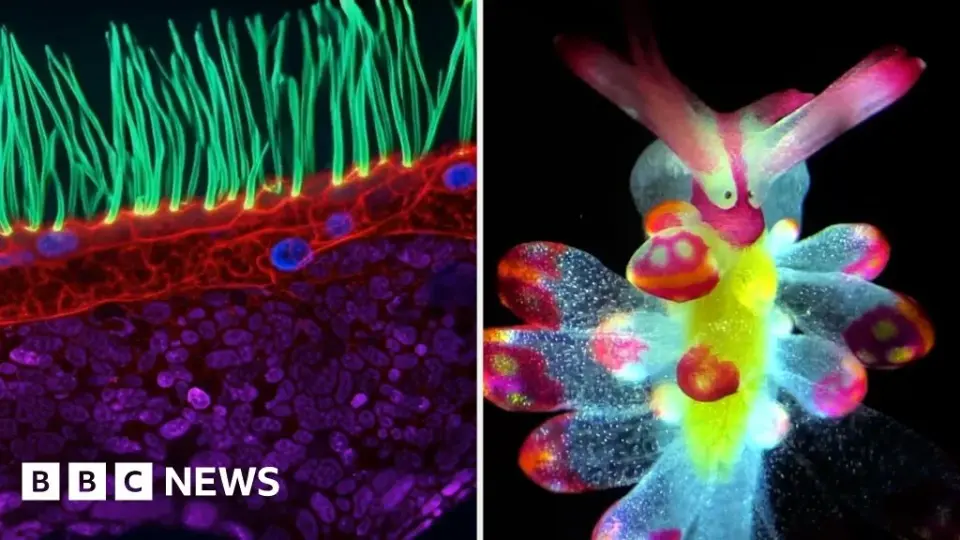
Nikon has disqualified the initial winner of its 16th annual Small World in Motion competition after determining the winning video violated rules against artificially generated content. The disqualification follows the announcement of Dr. Ning Xu’s footage of abnormal cilia movement in a child with primary ciliary dyskinesia, which had previously been praised for its scientific value. The company has adjusted the remaining rankings, and the competition received 347 entries from 40 countries.
Key points
- Nikon disqualified the first-place winner of the 2026 Small World in Motion competition for using artificially generated video.
- The original winner, Dr. Ning Xu of Tsinghua University, filmed abnormal cilia movement in a child with primary ciliary dyskinesia.
- The competition received 347 entries from 40 countries, judged by specialists in science and microscopy.
- Runners-up included videos of a roundworm, jellyfish larvae, and synchronized cell division.
- Nikon adjusted the rankings following the disqualification, though specific new winners were not detailed in the sources.
Background
The Nikon Small World in Motion competition began as a photography contest in 1975 and added moving images in 2011. It aims to showcase the artistry and scientific value of microscopic imaging. Previous coverage highlighted the beauty of invisible life captured through high-precision microvideos.
How outlets are covering it
The New York Times reported that Nikon disqualified the first-place winner for violating a rule prohibiting artificially generated videos, adjusting the rankings accordingly. CNN and The Washington Post initially highlighted the scientific merit of Dr. Ning Xu’s footage of abnormal cilia movement in a child with primary ciliary dyskinesia, emphasizing its value for understanding the disease. BBC noted the use of complicated light waves to illuminate the sample. The outlets differ in emphasis: NYT focuses on the disqualification and rule violation, while CNN and WaPo focus on the scientific and artistic aspects of the winning footage before the disqualification.
Why it matters
The disqualification highlights the growing tension between scientific imaging and artificial intelligence in competitions that aim to showcase real-world microscopic phenomena. It raises questions about the integrity of scientific competitions and the role of AI in generating content that mimics real scientific observations.
What to watch
Nikon has adjusted the competition’s remaining winner rankings to reflect the disqualification. The specific new winners and their rankings are not detailed in the sources. The competition continues to showcase microscopic imagery from contestants around the world.
- See tiny organisms on show in microscopic video competition BBC
- Microscopic Videos That Show the Invisible Wonders Around Us The New York Times
- Astonishing footage of abnormal cell movement in lungs wins 2026 Nikon video microscopy prize CNN
- See the microscopic wonders from the winners of Nikon’s Small World in Motion The Washington Post
- These 16 Nikon Small World in Motion Winners Show Dynamics of Nature at a Microscopic Level PetaPixel
Want the full story? Read the original reporting
Read on BBC