
Proteomic aging clocks hint at geroprotective signals in rentosertib IPF trial
TL;DR Summary
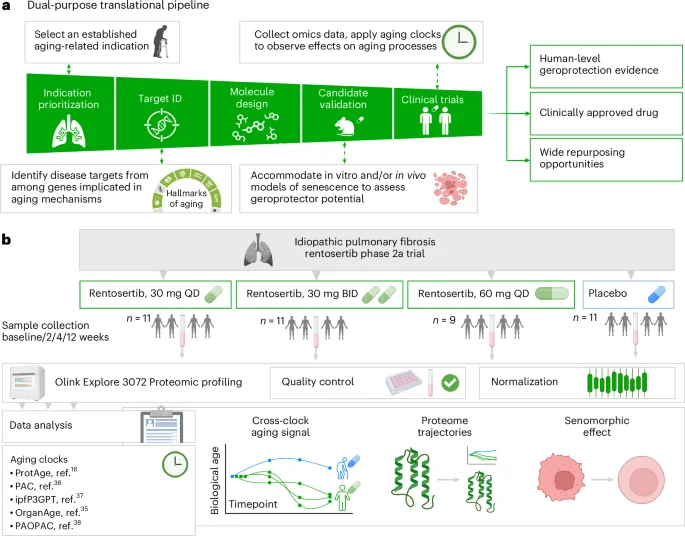
Six proteomic aging clocks applied to serum from a phase 2a rentosertib IPF trial consistently show slowed biological aging in treated groups, but disentangling aging modulation from anti-fibrotic effects remains challenging. The authors use pathway and external aging-data analyses (including UK Biobank) to identify potential anti-aging shifts in senescence and metabolism, supporting the idea of dual-purpose trials that integrate aging endpoints with disease outcomes.
- Integration of proteomic aging clocks in a phase 2a clinical trial supports simultaneous geroprotective assessment Nature
- Early Data Indicates an A.I.-Generated Drug Could Slow Aging The New York Times
- Insilico’s Co-CEO Has Big Hopes That Fibrosis Drug Can Reverse Aging Too WSJ
- AI-Discovered Drug Reverses Aging Markers In Study, Biotech Says Bloomberg.com
- Insilico's IPF candidate Rentosertib shows anti-aging promise FirstWord Pharma
Reading Insights
Total Reads
1
Unique Readers
9
Time Saved
65 min
vs 65 min read
Condensed
100%
12,982 → 64 words
Want the full story? Read the original article
Read on Nature