
Nikon Small World 2026: Microscopic Video Winners Reveal Hidden Life, but AI Dispute Reshuffles Top Prize
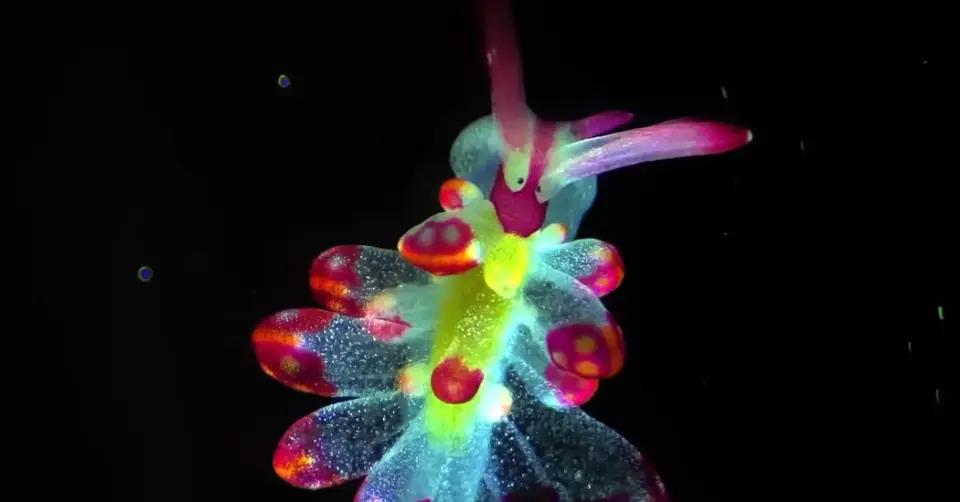
The 16th annual Nikon Small World in Motion competition has revealed its winners, showcasing microscopic videos that highlight the beauty and complexity of invisible life. The initial top prize went to Ning Xu of Tsinghua University for footage of abnormal cilia movement in a child with primary ciliary dyskinesia. However, Nikon later disqualified Xu’s entry on October 10, 2026, due to the use of artificial intelligence, awarding first place to Vietnamese researcher Nguyen Nam Nhat for his video of a roundworm interacting with a single-celled organism. Other winners include Benedikt Pleyer for jellyfish larvae and Andrew Moore for synchronized cell division. The competition received 347 entries from 40 countries, judged by a panel of scientists and designers.
Key points
- Ning Xu initially won first place for videoing abnormal cilia movement in a child with primary ciliary dyskinesia, but was disqualified on October 10, 2026, for using AI.
- Nguyen Nam Nhat was subsequently awarded first place for his video of a roundworm and a single-celled Dileptus, which he described as a chance observation of defensive behavior.
- Benedikt Pleyer won third place for his video of jellyfish larvae suspended in water droplets, a process that required months of patience to capture.
- The competition received 347 entries from 40 countries, with judging panels including award-winning scientists, designers, and directors of scientific institutions.
- Honorable mentions included videos of a Cyerce kikutarobabai sea slug, Penicillium venetum fungus growth, and bioluminescent phytoplankton triggered by electric charges.
Background
The Nikon Small World competition began in 1975 as a photography contest. A separate competition for moving images was established in 2011. This year’s event is the 16th annual iteration of the video category. The competition aims to inspire wonder and fuel discovery by showcasing the artistry inherent in scientific exploration. Recent advancements in digital sensors and cameras have made it easier and cheaper for amateurs to capture moving microscopic images, according to participant Benedikt Pleyer.
How outlets are covering it
The New York Times highlighted the artistic and scientific beauty of the microscopic world, quoting Benedikt Pleyer’s comparison of microscopy to being a 'ranger in the African bush.' CNN focused on the medical significance of the winning footage, emphasizing how observing cilia movement helps understand primary ciliary dyskinesia. ABC News provided detailed accounts of the specific techniques used by winners, such as Pleyer’s use of glycerol and electric charges to capture bioluminescent phytoplankton, and Nhat’s observation of nematode defensive behaviors. The Washington Post offered a brief overview of the winners, focusing on the visual appeal of the entries. All sources agreed on the initial winners but only ABC News reported the subsequent disqualification of Ning Xu’s entry due to AI usage, which reshuffled the top prize to Nguyen Nam Nhat.
Why it matters
The competition underscores the evolving role of technology in scientific imaging, particularly the debate surrounding the use of AI in scientific competitions. The disqualification of the initial winner highlights the importance of transparency and ethical standards in scientific research and imaging. Additionally, the competition serves as a platform for amateur and professional scientists to share discoveries, potentially leading to new insights in fields like biology and medicine. The diverse entries, from jellyfish larvae to fungus growth, demonstrate the vast and unexplored nature of the microscopic world.
What to watch
The full list of winners and honorable mentions is available on the competition's website. Future iterations of the Nikon Small World in Motion competition may face increased scrutiny regarding the use of AI in image capture and processing. Researchers and enthusiasts continue to use advanced imaging tools to explore microscopic phenomena, potentially leading to new discoveries in biology and medicine. The competition may also see more entries from amateur scientists as digital technology becomes more accessible.
- Microscopic Videos That Show the Invisible Wonders Around Us The New York Times
- Astonishing footage of abnormal cell movement in lungs wins 2026 Nikon video microscopy prize CNN
- Tiny cells and creatures dazzle in microscopic video competition ABC News & Headlines – Australian Broadcasting Corporation
- See the microscopic wonders from the winners of Nikon’s Small World in Motion The Washington Post
- Watch A Tardigrade Frolicking In The Snow And A Cell With A Prehensile "Trunk" As This Year's Nikon Small World In Motion Video Winners IFLScience
Want the full story? Read the original reporting
Read on The New York Times