
SpaceX Achieves First Orbital Starship Flight While Industry Faces Launch Capacity Crisis
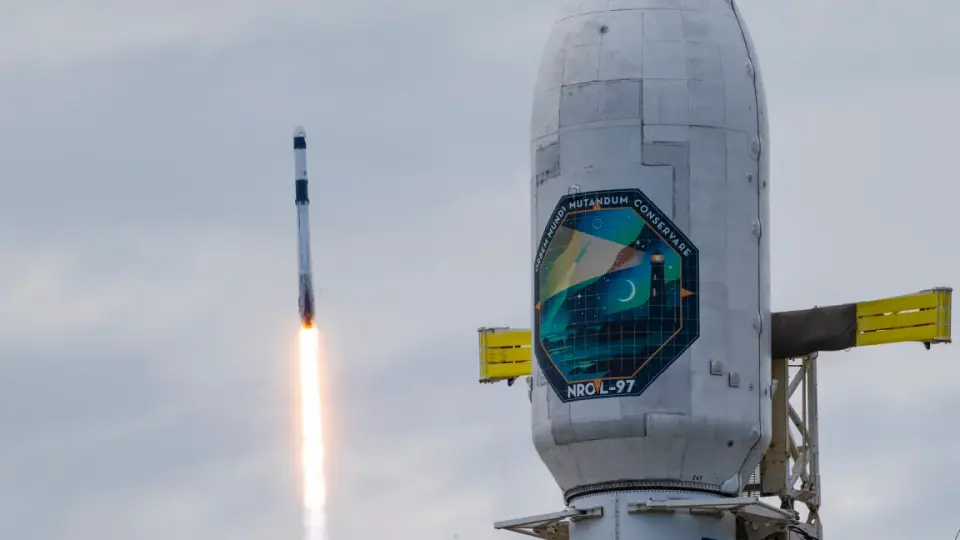
SpaceX successfully completed its 14th Starship test flight, achieving low-Earth orbit and deploying 26 new Starlink V3 satellites. This milestone coincides with a record-breaking 13-hour launch window for SpaceX, including the Crew-13 mission to the ISS. However, the success of Starship is accelerating the phase-out of Falcon 9 and Dragon, creating a potential launch capacity crisis for smaller satellite operators. Meanwhile, Rocket Lab secured its largest contract yet, and Blue Origin seeks approval for a significantly higher launch cadence.
Key points
- SpaceX’s 14th Starship flight reached low-Earth orbit, deploying 26 Starlink V3 satellites, though one engine failure shortened the test duration.
- SpaceX completed three launches in 13 hours, including Crew-13 to the ISS, a Transporter-18 rideshare mission, and a classified Falcon Heavy launch for the NRO.
- Crew-13 commander Jessica Watkins became the first Black woman to lead a space mission; the launch was delayed by a valve leak on the Dragon spacecraft.
- Rocket Lab signed a 20-mission contract with Japanese firm Synspective, its largest agreement to date, extending total bookings to 47 launches.
- Blue Origin is seeking FAA approval to increase New Glenn launches from 12 to 50 per year, including 50 booster landings.
- NASA is funding Boeing’s Starliner repairs and certifying ULA’s Vulcan rocket for human missions as SpaceX prepares to retire Falcon 9 and Dragon.
Background
Recent months have seen a surge in US launch activity, with the FAA projecting thousands of launches in the coming decade. SpaceX has faced regulatory scrutiny regarding spectrum interference with Rocket Lab and Iridium, while Rocket Lab’s stock has fluctuated due to Neutron rocket delays. The current environment is marked by a transition from legacy launch vehicles to next-generation systems, with SpaceX’s Starship emerging as a dominant force in both satellite deployment and human spaceflight.
How outlets are covering it
Ars Technica emphasizes the technical achievement of Starship’s orbital flight and SpaceX’s operational efficiency, highlighting the triple-header launch day. CNN focuses on the broader industry implications, framing the Starship success as a catalyst for a 'crisis' as Falcon 9 and Dragon are phased out, potentially leaving smaller operators without affordable launch options. SpaceNews notes that both SpaceX and external analysts are largely satisfied with the Starship flight despite minor technical issues, suggesting a positive reception of the milestone. The outlets differ in emphasis: Ars Technica highlights operational milestones, CNN highlights industry disruption, and SpaceNews focuses on technical validation.
Why it matters
The success of Starship marks a pivotal shift in space transportation, potentially rendering legacy rockets obsolete and reshaping the commercial launch market. The phase-out of Falcon 9 and Dragon could create a capacity gap, affecting startups and government missions, while the certification of alternative rockets like ULA’s Vulcan and Boeing’s Starliner becomes critical for maintaining US access to orbit. This transition also raises concerns about launch costs and accessibility for smaller operators, potentially consolidating the market around SpaceX’s Starship and Starlink ecosystem.
What to watch
SpaceX is expected to continue ramping up Starship flights, potentially replacing Falcon 9 and Dragon within the next few years. NASA is set to conduct an uncrewed Starliner test flight in December, with a potential crewed flight by mid-2028. Blue Origin awaits FAA approval for its increased launch cadence, while Rocket Lab continues to expand its customer base. The industry will likely see a shift toward larger, more capable rockets, with smaller operators seeking alternative launch providers or adjusting their timelines.
- Rocket Report: SpaceX completes launch triple-header; Rocket Lab nets big contract Ars Technica
- SpaceX, analysts satisfied with latest Starship flight spacenews.com
- SpaceX’s megarocket is on the verge of paradigm-shifting success. It’s spurring a ‘crisis’ CNN
- SpaceX's Starship engine failure could impact NASA's moon mission objectives reuters.com
- Musk’s Remarks Don’t Mean SpaceX Cut Its Starship Launch Guidance Barron's
Want the full story? Read the original reporting
Read on Ars Technica