Tag

Falcon 9

All articles tagged with #falcon 9

SpaceX Delays Military Satellite Launch by Five Days After Stage Two Anomaly
space19 hours ago

SpaceX Delays Military Satellite Launch by Five Days After Stage Two Anomaly

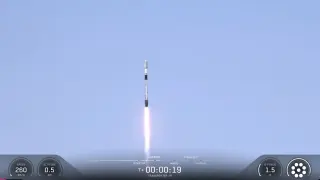
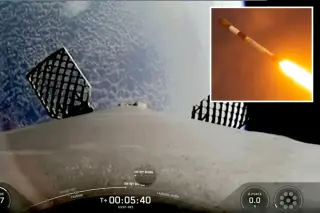
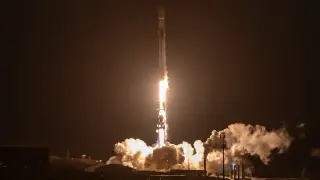
SpaceX successfully launched 21 military satellites to orbit on October 10, 2026, five days after a last-minute abort. The mission, designated Tranche 1 Transport Layer A, delivered Northrop Grumman-built spacecraft to the U.S. Space Force's Proliferated Warfighter Space Architecture network. The initial attempt on October 5 was scrubbed due to 'off-nominal data' on the second stage, leading to a five-day delay for troubleshooting and range deconfliction. This is the fourth of nine planned launches for the initial Tranche 1 constellation, which aims to provide global tactical communications and missile warning capabilities.
space1 day ago

SpaceX Delays SDA Satellite Launch to Oct. 9 After Stage Two Anomaly

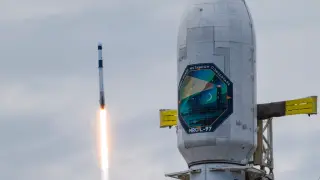
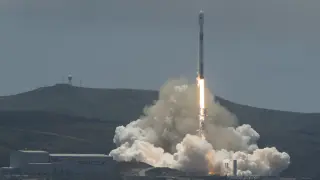
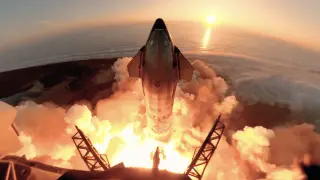
SpaceX successfully launched 21 military data satellites for the Space Development Agency (SDA) on October 9, 2026, from Vandenberg Space Force Base. The mission, designated Tranche 1 Transport Layer A (T1TL-A), followed a five-day delay caused by an auto-abort on October 5 due to 'off-nominal data' on the rocket's second stage. The launch utilized Falcon 9 booster B1103, which landed at Landing Zone 4 approximately 7.5 minutes after liftoff. This is the fourth SDA Tranche 1 mission, adding to a constellation of 63 satellites already in orbit. The satellites, manufactured by Northrop Grumman, are part of the Proliferated Warfighter Space Architecture (PWSA), designed to provide secure communications and missile tracking for the U.S. military and allies by 2027.

space5 days ago

SpaceX Scrubs Fourth SDA Transport Layer Launch, Reschedules for Thursday

SpaceX aborted its launch of 21 military data satellites for the Space Development Agency on Monday, Oct. 5, 2026, during the final seconds of the countdown. The company waived the subsequent Tuesday opportunity, with a new attempt now targeted for Thursday, Oct. 8. The mission, designated Tranche 1 Transport Layer A, is part of a broader constellation intended to provide secure communications and missile tracking capabilities for the U.S. military.

SpaceX Falcon 9 Booster B1067 Reaches 37th Flight, Validating Long-Term Reuse Strategy
technology5 days ago

SpaceX Falcon 9 Booster B1067 Reaches 37th Flight, Validating Long-Term Reuse Strategy

On August 25, 2026, SpaceX’s Falcon 9 booster B1067 completed its 37th flight, deploying 29 Starlink satellites from Cape Canaveral before landing on a droneship. This milestone confirms the viability of high-cycle rocket reuse, with the company stating boosters are engineered for up to 40 flights. While B1067 approaches its limit, other boosters like B1063 have flown 35 times, and rapid turnaround records of nine days demonstrate operational efficiency. SpaceX is now applying these reuse principles to its larger Starship system, which has already reused two Super Heavy boosters across 14 test flights, aiming for full upper-stage reuse by late 2026.

Starship’s First Orbital Flight Marks a New Era and Industry Crisis
space7 days ago

Starship’s First Orbital Flight Marks a New Era and Industry Crisis

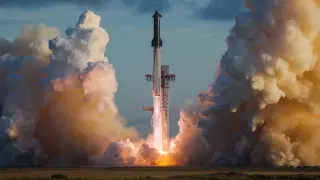
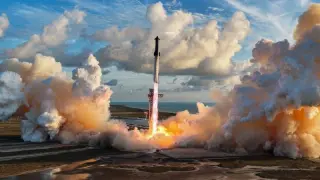
SpaceX’s Starship achieved its first orbital flight on September 28, 2026, deploying 26 Starlink V3 satellites. While the mission was cut short due to an engine failure, it confirmed the vehicle's capability to reach orbit. This milestone accelerates SpaceX’s plan to retire Falcon 9 and Dragon, sparking concerns about a launch supply crisis for commercial operators.

Starship’s First Orbital Flight Marks a Turning Point for Space Industry
space8 days ago

Starship’s First Orbital Flight Marks a Turning Point for Space Industry

SpaceX’s Starship successfully reached orbit on Sept. 28, deploying 26 Starlink V3 satellites, but the mission ended early due to an engine failure. While SpaceX and analysts view the flight as a major milestone, the success of Starship is accelerating the phase-out of Falcon 9 and Dragon, creating a potential launch bottleneck for the commercial space industry.

SpaceX Crew-13 Reaches Station After Record 8-Hour Transit, Following Unprecedented Valve Repair
space8 days ago

SpaceX Crew-13 Reaches Station After Record 8-Hour Transit, Following Unprecedented Valve Repair

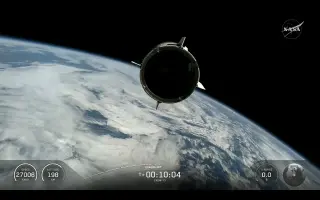
SpaceX successfully launched its Crew-13 mission to the International Space Station (ISS) on October 1, 2026, achieving the fastest US launch-to-docking transit in history at approximately eight hours. The four-person crew, led by Jessica Watkins, joined Expedition 75. The mission followed a significant delay caused by a faulty valve in the Dragon spacecraft’s propulsion system, which required an unprecedented in-situ repair while the vehicle was loaded with propellant. This launch marks the 13th crew rotation for SpaceX under its NASA contract and highlights the company’s operational reliability despite upcoming fleet retirements.

SpaceX Achieves First Orbital Starship Flight While Industry Faces Launch Capacity Crisis
space-and-technology9 days ago

SpaceX Achieves First Orbital Starship Flight While Industry Faces Launch Capacity Crisis

SpaceX successfully completed its 14th Starship test flight, achieving low-Earth orbit and deploying 26 new Starlink V3 satellites. This milestone coincides with a record-breaking 13-hour launch window for SpaceX, including the Crew-13 mission to the ISS. However, the success of Starship is accelerating the phase-out of Falcon 9 and Dragon, creating a potential launch capacity crisis for smaller satellite operators. Meanwhile, Rocket Lab secured its largest contract yet, and Blue Origin seeks approval for a significantly higher launch cadence.

SpaceX Completes Transporter-18 Rideshare with 130 Payloads in Polar Orbit
space9 days ago

SpaceX Completes Transporter-18 Rideshare with 130 Payloads in Polar Orbit

SpaceX successfully launched its Transporter-18 rideshare mission from Vandenberg Space Force Base on October 1, 2026, deploying 130 small satellites into low-Earth orbit. The Falcon 9 booster, designated B1082, completed its 25th flight, landing safely at Landing Zone 4 approximately 7.5 minutes after liftoff. This mission marked the second leg of a planned tripleheader launch day, following the Crew-13 mission from Florida. The payloads included a prototype for Google’s Project Suncatcher, a methane tracker, and pharmaceutical manufacturing labs, all deployed into a polar orbit over an 11-minute period.

SpaceX Transporter-18 Delivers Google's Orbital AI Prototype and 129 Other Payloads
space10 days ago

SpaceX Transporter-18 Delivers Google's Orbital AI Prototype and 129 Other Payloads

SpaceX successfully launched the Transporter-18 rideshare mission on October 1, 2026, from Vandenberg Space Force Base. The Falcon 9 rocket carried 130 payloads to low Earth orbit, including a prototype satellite for Google's Project Suncatcher. The first stage booster completed its 25th flight, landing safely at the launch site approximately 7.5 minutes after liftoff. The upper stage deployed the payloads over an 11-minute period, marking the second leg of a planned spaceflight tripleheader.

Crew-13 Sets Record with 7-Hour ISS Transit After Launch Delay
space-exploration10 days ago

Crew-13 Sets Record with 7-Hour ISS Transit After Launch Delay

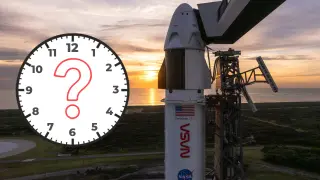
SpaceX successfully launched the Crew-13 mission to the International Space Station (ISS) on October 1, 2026, at 11:10 a.m. EDT from Cape Canaveral. The four-person crew, led by NASA astronaut Jessica Watkins, docked with the station just 7 hours and 55 minutes later, setting a new record for the fastest American spacecraft transit to the ISS. The mission, which had been delayed by an oxidizer leak in September, marks the beginning of a six-month expedition for the crew, who will join Expedition 75 to conduct scientific research and station maintenance.

Crew-13 Launches Oct. 1 for Record-Breaking ISS Transit
space10 days ago

Crew-13 Launches Oct. 1 for Record-Breaking ISS Transit

SpaceX and NASA are set to launch the Crew-13 mission on October 1 at 11:10 a.m. EDT from Cape Canaveral. The four-person crew will travel to the International Space Station in a record-breaking 7 hours and 50 minutes, docking at the Harmony module by 7 p.m. The mission follows a previous delay caused by a Dragon spacecraft leak and marks the first U.S. crewed launch in six months.