
SpaceX Starship Flight 15 reaches orbit after aborting booster catch
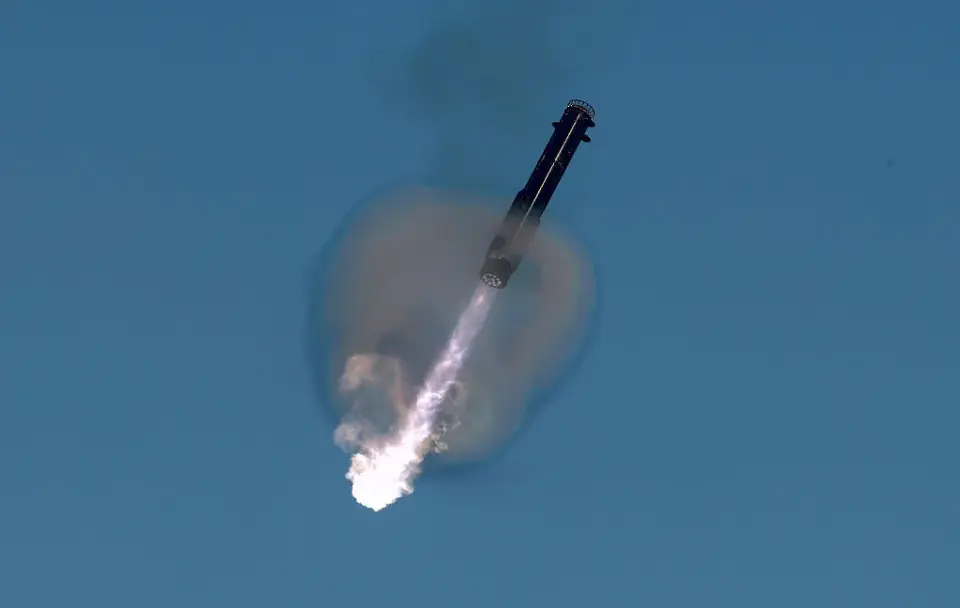
SpaceX’s 15th Starship test flight launched successfully on November 13, 2026, achieving orbital insertion for the upper stage and deploying 26 Starlink V3 satellites. However, the company aborted the planned catch of the Super Heavy booster, which splashed down in the Gulf of Mexico. The upper stage is now orbiting Earth and may attempt a historic landing at the launch site on November 14, marking the first recovery of a Starship upper stage.
Key points
- The Super Heavy booster was diverted to the ocean due to an unspecified issue, resulting in a fiery splashdown.
- The upper stage successfully reached orbit and deployed 26 Starlink V3 satellites, each with 60-meter solar panels.
- SpaceX will decide whether to attempt a catch of the upper stage on November 14, contingent on health checks.
- The mission is critical for testing heat shield durability and validating full reusability for future lunar missions.
Background
This flight follows previous Starship tests, including a September 2026 mission that also reached orbit but faced engine issues. SpaceX has previously landed and refloled Super Heavy boosters, but this is the first attempt to catch the upper stage. The company aims to make Starship fully reusable to reduce costs and support NASA’s Artemis III moon landing, currently planned for 2027-2028.
How outlets are covering it
Ars Technica emphasizes the successful orbital insertion and satellite deployment as a primary mission success, while noting the booster abort as a setback for reusability goals. CNN highlights the significance of the Starlink deployment, noting that a single Starship launch can provide bandwidth equivalent to 10 Falcon 9 launches, and stresses the importance of reusability for Starship’s economics. BBC focuses on the aborted booster catch and the upcoming decision to attempt catching the upper stage, framing it as a critical step toward full reusability. Space.com provides detailed pre-launch context, noting the 22.5-hour mission duration and the historic nature of attempting a double catch.
Why it matters
Success in catching the upper stage would mark a pivotal step toward full reusability, potentially reducing launch costs and enabling future missions to the Moon and Mars. It also validates Starship’s heat shield and propulsion systems, which are critical for NASA’s Artemis III mission and SpaceX’s Starlink expansion.
What to watch
SpaceX will assess the upper stage’s health during its 14 orbits and decide whether to attempt a catch on November 14. If successful, it would be the first full recovery of an orbital rocket. The company also plans to test in-orbit cryogenic refueling in early 2027, a key requirement for lunar missions.
- Starship flight 15 powers to orbit—setting up a possible catch on Saturday Ars Technica
- Live updates: SpaceX lifts off, aiming to make history in Starship’s 15th test CNN
- SpaceX Starship Flight 15 live updates: How to spot Starship in the night sky as it coasts in orbit Space
- First catch aborted in SpaceX Starship rocket double-catch test BBC
- SpaceX’s Latest Starship Mission Hits Early Setback WSJ
Want the full story? Read the original reporting
Read on Ars Technica