
SpaceX targets first full orbital rocket recovery in Nov. 15 Starship test
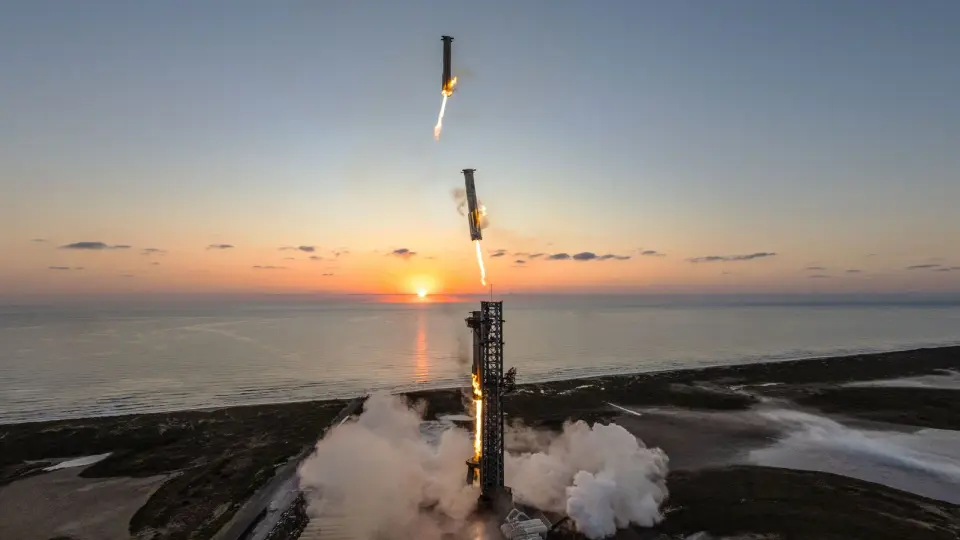
SpaceX is attempting the first full recovery of an orbital launch system on November 13, 2026, by catching both the Super Heavy booster and the Starship upper stage at its Texas launch site. The 22.5-hour mission will deploy 26 Starlink V3 satellites before the upper stage attempts a mid-air capture by the launch tower's mechanical arms, a feat never previously achieved. While the booster catch has been demonstrated three times, the upper stage recovery remains untested, with SpaceX retaining the option to splash down in the ocean if safety checks fail. Success would mark a major step toward rapid reusability and significantly lower launch costs, though engineers note heat shield durability remains a key engineering challenge.
Key points
- SpaceX scheduled Starship Flight 15 for November 13, 2026, at 5:45 p.m. ET from Starbase in South Texas, with a 75-minute launch window.
- The mission aims to catch both the Super Heavy booster and the Starship upper stage using the launch tower's 'chopstick' arms, a first for the upper stage.
- The upper stage will orbit Earth for approximately 22.5 hours, deploying 26 Starlink V3 satellites before attempting reentry and capture on November 14.
- SpaceX has previously caught the booster three times but has never recovered the upper stage, which travels at orbital velocities exceeding 17,000 mph.
- If issues arise, SpaceX will steer the upper stage to a splashdown in the Pacific Ocean near Hawaii or off the coast of Chile.
- Engineers note that heat shield inspection and repair are critical hurdles for achieving rapid reusability, as the vehicle must withstand reentry temperatures exceeding 2,000 degrees Fahrenheit.
Background
This attempt follows SpaceX's 14th test flight on September 28, 2026, which successfully reached orbit but ended with a splashdown rather than a catch. Previous flights have demonstrated booster recovery, but the upper stage has never been captured. The mission is part of SpaceX's broader goal to develop a fully reusable launch system to reduce costs and support future lunar and Mars missions.
How outlets are covering it
SpaceX frames the mission as a 'breakthrough moment' for rapid reusability, emphasizing the potential to lower launch costs by orders of magnitude. CNN highlights the risks, noting that the upper stage travels at orbital velocities and must cross populated areas during reentry, with temperatures exceeding 2,000 degrees Fahrenheit. ABC News emphasizes the economic implications, comparing the current practice of discarding rockets to throwing away cars after each trip. Experts like Casey Dreier of The Planetary Society note that while the catch is a critical step, heat shield durability remains a significant engineering challenge for rapid reusability. Joseph Gonzalez of the University of Illinois points out that the upper stage's reentry path crosses land, unlike previous missions that crossed water, adding to the risk.
Why it matters
A successful dual-catch would mark the first full recovery of an orbital launch system, potentially revolutionizing spaceflight economics by enabling rapid reuse and significantly lower launch costs. This could accelerate SpaceX's plans for lunar and Mars missions, as well as expand its Starlink network. However, the mission's success depends on overcoming technical challenges related to heat shield durability and safe reentry over populated areas.
What to watch
SpaceX will monitor the upper stage's health throughout the 22.5-hour flight, with multiple opportunities to deorbit early over the ocean if issues arise. If the catch is successful, SpaceX will inspect and refurbish the vehicle for future flights. If the catch fails, the upper stage will splash down in the Pacific Ocean. The outcome will inform future test flights and the timeline for achieving rapid reusability.
- Watch SpaceX attempt a historic Starship launch and double-catch landing today (Nov. 13) Space
- SpaceX’s next move is chasing the unprecedented ‘holy grail’ of rocketry. Here’s what’s at stake CNN
- SpaceX Starship Flight 15 could be a major step toward full rocket reusability and cheaper missions ABC News - Breaking News, Latest News and Videos
- Dear SpaceX Stock Fans, Mark Your Calendars for November 13 Barchart.com
- SpaceX Starship Flight 15 live updates: T-1 day to SpaceX's 1st-ever double Starship landing attempt Space
Want the full story? Read the original reporting
Read on Space