
SpaceX targets Nov. 13 for historic dual Starship recovery
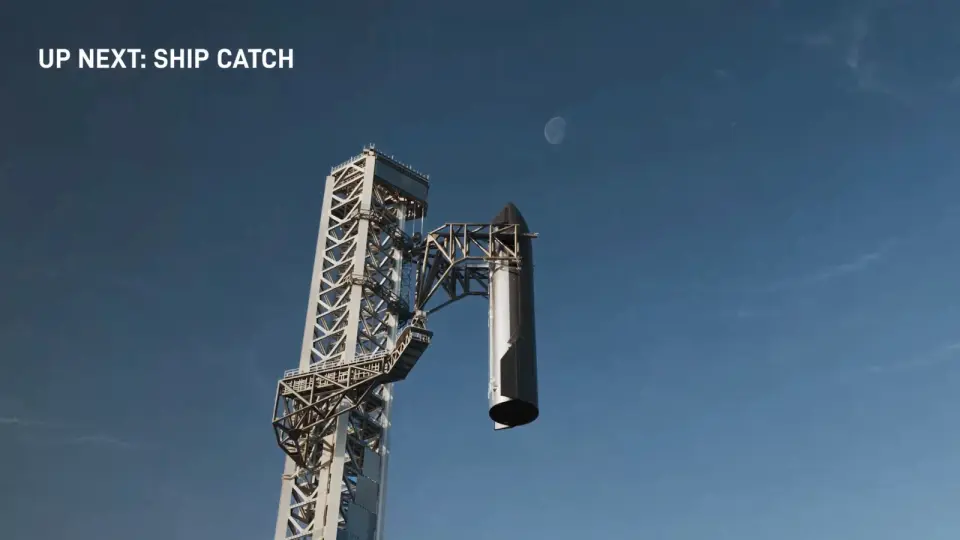
SpaceX has confirmed its 15th Starship test flight for November 13, 2026, at its Starbase facility in Texas. The mission aims to achieve the first full recovery of an orbital launch system by catching both the Super Heavy booster and the upper stage. If successful, the upper stage will complete a 22-hour orbital flight, deploy 26 Starlink satellites, and return to Earth for a mid-air capture by mechanical arms, a feat never before accomplished in spaceflight.
Key points
- Launch is scheduled for 4:45 p.m. CST on November 13, with backup dates through November 19.
- The Super Heavy booster (Booster 22) is expected to return within seven minutes of launch for a catch by the 480-foot launch tower.
- The upper stage (Ship 42) will orbit Earth for approximately 22 hours, completing up to 14 orbits at an altitude of 171 miles.
- The mission includes the deployment of 26 next-generation Starlink satellites, which are designed to raise their own orbits and serve customers.
- SpaceX will only attempt the upper stage catch if strict safety conditions are met; otherwise, the vehicle will splash down in the Pacific or Indian Oceans.
- The return trajectory will pass over populated areas in northern Mexico and South Texas, a first for the upper stage's reentry.
Background
This flight follows the September 28, 2026, mission (Flight 14), which marked Starship's first orbital flight but ended early after three hours due to engine issues. Previous test flights have successfully recovered the Super Heavy booster on three occasions since October 2024, but the upper stage has always been allowed to splash down or explode. SpaceX has also been preparing launch sites in Florida, including Launch Complex 39A at Kennedy Space Center, for a potential Starship debut later in 2026.
How outlets are covering it
Space.com and USA Today emphasize the historic nature of the dual recovery, describing it as the 'Holy Grail of rocketry' and a breakthrough for rapid reusability. MyRGV.com highlights the logistical preparations, including safety zone perimeters and highway closures in Boca Chica. The Palm Beach Post focuses on the broader context of SpaceX's expansion, noting that Flight 15 may be the final test in Texas before a Florida launch debut. All sources agree on the November 13 launch date and the 22-hour orbital duration, but differ in emphasis: Space.com focuses on the technical catch mechanism, while USA Today details the reentry path over populated areas.
Why it matters
A successful dual recovery would validate SpaceX's vision of a fully reusable, rapidly deployable launch system, potentially reducing launch costs and enabling frequent missions to the Moon and Mars. It also demonstrates the capability to safely return large vehicles through populated areas, a critical step for commercial spaceflight operations. The deployment of operational Starlink satellites further expands SpaceX's global internet network.
What to watch
SpaceX will monitor weather and technical conditions in the days leading up to November 13. If the launch proceeds, the booster catch is expected within seven minutes, while the upper stage catch will occur approximately 22 hours later. Backup launch dates are scheduled through November 19. Following this mission, SpaceX is expected to shift focus to its Florida launch sites, with preparations at Kennedy Space Center and Cape Canaveral nearing completion.
- SpaceX Starship Flight 15 live updates: T-2 days to SpaceX's 1st-ever double Starship landing attempt Space
- Starship may attempt first landing at Boca Chica after Friday launch MyRGV.com
- Starship's Friday launch in Texas could be last before Florida debut The Palm Beach Post
- SpaceX Sets Date For Critical Starship Flight 15, Plans Tower Catches Investor's Business Daily
- SpaceX targets 'Holy Grail of rocketry' with Starship flight 15 USA Today
Want the full story? Read the original reporting
Read on Space