
SpaceX to Retire Historic Starship Upper Stage for Public Display
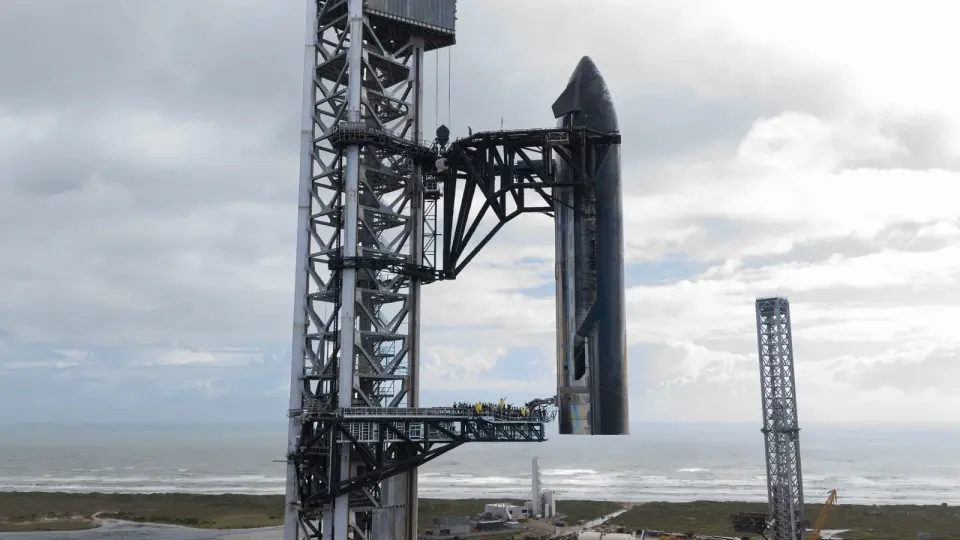
Elon Musk announced that SpaceX will not re-fly Ship 42, the first Starship upper stage ever recovered from orbit, instead retiring it for public display. The vehicle returned to Starbase on Nov. 14 after Flight 15, marking a historic milestone for reusable rocketry. Musk cited the historic nature of the achievement as the reason for preserving the hardware rather than refurbishing it for future missions.
Key points
- Ship 42, the first Starship upper stage successfully caught by the 'chopsticks' tower, landed at Starbase on Nov. 14, 2026.
- Elon Musk stated on Nov. 18 that the vehicle will not be reflown despite being in good condition, opting instead for public display.
- The decision prioritizes preserving a historic artifact over the potential reuse of the hardware.
- SpaceX aims to launch 10,000 Starship missions annually by 2030 to support Starlink and Starmind constellations.
- The upper stage catch was a critical step toward fully reusable orbital systems, though the Super Heavy booster was lost during the same flight.
Background
SpaceX’s 15th test flight launched on Nov. 13, 2026, with the goal of achieving a 'double catch' of both the booster and upper stage. While the upper stage was successfully recovered, the Super Heavy booster failed to land and exploded in the Gulf of Mexico. This followed previous successful recoveries of the booster, but the upper stage catch was the first of its kind. The company has previously reflown boosters twice, but this was the first time an upper stage was retrieved from orbit.
How outlets are covering it
Space.com highlights Musk’s decision to retire Ship 42 for display, emphasizing the historic significance of the first upper stage catch. Ars Technica frames the event as a major step toward fully reusable rockets, noting that the upper stage catch was a profound milestone despite the booster loss. Both outlets agree on the technical achievement but differ in emphasis: Space.com focuses on the preservation of the specific vehicle, while Ars Technica contextualizes it within the broader industry shift toward reusability and the concurrent failure of ULA’s Vulcan rocket.
Why it matters
The decision to retire Ship 42 underscores the cultural and historical value SpaceX places on first-of-its-kind achievements. It signals a shift from pure operational efficiency to preserving milestones, which may influence how future test flights are managed. The successful upper stage catch validates the feasibility of fully reusable orbital systems, a key requirement for SpaceX’s ambitious launch cadence and constellation deployment plans.
What to watch
SpaceX plans to attempt a double catch on the next test flight, described by Musk as a 'profound technology milestone.' The company is also preparing to shift most Starship launches to a new $100 billion facility in Louisiana, though construction has not yet begun. Meanwhile, ULA is investigating the cause of its Vulcan rocket failure, which impacted Amazon’s satellite deployment plans.
- SpaceX will retire 1st Starship upper stage ever caught by 'chopsticks,' Elon Musk says Space
- During Wall Street's worst week in over a year, we put money to work. What we're buying CNBC
- Rocket Report: A weekend of ups and downs; Stoke celebrates engine milestone Ars Technica
- Starship’s triumph and Vulcan’s failure The Planetary Society
- Prediction: Where Will SpaceX Stock Be in 2030 Now That Flight 15 Has Launched? The Motley Fool
Want the full story? Read the original reporting
Read on Space