
Starship V3 Floats in Indian Ocean After Successful Flight 13, Despite Heat Shield Concerns
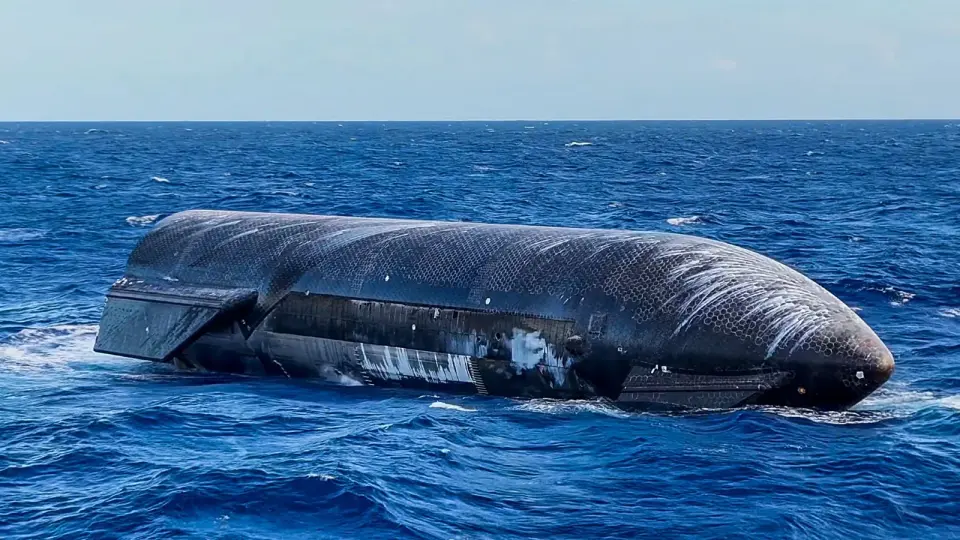
SpaceX’s Starship V3 remains afloat in the Indian Ocean five days after its July 24 test flight, marking the first launch since the company’s IPO. While the upper stage achieved a soft splashdown and deployed 20 new Starlink satellites, the booster suffered a hard landing due to engine ignition issues. Experts warn that current heat shield technology may hinder the rapid reusability goals central to SpaceX’s cost-reduction strategy.
Key points
- Starship V3, standing 408 feet tall, completed Flight 13 on July 24, 2026, from Starbase, Texas.
- The upper stage executed a soft splashdown in the Indian Ocean and is still floating as of July 29.
- The Super Heavy booster experienced a hard splashdown in the Gulf of Mexico after only a subset of engines ignited for landing.
- The mission successfully deployed 20 Starlink V3 satellites, which were designed to burn up after 20 minutes.
- Former NASA engineers argue that Starship’s current thermal protection system is a 'dead end' for rapid reusability.
Background
SpaceX had previously delayed Flight 13 from July 16 to July 24 due to weather and engine ignition issues. This was the second test for the Starship V3 version and the first since the company’s record IPO in June 2026. The flight aimed to validate the new Starlink V3 satellites and the heat shield integrity of the upper stage.
How outlets are covering it
Space.com highlights the visual success of the upper stage’s soft splashdown and the deployment of Starlink V3 satellites. CNBC notes the booster’s hard landing and the stock’s recent 43% drop from its peak, emphasizing investor scrutiny. ExtremeTech and Ars Technica report on expert criticism, with former NASA engineer Dan Rasky calling the current heat shield a 'dead end' for rapid reusability, warning that tile-by-tile inspections would negate cost savings. TMF Associates’ Tim Farrar noted progress but highlighted the risk of engine failures damaging launch pads.
Why it matters
The success of Flight 13 is critical for SpaceX’s plans to expand Starlink and achieve rapid reusability. However, technical setbacks and expert skepticism about heat shield durability could impact the company’s ability to meet its ambitious cost and schedule targets for future missions, including NASA collaborations and Mars exploration.
What to watch
SpaceX will analyze data from the intact heat shield of the floating upper stage. The company is preparing for a major NASA test flight next year and continues to develop Starmind satellites for orbital data centers. Investors will monitor subsequent test flights for signs of improved reusability and engine reliability.
- SpaceX Starship still floating 5 days after flight | Space photo of the day for July 29, 2026 Space
- SpaceX stock recovers after hitting all-time low Yahoo Finance
- SpaceX launches massive Starship rocket in first test flight since IPO CNBC
- NASA Heat Shield Experts Warn Starship Shielding Could Be a 'Dead End' extremetech.com
- Starship has been floating in ocean. Elon Musk says SpaceX plans to get it USA Today
Want the full story? Read the original reporting
Read on Space