Tag

Heat Shield

All articles tagged with #heat shield

technology19 hours ago

Artemis 2 bets on proven heat shield with lofted re-entry plan

NASA says Artemis 2 can safely re-enter with the same Avcoat heat shield used for Artemis 1, thanks to a lofted skip-entry trajectory that preserves shield permeability and vents gas, addressing the earlier damage seen in Artemis 1. The confidence rests on extensive testing and flight data, though using the current shield means a slightly reduced ability to dodge bad weather at splashdown, and some critics remain skeptical of the approach.

Artemis II heat shield confidence grows as NASA opts direct reentry
space19 hours ago

Artemis II heat shield confidence grows as NASA opts direct reentry

Live Science talks with Ed Macaulay about Artemis II’s heat shield: NASA is sticking with the same shield as Artemis I but changing to a direct reentry at roughly 25,000 mph to reduce stress, after Artemis I’s shield damage. Macaulay says there are reasons for confidence due to safety margins and improved modeling, though heat and g-forces remain a risk in crewed spaceflight. The mission has been technically successful so far and aims for a nominal, safe return as astronauts prepare to complete the lunar journey.

Artemis II Braces for Reentry as Heat Shield Flaws Loom
science21 hours ago

Artemis II Braces for Reentry as Heat Shield Flaws Loom

Ahead of Artemis II’s planned California splashdown, NASA acknowledges known flaws in the capsule’s heat shield—a design linked to Artemis I’s crack, and lacking a backup shield. Officials say a modified reentry path and crew safety measures will mitigate risk during the 5,000-degree-F heat, which makes the final ~13 minutes of flight the mission’s most perilous phase. Experts including Charlie Camarda warn of possible catastrophe, while NASA asserts the shield’s overall thermal performance has met or exceeded expectations; the four astronauts have been sending personal messages home as they approach splashdown.

Artemis II heat shield concerns eased by redesigned reentry, NASA says safety intact
space1 day ago

Artemis II heat shield concerns eased by redesigned reentry, NASA says safety intact

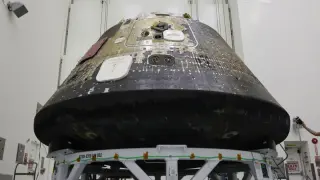
NASA says Artemis II’s heat-shield issue is under control: after Artemis I revealed char loss in the Avcoat shield, NASA adjusted the reentry profile to a steeper angle and shorter exposure to heat, and independent reviews backed the plan. The Orion capsule’s heat shield is built to erode safely, and engineers concluded the crew can be protected even if parts of the shield underperform. Artemis II will carry four astronauts (Reid Wiseman, Victor Glover, Christina Koch, Jeremy Hansen) on a crewed lunar flyby with a splashdown in the Pacific, and while some experts remain skeptical, NASA maintains confidence that the root cause has been addressed and safety margins are in place.

Artemis II readies for a controlled, fiery reentry and Pacific splashdown
science1 day ago

Artemis II readies for a controlled, fiery reentry and Pacific splashdown

Artemis II's four-person Orion is returning to Earth on Friday with a tightly choreographed entry: the Crew Module will separate from the Service Module at 7:33 pm ET, perform final trajectory tweaks, and enter the atmosphere at about 7:53 pm ET at roughly 24,000 mph, enduring peak heat up to 3,000°F during an eight-minute heat-load and a six-minute plasma blackout before a splashdown off Southern California around 8:07 pm ET; NASA redesigned the heat shield entry profile after Artemis I, and recovery by USS John P. Murtha will extract the crew—Christina Koch, Victor Glover, Jeremy Hansen, Reid Wiseman—and ferry them to Houston the next morning.

Artemis II’s fiery Earth return tests the heat shield’s limits
space1 day ago

Artemis II’s fiery Earth return tests the heat shield’s limits

As Artemis II returns from its lunar flyby, the crew must rely on a heat shield designed to endure about 5,000 degrees of reentry heat, after Artemis I revealed permeability-driven damage. NASA validated a modified skip-entry trajectory and extensive testing to ensure the shield breathes properly and protects the crew, while the team remains cautiously confident ahead of a Pacific splashdown.

Artemis 2 faces fiery Earth reentry en route to Pacific splashdown
space2 days ago

Artemis 2 faces fiery Earth reentry en route to Pacific splashdown

Artemis 2's crew—Reid Wiseman, Victor Glover, Christina Koch and Jeremy Hansen—will return from the moon by plunging into Earth’s atmosphere at about 23,840 mph (38,367 kph) around 75 miles up, in a roughly eight-minute fiery reentry before a splashdown in the Pacific off San Diego on April 10. To reduce heat-stress after Artemis 1’s heat-shield damage, Orion will enter at a steeper angle and rely on its Avcoat heat shield, with parachutes deploying to slow the capsule for a Navy recovery after touchdown.

Atmosphere-specific heat shield behavior revealed for Venus and Titan entries
space17 days ago

Atmosphere-specific heat shield behavior revealed for Venus and Titan entries

UIUC researchers using a Plasmatron X wind tunnel found that heat-shield ablation depends on atmospheric composition: in oxygen-rich environments ablation erodes the surface steadily, but when oxygen is absent the process becomes unsteady with intermittent, sometimes violent particle bursts. This “breathing” behavior affects shield performance and has implications for future missions like Dragonfly to Titan, whose nitrogen–methane atmosphere differs from Earth’s.

Artemis II Targets April Launch Window After Thorough FRR
science29 days ago

Artemis II Targets April Launch Window After Thorough FRR

NASA completed the Flight Readiness Review for Artemis II and set an April 1 launch date (target 6:24 p.m. ET) with backup windows on April 2–6 and April 30 for the four-person lunar flyby mission. Officials avoided publishing a precise probabilistic risk number but stressed careful risk mitigation. The review scrutinized the Orion heat shield and propulsion/ground-system issues, including hydrogen leaks and a helium-flow problem that was fixed, with no dissent noted. NASA also decided against another wet dress rehearsal to preserve fuel tanks. The SLS/Orion stack is slated to return to the launch pad by March 19, and the crew joined the FRR virtually from Houston; the mission will last about 10 days and use a lunar flyby path with reentry on Earth.

Artemis II Faces Heat Shield Scrutiny Ahead of Manned Moon Flyby
space1 month ago

Artemis II Faces Heat Shield Scrutiny Ahead of Manned Moon Flyby

NASA's Artemis II crewed lunar flyby is moving forward, but Orion's heat shield—composed of Avcoat and reinforced with a 3D Multifunctional Ablative Thermal Protection System—is under scrutiny after Artemis I showed shielding damage on reentry. NASA says there is no significant safety threat and has adjusted the reentry plan to reduce risk, while hydrogen-leak delays push the launch window to March at the earliest.

CU Boulder Unveils Global-Unique Plasma Tunnel for Hypersonic Reentry Testing
space2 months ago

CU Boulder Unveils Global-Unique Plasma Tunnel for Hypersonic Reentry Testing

Researchers at the University of Colorado Boulder have built a plasma tunnel that mimics the extreme heat and pressure of reentry, reaching up to 9,000°F to test materials, heat shields, and sensors under hypersonic conditions; the facility can also reproduce Mars-like CO2 atmospheres, and scientists are exploring magnetic control of the plasma to potentially steer reentry, which could improve future spacecraft safety and maneuverability.

Artemis 2 Faces Scrutiny Over Heat Shield as Experts Warn of Reentry Risks
science2 months ago

Artemis 2 Faces Scrutiny Over Heat Shield as Experts Warn of Reentry Risks

With Artemis 2 looming, experts question whether NASA’s heat-shield fixes will keep astronauts safe during reentry, citing Artemis 1’s heat-shield cracking from gas buildup. NASA adjusted Artemis 2’s reentry profile and heat-shield design to reduce risk, and officials emphasize redundancies, but some veterans argue deeper fixes were needed. Artemis 2 will be crewed but not land on the Moon, setting the stage for Artemis 3’s lunar landing.

SpaceX's Starship Progress and Challenges for Lunar and Martian Missions
science-and-technology7 months ago

SpaceX's Starship Progress and Challenges for Lunar and Martian Missions

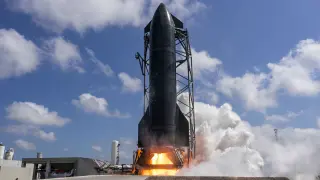
SpaceX's recent Starship test flight highlighted issues with heat shield tiles, particularly the need to improve sealing to prevent heat leakage, with plans to test new sealing methods like 'crunch wrap' on upcoming flights. The company aims to achieve orbital flights next year with upgraded Starship versions, paving the way for lunar and Mars missions, and developing large-scale orbital refueling.