
Starship’s First Orbital Flight Marks a Turning Point for Space Industry
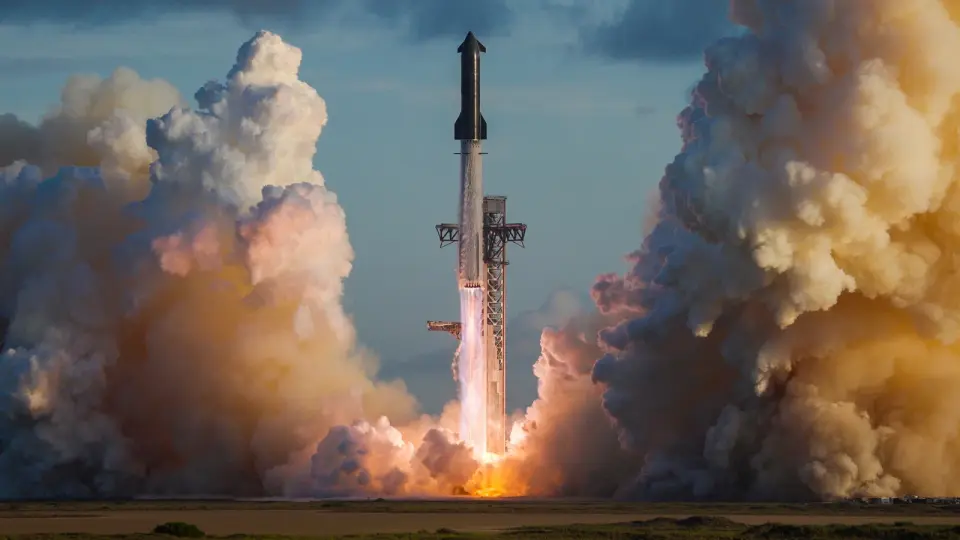
SpaceX’s Starship successfully reached orbit on Sept. 28, deploying 26 Starlink V3 satellites, but the mission ended early due to an engine failure. While SpaceX and analysts view the flight as a major milestone, the success of Starship is accelerating the phase-out of Falcon 9 and Dragon, creating a potential launch bottleneck for the commercial space industry.
Key points
- Starship Flight 14 achieved its first orbital insertion, deploying 26 Starlink V3 satellites, but the mission was cut short from 10 hours to 3 hours after an engine anomaly.
- SpaceX is planning to phase out Falcon 9 and Dragon, which has caused concern among satellite operators about a potential launch bottleneck and rising costs.
- NASA is supporting Boeing’s Starliner and ULA’s Vulcan rocket to ensure a backup for crewed spaceflight as SpaceX focuses on Starship.
- The success of Starship is seen as a major milestone, but it also highlights the need for alternative launch providers to maintain access to space.
Background
This is the 14th test flight of Starship, following 13 suborbital flights. Previous missions had intentionally limited the rocket’s capability to avoid stranding it in space. The flight was originally planned for Sept. 22 but was delayed to Sept. 28 due to hardware fixes for engine reliability issues.
How outlets are covering it
SpaceNews and Ars Technica emphasize the technical success of the orbital insertion and satellite deployment, despite the early termination. CNN highlights the broader industry implications, noting that the phase-out of Falcon 9 and Dragon could create a launch bottleneck and raise costs for satellite operators. BBC focused on the live reentry and splashdown, describing it as a 'light show' and an 'incredibly impressive' de-orbit burn.
Why it matters
The success of Starship is a significant milestone for SpaceX, but it also signals a shift in the space industry. The phase-out of Falcon 9 and Dragon could lead to a launch bottleneck, affecting the development of new technologies and the ability of startups to access space. NASA’s support for Boeing and ULA is crucial to ensure a backup for crewed spaceflight.
What to watch
SpaceX is expected to continue testing Starship, with plans for in-orbit refueling and expanded Starlink deployment. The commercial space industry will need to adapt to the changing landscape, with some operators turning to European launch providers. NASA will continue to support Boeing’s Starliner and ULA’s Vulcan rocket to ensure a backup for crewed spaceflight.
- SpaceX, analysts satisfied with latest Starship flight SpaceNews
- SpaceX’s megarocket is on the verge of paradigm-shifting success. It’s spurring a ‘crisis’ CNN
- SpaceX Starship rocket splashes down in Pacific Ocean BBC
- Rocket Report: SpaceX completes launch triple-header; Rocket Lab nets big contract Ars Technica
- Starship launch day in Texas brings watch parties and cracked walls Florida Today
Want the full story? Read the original reporting
Read on SpaceNews