
FAA Launches Limited AI Traffic Tool Amid Industry Relief and Controller Shortage
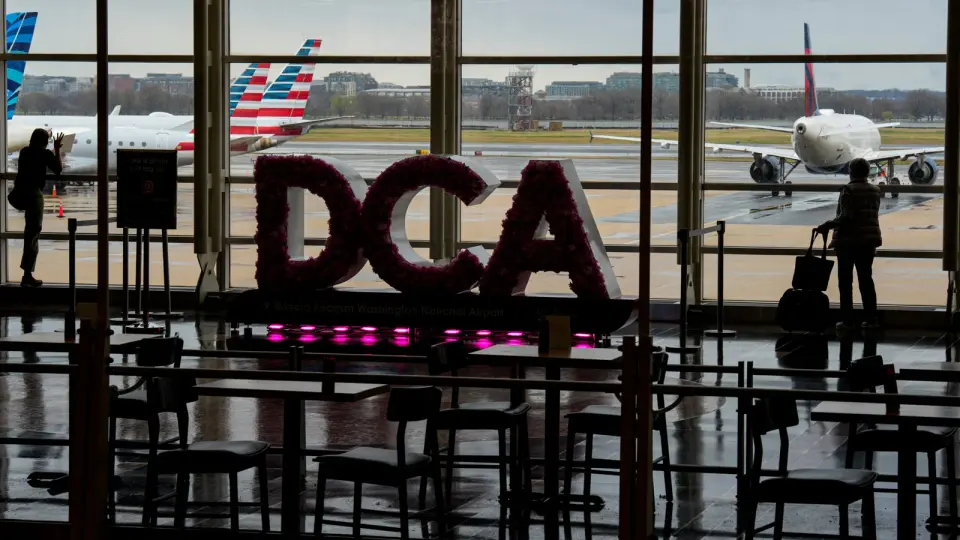
The Federal Aviation Administration is set to launch its Strategic Management of Airspace Routing Trajectories (SMART) system, an AI-driven tool designed to predict traffic flows and suggest alternative routes. The initial rollout, expected around September 21, 2026, will focus on the three major airports in the Washington, DC, area. This limited deployment is part of a 90-day testing phase before a potential nationwide expansion. The system aims to reduce fuel burn, improve on-time performance, and mitigate congestion without altering existing controller procedures. It is part of an $875 million, 12-year contract with Air Space Intelligence to modernize the aging air traffic control infrastructure.
Key points
- SMART will debut in the Washington, DC, airspace, covering three major airports, as a precursor to a nationwide rollout across 29 million square miles of US airspace.
- The system uses AI to predict traffic flows and identify conflicts based on schedules, weather, and capacity, providing alternative route information through existing FAA systems.
- The initiative is part of an $875 million, 12-year contract awarded to Boston-based Air Space Intelligence in June 2026.
- The FAA plans a 90-day testing period to assess performance and build airline confidence before expanding the tool's scope.
- The rollout occurs amid a severe shortage of air traffic controllers, with the workforce declining 6% over the past decade and facing further stress from recent government shutdowns and layoffs.
Background
The FAA has faced significant challenges in recent years, including a deadly midair collision near Washington National Airport in January 2025 and a fatal runway crash at LaGuardia Airport in March 2025. These incidents, along with a decades-long controller shortage exacerbated by hiring freezes and recent workforce reductions, have prompted the agency to seek technological solutions. The SMART system is part of a broader modernization effort to replace aging radar and communication systems dating back to the 1980s. Previous coverage noted that the FAA had already signaled a cautious approach to this AI integration, emphasizing a 'slow roll' to ensure safety and operational stability.
How outlets are covering it
Ars Technica highlights the technical and strategic aspects of the SMART system, noting that Philip Mann, a former FAA official, supports the limited initial scope as a way to reduce unknowns in a national-scale AI deployment. The outlet questions whether the system will remain limited to high-altitude cruise traffic and emphasizes the need for clear accountability when AI predictions fail. Business Insider, drawing from Politico, focuses on the airline industry's initial panic and subsequent relief. It details how weeks of confusion over the tool's integration led to a September 10 meeting between FAA Administrator Bryan Bedford and major airline CEOs, which clarified that SMART would not create new procedures but would only provide alternative route suggestions. While Ars emphasizes the technical risks and the controller shortage context, Business Insider underscores the collaborative resolution between the FAA and the airline industry, noting that CEOs from United, American, Delta, and Southwest expressed support for the initiative after gaining clarity on its limited scope.
Why it matters
The deployment of SMART represents a significant shift in how the FAA manages air traffic, potentially addressing long-standing issues of congestion and inefficiency. However, its success depends on the ability to integrate AI predictions into existing workflows without compromising safety or increasing operational complexity. The tool's performance during the 90-day test will determine whether it can alleviate the pressure on a shrinking controller workforce and improve on-time performance for flights. If successful, it could serve as a model for nationwide adoption, but if it fails to meet expectations or introduces new risks, it could exacerbate existing concerns about the reliability of air traffic management systems.
What to watch
The FAA will monitor the SMART system's performance during the 90-day testing phase, focusing on its ability to accurately predict weather patterns and traffic flows. The agency will work with airlines to compare flight paths and assess the accuracy of the AI's recommendations. If the system proves effective and gains industry confidence, the FAA plans to expand its use beyond the Washington, DC, area. Key questions remain about the specific AI models used and how the system will handle degraded data or real-world workload conditions. The FAA has not yet provided detailed answers on whether airlines can opt out of the system or how it will be integrated into daily operations, but further clarifications are expected as the testing phase progresses.
- FAA tees up $875M AI tool to help manage air traffic congestion Ars Technica
- Airlines Panic After FAA Pushes New AI Tool From $875 Million Contract Business Insider
- F.A.A. to Roll Out New A.I. Tool for Washington Airports The New York Times
- U.S. to Launch AI-Powered Tool for Air-Traffic Control WSJ
- The FAA’s plan to fix air traffic? $875M worth of AI TechCrunch
Want the full story? Read the original reporting
Read on Ars Technica