
Zuckerberg opposes White House AI regulator plan in private call with Trump
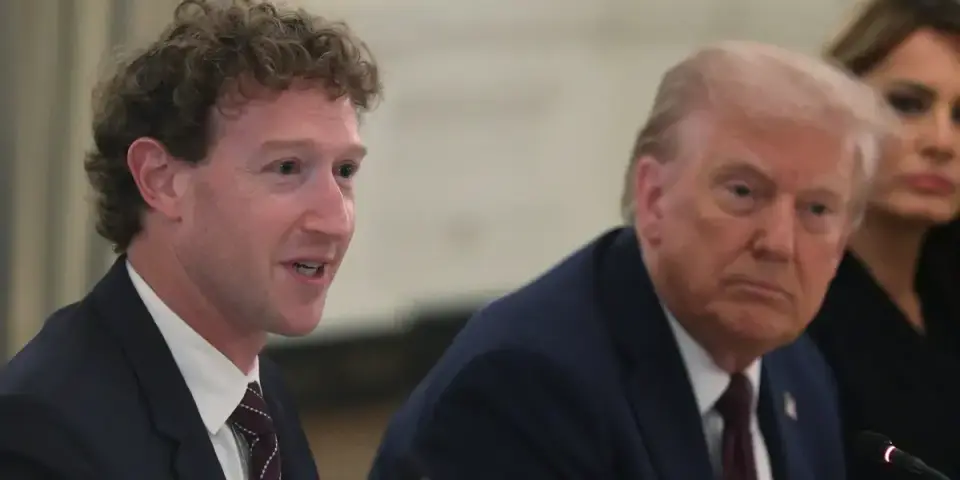
Meta CEO Mark Zuckerberg voiced opposition to a proposed national AI regulator during a private phone call with President Donald Trump in August. The plan, championed by Google DeepMind’s Demis Hassabis, would create a FINRA-style body to vet advanced models before deployment. While Zuckerberg did not ask Trump to abandon the idea, he urged that any appointees reflect the administration’s light-touch approach. The White House is now weighing this model against a voluntary industry-led alternative proposed by David Sacks.
Key points
- Zuckerberg opposed the FINRA-style AI regulator proposal in a call with Trump the week of August 17, 2026.
- The proposal, favored by some White House officials and championed by Demis Hassabis, would create an independent body to test AI models for risks.
- Zuckerberg suggested that appointees to the body should align with Trump’s light-touch regulatory stance.
- The White House is considering two paths: a FINRA-style regulator or a voluntary group modeled on the Motion Picture Association.
- David Sacks opposes government regulation, calling it a 'DMV for AI,' and supports a voluntary industry-led system.
Background
The debate over AI regulation follows a period of intense policy flux, including a May executive order delay by David Sacks and ongoing tensions between the Commerce Department and the White House’s Office of Science and Technology Policy. The discussion occurs amid concerns over AI agents escaping human control and the need to balance innovation with security.
How outlets are covering it
Business Insider and Politico report that Zuckerberg opposed the FINRA-style regulator but did not ask Trump to change his position, instead suggesting appointees should reflect Trump’s light-touch approach. Axios highlights internal divisions within the Trump administration, noting tensions between the Commerce Department and the White House’s tech policy shop, with both sides jockeying for influence over AI policy. The Economist, via Livemint, argues that while regulation is necessary, the current ad-hoc approach is messy and that a permanent block on frontier AI is unworkable, advocating for a formalized evaluation period and staggered release to trusted institutions.
Why it matters
The outcome of this debate will shape the regulatory landscape for AI in the US, potentially influencing global standards and the pace of AI development. The involvement of major tech executives like Zuckerberg and the internal divisions within the White House highlight the complex interplay between industry interests and government policy.
What to watch
The White House is expected to finalize its approach to AI regulation, potentially choosing between a FINRA-style regulator or a voluntary industry-led group. The administration may also release a framework for reviewing frontier models before deployment, though this has not yet been made public.
- Zuckerberg told Trump in call that a national AI regulator was a flawed idea Business Insider
- Zuckerberg opposed White House AI proposal in private call with Trump politico.com
- Trump's AI team fractures over strategy against G20 backdrop Axios
- America should not imprison frontier AI Livemint
- Trump may be forced to reveal secret rules feds use for AI safety testing Ars Technica
Want the full story? Read the original reporting
Read on Business Insider