
Vanderbilt Researchers Flag Suspicious Pre-Poll Bets on Kalshi and Polymarket
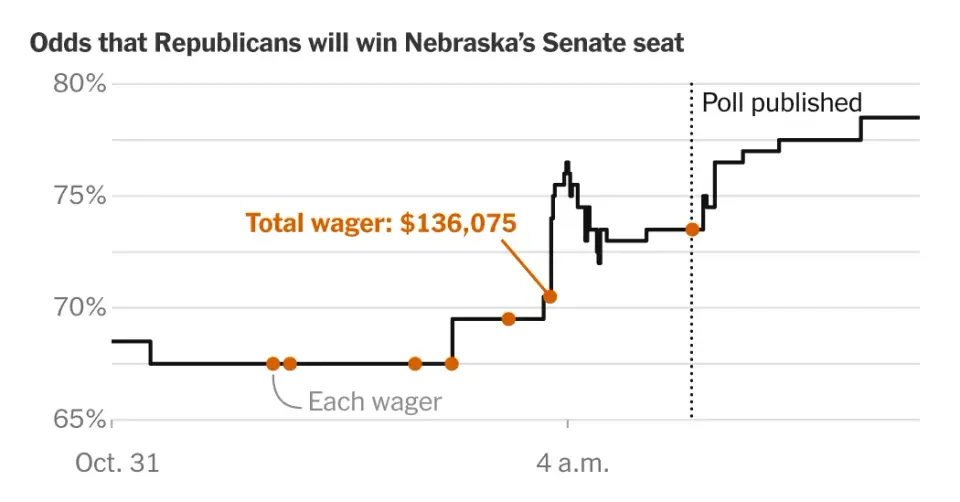
Vander University researchers identified suspicious trading activity on prediction platforms Kalshi and Polymarket shortly before the release of two New York Times/Siena polls. An anonymous user placed $191,277 in bets on Senator Pete Ricketts’ re-election in Nebraska hours before a poll showed him with a significant lead. Similar large bets were placed on Michigan races before another poll release. It remains unclear if the trader had insider information or simply made accurate predictions.
Key points
- Vanderbilt University researchers identified suspicious activity on Polymarket and Kalshi prior to the release of two Times/Siena polls.
- A user placed $191,277 in bets on Senator Pete Ricketts’ re-election in Nebraska in the early hours of Oct. 31.
- A Times/Siena poll released at 5:05 a.m. Eastern time on Oct. 31 showed Ricketts leading by six points, his largest lead in the race.
- The same user placed large bets on a Democratic victory in Michigan, followed by a poll release on Oct. 32 at 7:53 p.m.
- It is unclear whether the trader possessed inside information or simply made well-timed trades based on public data.
Background
This incident follows broader concerns about prediction market integrity. In late October, Hollywood studios banned employees from using confidential information to bet on platforms like Kalshi and Polymarket due to enforcement challenges. Additionally, earlier in November, prediction markets forecasted a Democratic sweep in the 2026 midterms, contrasting with some polling data. The current investigation highlights potential vulnerabilities in how prediction markets may reflect or influence polling outcomes.
How outlets are covering it
The New York Times reports that Vanderbilt researchers identified the suspicious activity but notes it is unclear if the trader had inside information. The secondary source, NewsCord, focuses on a separate but related issue: Wedgewood Polls admitting to fabricating election surveys, which led to the New York Times removing 15 polls from its tracking project. While the NYT article focuses on market manipulation or luck, NewsCord highlights the broader crisis of data integrity in polling, noting that fabricated numbers gained instant credibility across media platforms. The two stories together suggest a growing concern over the reliability of both polling data and prediction markets in the 2026 election cycle.
Why it matters
This raises questions about the integrity of prediction markets and their potential to influence or reflect pre-release polling data. If traders can consistently profit from pre-poll releases, it may indicate insider information or a systemic flaw in how markets and polls interact. This could undermine public trust in both polling and market-based predictions, especially as these tools become more prominent in election coverage.
What to watch
Regulators and platform operators may investigate the suspicious trades to determine if insider information was used. The New York Times and other media outlets may continue to scrutinize the relationship between prediction markets and polling releases. Additionally, the admission of fabrication by Wedgewood Polls may lead to stricter vetting standards for polling data across media platforms.
- Researchers Identify Suspicious Activity on Kalshi and Polymarket Before Times/Siena Poll Release The New York Times
- Wedgewood Polls Admits Fabricating Election Surveys, New York Times Removes 15 Polls: 9 outlets compared NewsCord
- Suspicious prediction market activity seen before election poll release: NYT TradingView
- Polymarket investigates bets placed before New York Times/Siena poll releases Traders Union
Want the full story? Read the original reporting
Read on The New York Times