
Google Signs Blue Origin Deal for 2029 Space Data Center Launch Amid Launch Capacity Crunch
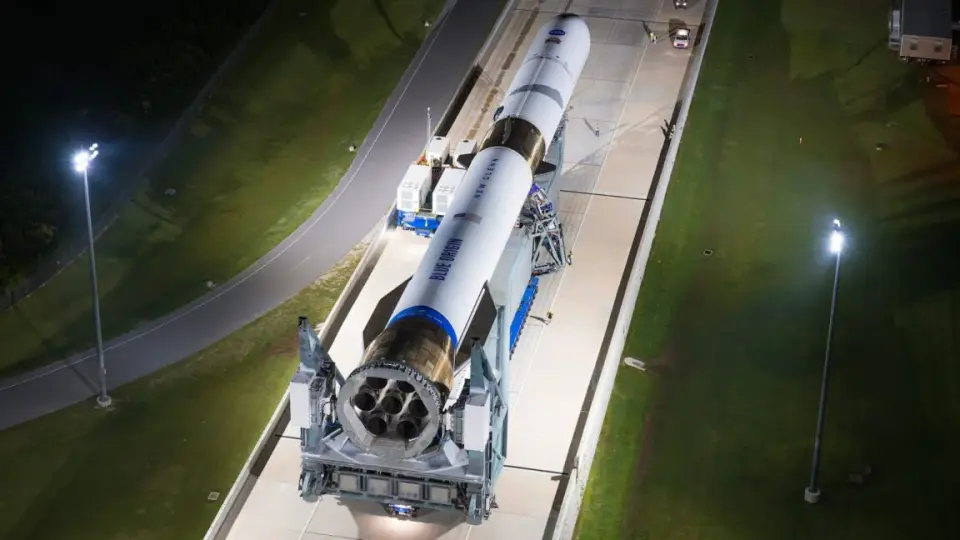
Google has secured a launch contract with Blue Origin to deploy its Project Suncatcher satellites in the first quarter of 2029. The mission will use the New Glenn rocket to place solar-powered computing satellites into sun-synchronous orbit, marking a key step in Google’s strategy to move AI infrastructure into space. While the 2029 launch serves as a technology demonstration, analysts note that Google faces significant long-term challenges in securing affordable heavy-lift capacity without owning its own launch vehicle, particularly as SpaceX prioritizes its own orbital computing projects.
Key points
- Google and Blue Origin announced a deal for a dedicated New Glenn launch in Q1 2029 to deploy Project Suncatcher satellites.
- The satellites will carry Google Tensor Processing Units (TPUs) with computing capacity equivalent to a standard data center rack.
- The mission aims to test solar-powered AI computing in sun-synchronous orbit, where satellites receive nearly continuous sunlight.
- Google previously launched a prototype Suncatcher satellite with Planet Labs on a SpaceX rideshare mission in October 2026.
- The 2029 launch is described as a technology demonstration to verify chip performance, radiation resistance, and cooling systems in space.
- Google’s long-term goal is a large constellation of orbital data centers, but it lacks its own heavy-lift rocket to achieve this economically.
Background
Google announced Project Suncatcher approximately a year ago as a research 'moonshot' to scale AI infrastructure in space. The initiative follows similar announcements from Amazon and SpaceX regarding orbital computing. In October 2026, Google successfully launched a prototype satellite with Planet Labs on a SpaceX rideshare mission, confirming that the hardware could operate in space. The current launch deal comes amid a broader trend of US commercial heavy-lift rockets filling their capacity through 2030, with Blue Origin recently unveiling new engine and stage upgrades to increase New Glenn’s payload capacity and launch cadence.
How outlets are covering it
Ars Technica emphasizes the strategic vulnerability of Google, noting that without its own launch vehicle, the company may be forced to subsidize competitors like Blue Origin and SpaceX while paying higher launch costs. The outlet highlights that reaching the projected $200 per kg launch cost by the mid-2030s likely requires SpaceX’s Starship V4, which SpaceX may prioritize for its own payloads. Via Satellite and The American Bazaar focus on the technical details of the deal, confirming the Q1 2029 timeline and the use of TPUs, while noting that the mission will test cooling and radiation resistance. heise online adds that Google plans to use additional satellite and launch partners for future missions and that the next satellites will carry dozens of TPUs and communicate via laser. All sources agree that the 2029 launch is a critical milestone but do not address the economic viability of large-scale orbital data centers, which remains a significant open question.
Why it matters
The deal highlights the growing competition for orbital computing infrastructure and the logistical challenges of deploying large-scale AI systems in space. It underscores the dependency of major tech companies on a limited number of heavy-lift launch providers, raising concerns about cost control and supply chain resilience. As Google and other tech giants move data centers into orbit to bypass terrestrial energy and cooling constraints, the availability and pricing of launch services will determine the pace of this transition. The potential for Blue Origin to prioritize its own Project Sunrise constellation over Google’s needs adds a layer of strategic risk to Google’s long-term plans.
What to watch
Google will likely continue to seek additional launch partners to diversify its supply chain for Project Suncatcher. The 2029 launch will provide critical data on the performance of TPUs in space, including radiation effects and cooling efficiency. In the coming years, the industry will watch whether SpaceX’s Starship V4 becomes available for commercial customers at the projected low cost, or if Google is forced to invest in its own launch capabilities or acquire a smaller launch provider. Blue Origin’s progress with its larger 9x4 New Glenn variant and its own Project Sunrise constellation will also influence the competitive landscape for orbital data centers.
- Google turns to Blue Origin for a rocket, but its long-term problem remains Ars Technica
- Google Orders Heavy-Lift Launch for Project Suncatcher from Blue Origin Via Satellite
- Google, Jeff Bezos join forces to take AI data centers into space by 2029 The American Bazaar
- Project Suncatcher: New Glenn to carry Google satellites into space heise online
- Google selects Blue Origin’s New Glenn for Project Suncatcher Yahoo Finance
Want the full story? Read the original reporting
Read on Ars Technica