
Google’s Project Suncatcher Launches First Orbital AI Chip Test
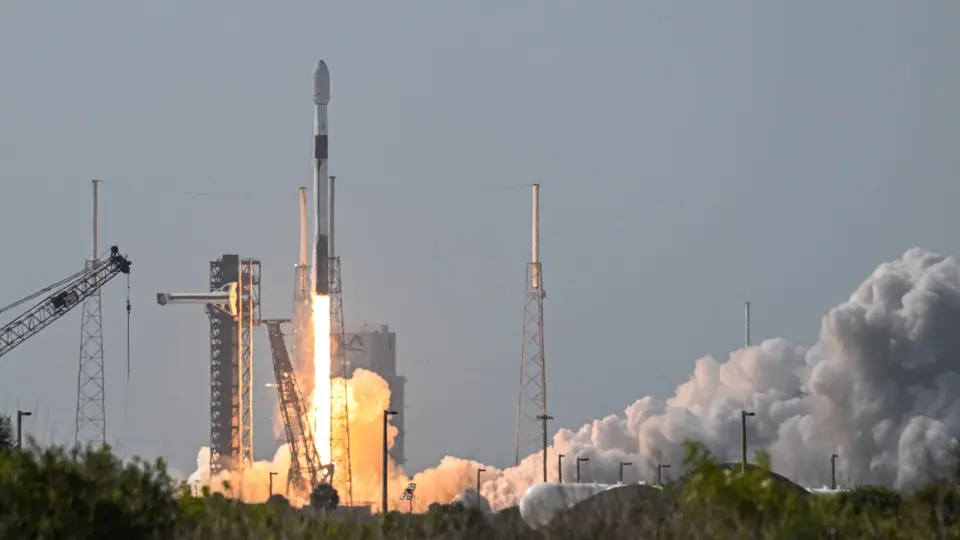
SpaceX successfully launched Google’s first orbital AI test satellite, Project Suncatcher, on October 1, 2026. The mission, part of the Transporter-18 rideshare, carries Tensor Processing Units (TPUs) to low Earth orbit to test hardware durability and cooling in space. This marks the initial step in Alphabet’s effort to develop solar-powered AI data centers in orbit, with two additional satellites planned for 2027. While the prototype will only operate in short intervals due to heat constraints, the launch signals a major push by tech giants to move computing infrastructure into space to bypass terrestrial energy and regulatory hurdles.
Key points
- SpaceX launched Google’s Project Suncatcher satellite on October 1, 2026, from Vandenberg Space Force Base as part of the Transporter-18 mission.
- The satellite carries Google’s Tensor Processing Units (TPUs) to test their performance in the radiation and temperature conditions of low Earth orbit.
- Alphabet’s stake in SpaceX is valued at over $82 billion following SpaceX’s record IPO in June 2026.
- The prototype satellite will power down every 20 minutes to prevent overheating, as it lacks the advanced cooling systems of future operational satellites.
- Google plans to launch two additional satellites in 2027 to test laser communication between orbital nodes.
- Industry experts warn that orbital data centers face significant challenges, including high launch costs, hardware obsolescence, and space debris risks.
Background
This launch follows months of anticipation for Google’s Project Suncatcher, first revealed in November 2025. Earlier reports indicated the satellite, built by Planet Labs, was a refrigerator-sized device carrying four TPUs. The initiative is part of a broader industry trend, with SpaceX and other tech firms also exploring orbital data centers to address the growing demand for AI computing power and the political backlash against terrestrial data centers.
How outlets are covering it
CNBC emphasizes the commercial partnership between Alphabet and SpaceX, highlighting Alphabet’s $82 billion stake in SpaceX and the competitive yet collaborative nature of their AI divisions. CNN focuses on the technical hurdles, noting that the prototype will only supply about 1 kilowatt of power and must shut down every 20 minutes to avoid overheating, far below the 100 kilowatts required for operational AI satellites. Scientific American highlights the environmental concerns, noting that astronomers have criticized orbital data centers for contributing to light pollution and that the mission is a critical step in validating hardware durability in space. All sources agree that while the technology is promising, significant engineering and economic challenges remain before orbital data centers become viable.
Why it matters
The successful launch of Project Suncatcher marks a pivotal moment in the race to develop AI infrastructure in space. If successful, orbital data centers could provide nearly constant solar power and bypass terrestrial energy and regulatory constraints. However, the mission also highlights the significant technical and economic hurdles that must be overcome, including cooling, radiation resistance, and launch costs. The outcome of this test will influence the future of AI infrastructure and the broader space industry.
What to watch
Google plans to launch two additional satellites in 2027 to test laser communication between orbital nodes. SpaceX has also announced plans to deploy its own orbital data centers in 2027, with a constellation of up to 1 million AI-computing satellites. The success of Project Suncatcher will determine the feasibility of orbital data centers and could accelerate the development of this technology.
- SpaceX set to launch Google AI chips into orbit in push toward space-based data centers CNBC
- Google launches Project Suncatcher, a step towards AI data centers in space NPR
- Google thinks SpaceX's Starship has to launch 1,600 times before space data centers get off the ground TechCrunch
- AI data centers in space? Google kicks off the race with a key test CNN
- Google’s Project Suncatcher AI data center test has officially launched to space aboard SpaceX rocket Scientific American
Want the full story? Read the original reporting
Read on CNBC