Tag

Orbital Data Centers

All articles tagged with #orbital data centers

SpaceX Bets on 1 Million AI Satellites, Sparking Astronomy Worries
technology13 days ago

SpaceX Bets on 1 Million AI Satellites, Sparking Astronomy Worries

SpaceX has unveiled a plan to deploy up to one million solar-powered satellites to provide AI computing from orbit, including a gargantuan “mini” satellite that dwarfs Starship; a proposed $20 billion Terafab facility would generate up to 200 billion AI or memory chips per year, while astronomers warn such a constellation could severely hinder deep-space observations, and analysts estimate deployment costs could exceed $1 trillion.

SpaceX’s 1 Million Satellite Data Centers: Ambition Meets Real-World Limits
technology15 days ago

SpaceX’s 1 Million Satellite Data Centers: Ambition Meets Real-World Limits

SpaceX’s plan to orbit up to 1 million data-center satellites is under FCC review. Gwynne Shotwell says the target is aspirational and may not be reached, but the company is starting with a high ceiling. Satellites could orbit Earth, the Moon, or even the Sun to manage congestion, while critics cite light pollution, atmospheric impact, and space-safety concerns. Rival firms are proposing their own large constellations, and SpaceX has signaled a cautious, phased approach with testing before scaling.

SpaceX Unveils Gigantic AI Satellites Meant for Orbit, Longer Than the ISS
technology18 days ago

SpaceX Unveils Gigantic AI Satellites Meant for Orbit, Longer Than the ISS

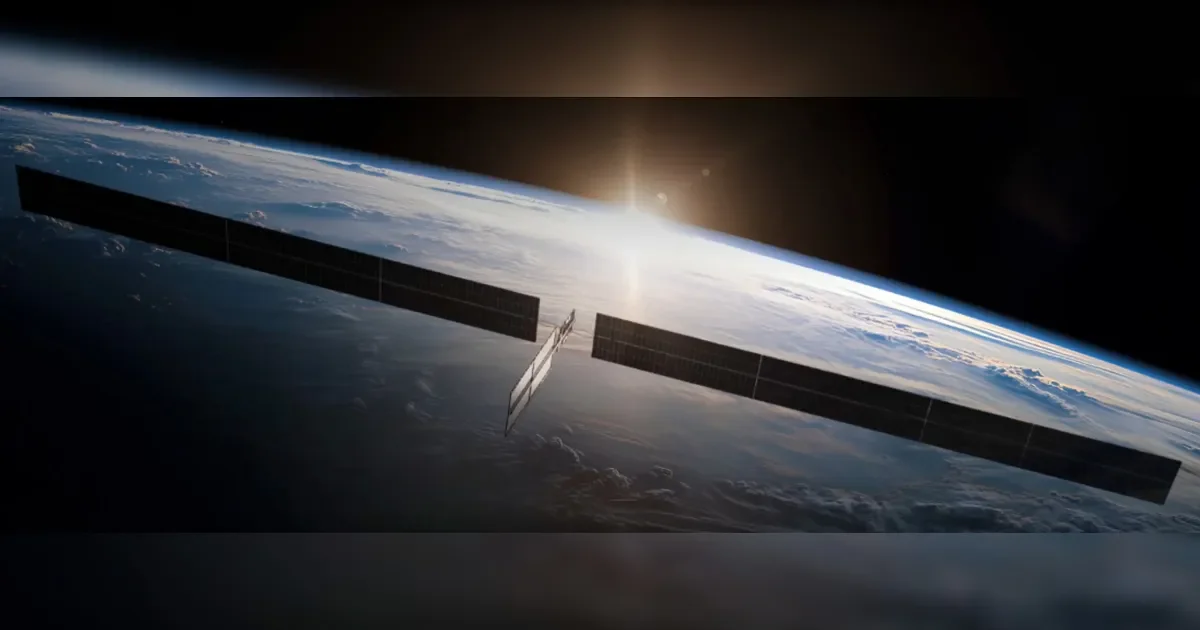
Elon Musk teased a rough rendering of orbiting data centers that would be longer than the ISS, powered by large solar arrays to support 100 kW of AI computing per satellite with future megawatt-scale versions, and a plan to launch up to 1 million satellites; experts warn about collision risk, light pollution, and atmosphere/astronomy interference, while SpaceX argues heat rejection in space and pursues a Terafab chip factory in Austin to supply AI hardware.

Night Sky at Risk: SpaceX Plans a Million Orbital Data Centers
technology19 days ago

Night Sky at Risk: SpaceX Plans a Million Orbital Data Centers

Astronomers warn SpaceX’s FCC filing to deploy up to one million additional satellites for orbital data centers could keep satellites in sunlight at midnight and increase atmospheric pollutants if they deorbit, jeopardizing ground-based astronomy. Regulators are fast-tracking environmental reviews amid opposition from astronomers and Amazon as the company expands its Starlink megaconstellation.

Blue Origin pitches 51,600-satellite orbital data-center network
technology20 days ago

Blue Origin pitches 51,600-satellite orbital data-center network

Blue Origin has filed with the FCC seeking authority to launch up to 51,600 low-Earth-orbit satellites for orbital data centers under Project Sunrise, supplementing its 5,408-satellite TeraWave plan and using laser links to serve terrestrial data centers and government customers; the move intensifies the space data-center race, drawing objections from SpaceX while other players like Starcloud eye the market and Amazon’s Leo/AWS could intersect in the future.

Bezos bets on space-based data centers with Project Sunrise megaconstellation
technology22 days ago

Bezos bets on space-based data centers with Project Sunrise megaconstellation

Blue Origin has filed with the FCC to pursue Project Sunrise, a megaconstellation of up to 51,600 satellites in sun-synchronous orbits (500–1,800 km) to host space-based data centers that would supplement terrestrial AI computing, joining ongoing industry pushes by SpaceX and Nvidia-backed teams in the race for orbital compute.

Nvidia bets on spaceborne AI chips to power orbital data centers
technology25 days ago

Nvidia bets on spaceborne AI chips to power orbital data centers

Nvidia unveiled the Space-1 Vera Rubin Module, a space-ready AI computing system designed to run on satellites and enable onboard data centers, aiming to outperform the H100 and support in-space AI analytics for satellite constellations; it integrates IGX Thor and Jetson Orin tech but faces radiation and cooling challenges and is not yet commercial, with Planet Labs and other partners testing Nvidia hardware for space-derived Earth-imaging analytics.

NVIDIA Takes AI to Orbit with Space Computing Platform
technology25 days ago

NVIDIA Takes AI to Orbit with Space Computing Platform

NVIDIA announced Space Computing, bringing data-center‑class AI to orbital data centers and space-edge environments via the Space‑1 Vera Rubin Module, IGX Thor, and Jetson Orin. Partners such as Aetherflux, Axiom Space, Kepler, Planet, Sophia Space and Starcloud will power next‑gen space missions with on‑board AI, real‑time analytics and autonomous operations. The lineup also includes ground‑processing acceleration with RTX PRO 6000 Blackwell Server Edition, while Space‑1 Rubin promises up to ~25x more AI compute for space inferencing versus the H100; IGX Thor and Jetson Orin are available now, with Space‑1 Rubin Module coming later.

Starcloud pitches 88,000-satellite space data center constellation
spacecommercial26 days ago

Starcloud pitches 88,000-satellite space data center constellation

Starcloud has filed with the FCC to operate up to 88,000 low‑Earth‑orbit satellites to serve as orbital data centers for AI and other computing needs, placing them in dusk‑dawn sun‑synchronous shells at 600–850 km. The plan envisions intersatellite optical links and Ka‑band telemetry/control, with safety measures including coordination with other operators and full demisability on reentry. Starcloud‑1 has already flown a small satellite with an Nvidia H100 processor; Starcloud‑2 is planned for 2027, and there are concepts for Starcloud‑3 and Starcloud‑4, including a massive satellite array with multi‑kilometer dimensions. The Starcloud filing would create a constellation far larger than existing systems like Starlink (about 10,000 satellites) but smaller than SpaceX’s unfunded one‑million‑satellite proposal.

Space-Based AI Data Centers Face Tough Trade-Offs for Earth and Orbit
science-space-and-astronomy1 month ago

Space-Based AI Data Centers Face Tough Trade-Offs for Earth and Orbit

SpaceX and xAI reportedly plan a million-satellite constellation to run AI data centers in orbit. While proponents cite solar efficiency and lower terrestrial costs, experts warn it could trigger debris cascades (Kessler syndrome), overheating and radiation risks for space hardware, brightening the night sky and harming astronomy, and disruption to Earth observation and climate monitoring; even if feasible, AI training would still require Earth-based resources, and governance gaps could complicate implementation.

SpaceX plots solar-powered orbital data-center megaconstellation
business2 months ago

SpaceX plots solar-powered orbital data-center megaconstellation

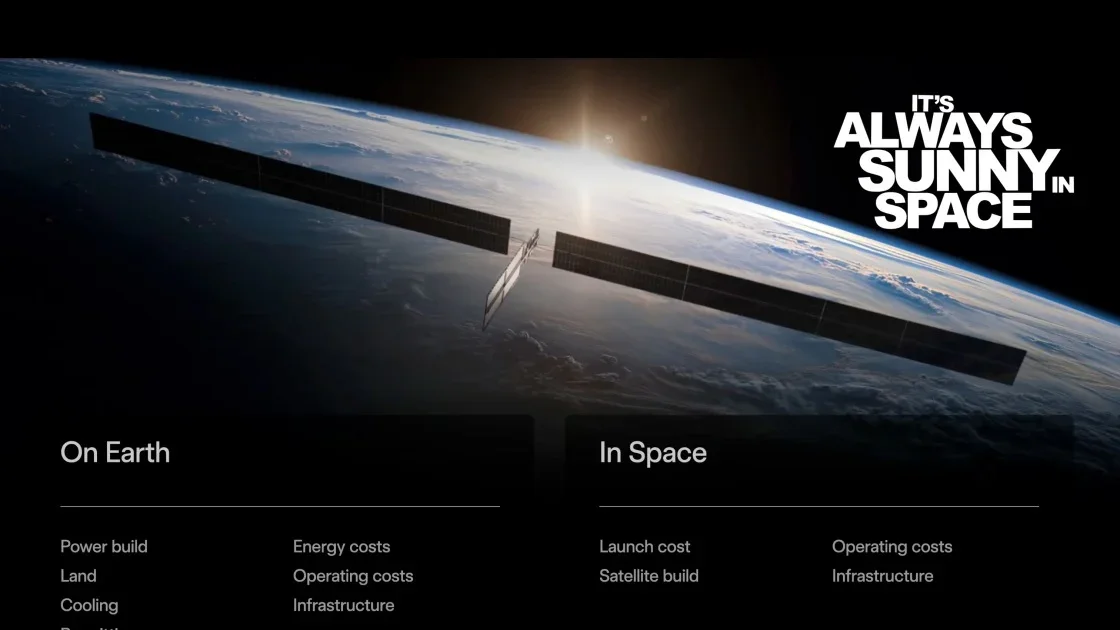
SpaceX has asked the FCC to authorize a constellation of up to one million satellites in low Earth orbit that would act as an orbital data center, using near-constant solar power and intersatellite optical links (with Ka-band as a backup) to deliver AI compute from space. The satellites would operate at 500–2,000 km with 30-degree and sun-synchronous inclinations to maximize sun exposure; SpaceX says the system could reduce terrestrial data-center costs and environmental impact while enabling rapid AI processing, though the filing provides few technical details and seeks waivers from usual deployment milestones with no schedule or price disclosed. The plan aligns with SpaceX’s AI ambitions and broader corporate moves, including IPO considerations and potential ties to xAI.

Blue Origin unveils TeraWave for enterprise-grade global connectivity
technology2 months ago

Blue Origin unveils TeraWave for enterprise-grade global connectivity

Blue Origin announced its own megaconstellation, TeraWave, a 5,408-satellite system in low- and medium-Earth orbits designed to deliver up to 6 Tbps, targeting enterprise, data-center, and government users rather than consumers. The network would use LEO radios for up to 144 Gbps and MEO optical links for higher speeds, with deployment planned to begin in Q4 2027. The project may complement Amazon Leo and hints at orbital data centers, reflecting Blue Origin’s broader push into high-speed, reliable global connectivity, though it adds to internal resource strain as the company pursues multiple ambitious programs led by a new Emerging Systems division.

Debate Grows Over Space-Based Data Centers and AI Energy Risks
technology3 months ago

Debate Grows Over Space-Based Data Centers and AI Energy Risks

Planet and Google are collaborating on Project Suncatcher to develop orbital data centers for AI, launching two demonstration satellites by 2027 to test high-bandwidth intersatellite links and heat dissipation in space, with long-term plans for large satellite clusters to provide continuous solar-powered data processing in orbit, reflecting growing industry interest in space-based computing solutions.