
Nvidia CEO Huang defends AI financing as low-risk, capital-intensive necessity
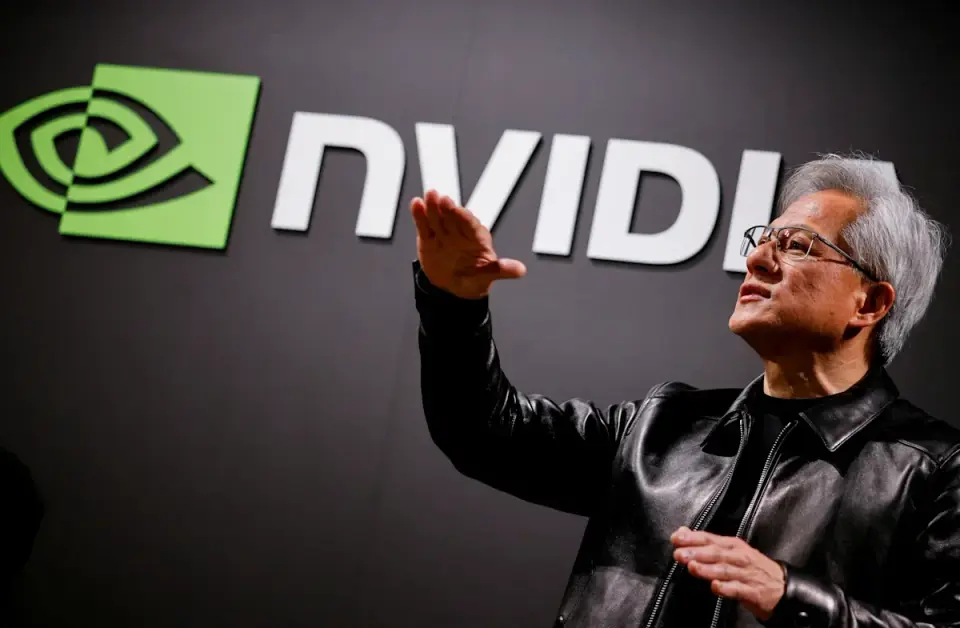
Nvidia CEO Jensen Huang defended the company's expanding financial role in the AI sector, arguing that its investments in frontier labs are a 'once-in-a-generation' opportunity with low risk. He stated that AI development is uniquely capital-intensive, requiring tens of billions of dollars, and that Nvidia's infrastructure can be redeployed if a partner company struggles. This defense comes amid criticism that Nvidia's financing arrangements constitute 'circular financing' that artificially inflates demand. The comments followed strong quarterly results, with Nvidia reporting $96.2 billion in revenue and projecting 70% growth for the next fiscal year.
Key points
- Huang argued that AI startups require unprecedented capital, unlike previous tech generations, justifying Nvidia's direct financial support.
- Nvidia reported $96.2 billion in quarterly revenue, with data center revenue rising 117% to $89 billion, reinforcing confidence in demand.
- The company has committed $105 billion to an Ohio data center campus for OpenAI and is arranging up to $500 billion in financing with Wall Street firms.
- Huang dismissed 'circular financing' concerns, noting that Nvidia's hardware can be redeployed to other customers if a specific investment underperforms.
- Nvidia shares rose approximately 4% in extended trading following the earnings release, despite a 12% gain for the year reflecting broader AI trade concerns.
Background
This follows earlier coverage in August 2026 where Huang similarly defended these investments as low-risk, high-reward opportunities, emphasizing the massive capital requirements of AI and the strategic value of partnering with frontier labs. The current briefing updates that narrative with specific financial results and renewed pushback against critics who compare these deals to dot-com bubble-era financing structures.
How outlets are covering it
CNBC highlights Huang's defense of the 'circular financing' criticism, framing it as a necessary response to the capital-intensive nature of AI. The outlet emphasizes the risk mitigation strategy of redeploying compute infrastructure. Yahoo Finance, while primarily displaying market data, contextualizes the story within a broader market trend, noting that Nvidia's stock has only gained 12% this year despite strong results, suggesting lingering investor caution about the AI trade. The sources agree on the financial figures but differ in emphasis: CNBC focuses on the strategic rationale, while the market data context suggests a more cautious investor sentiment.
Why it matters
Nvidia's strategy sets a precedent for how major tech firms finance emerging industries. If these investments succeed, they could solidify Nvidia's dominance in AI infrastructure. If they fail, it could expose the AI sector to systemic risks similar to the dot-com bubble. The success of these deals will determine whether AI's capital intensity is a sustainable business model or a speculative bubble.
What to watch
Investors will watch for the execution of the $500 billion financing plan and the performance of the Ohio data center campus. Nvidia's ability to redeploy infrastructure if a partner fails will be a key metric for assessing the risk of its ecosystem investments. Future earnings reports will show whether the projected 70% growth materializes, validating Huang's confidence in the AI boom.
- Nvidia says it's building an ecosystem that can't fail Yahoo Finance
- Exclusive | Nvidia Pauses Revenue-Sharing Deals With AI Cloud Companies WSJ
- Wall St. Scrutinizes Nvidia’s Deal Machine The New York Times
- Jensen Huang defends Nvidia's growing financial support for AI ecosystem, says 'the risk is low' CNBC
- Nvidia is looking more like the central bank of AI: Chart of the Day Yahoo Finance
Want the full story? Read the original reporting
Read on Yahoo Finance