
PR Firms Launch Aggressive Campaigns to Rebrand Data Centers as Community Assets
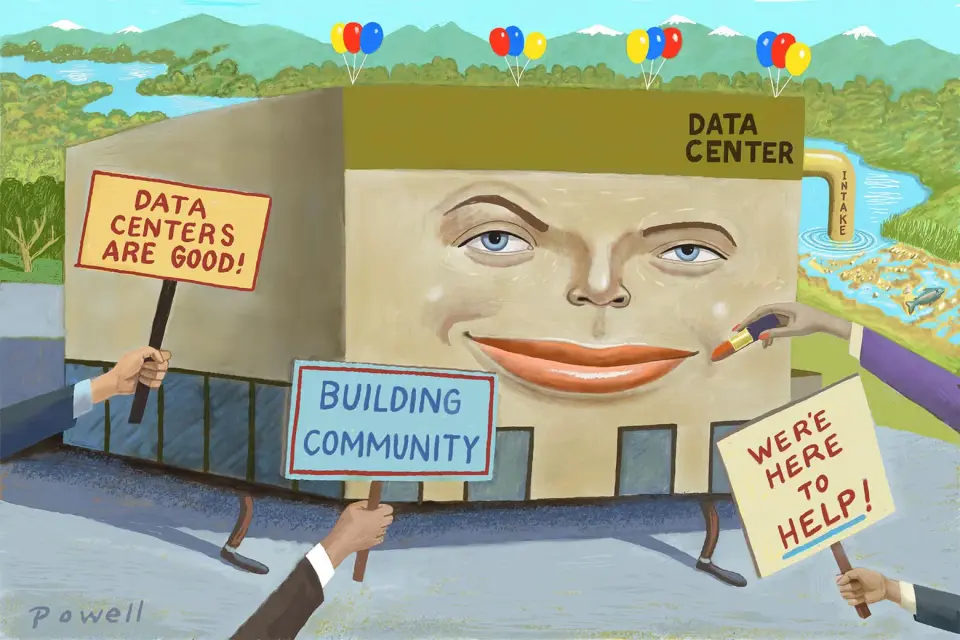
A new industry of public relations consultants is emerging to counter widespread American opposition to AI data centers. These firms use targeted community engagement, strategic lobbying, and reframing narratives to overcome local resistance, which has blocked or delayed $130 billion in projects in early 2026. While some experts argue the backlash will eventually subside as technology evolves, others warn that the current hostility is a permanent barrier to expansion.
Key points
- In the first quarter of 2026, opponents stopped or delayed 75 data center projects worth nearly $130 billion, matching the total for all of 2025.
- A Gallup survey found that 71% of Americans oppose new AI data centers in their local areas, creating a bipartisan national consensus against expansion.
- PR firms like JSA and KAOH Media are using 100-page analyses to identify vulnerable communities and recruiting local allies to neutralize opposition.
- Some consultants are reframing data centers as essential for economic growth, while others are sponsoring 'environmental justice' workshops to encourage stricter but manageable regulations.
- Meta has announced a $1 billion plan to meet with local leaders, while the Data Center Coalition runs ads promising that facilities will pay for their own energy usage.
Background
This surge in opposition follows a period of rapid, often secretive expansion. As noted in previous coverage, the issue has become a major political lever ahead of the November 2026 midterms, with at least 636 candidates running negative ads against data centers. Earlier in 2026, legislative efforts like the Ratepayer Protection Act faced hurdles, and community resistance was highlighted by Berkshire Hathaway CEO Greg Abel as a growing trend across the roughly 4,700 existing U.S. data centers.
How outlets are covering it
Slate Magazine highlights the aggressive and sometimes manipulative tactics of PR firms, noting that some campaigns are 'disingenuous' by framing data centers as environmental justice solutions despite their pollution. In contrast, The Washington Post offers a more optimistic technological perspective, arguing that the current boom will likely shrink as the industry evolves, suggesting that the current crisis is temporary. Yahoo Finance reflects the financial sector's view, citing Goldman Sachs, which believes that AI data center growth will not be significantly slowed by angry neighbors, implying that market forces will ultimately override local resistance.
Why it matters
The success or failure of these PR campaigns will determine the future of AI infrastructure in the U.S. If the backlash continues, it could lead to stricter national regulations or a halt in the expansion of AI capabilities. Conversely, if PR firms succeed in shifting public opinion, it could set a precedent for how large-scale technological infrastructure is integrated into communities, potentially influencing future energy and environmental policies.
What to watch
The November 2026 midterm elections will be a critical test for the data center industry, as candidates are actively using the issue to mobilize voters. Additionally, the effectiveness of the new PR strategies will be measured by whether they can prevent further moratoriums in states like Michigan and Iowa, where local opposition has already stalled projects.
- It’s the Most Evil Innovation in America. Everyone Hates It. These People Are Certain They Can Change Your Mind. Slate
- AI data center growth won't be slowed down by angry neighbors: Goldman Sachs Yahoo Finance
- Outmaneuvered, outmatched and outspent: How data centers are overwhelming small-town America OregonLive.com
- Opinion | The data center boom will shrink. That’s good news. The Washington Post
- Goldman sees US data center growth intact despite opposition Reuters
Want the full story? Read the original reporting
Read on Slate