
US Chip Curbs Hit Southeast Asia as Bessent Defends China Sales
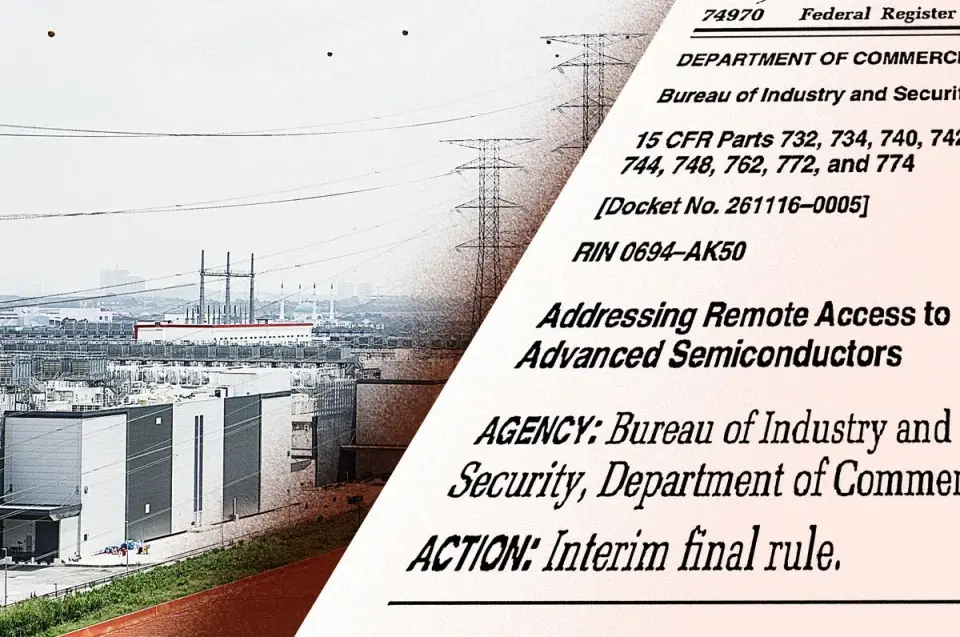
The US Commerce Department has tightened export rules for advanced AI chips to Southeast Asia and Brazil, requiring licenses to prevent Chinese firms from accessing hardware remotely. This move follows a scandal involving Nvidia’s former CEO and a Singapore-based firm. While Treasury Secretary Scott Bessent asserts that current restrictions on older chips are sufficient, the new rules disrupt regional data center investments and highlight tensions within the Trump administration over enforcement.
Key points
- US Commerce Department requires licenses for advanced chip exports to data centers in Indonesia, Singapore, Malaysia, Thailand, and Brazil to block remote access by Chinese firms.
- Treasury Secretary Scott Bessent stated that no further restrictions are needed for older Nvidia H200 chips sold to China, claiming current policies are sufficient.
- House Foreign Affairs Committee reports the Commerce Department approved over 850,000 chips for Chinese-linked companies, including Alibaba, Tencent, and Baidu, which the Pentagon links to the Chinese military.
- Nvidia halted H200 shipments to China despite prior approvals, while AMD maintains compliance with export laws.
- Trump defended Commerce Secretary Howard Lutnick against criticism for slow-walking export controls, despite Bessent’s public frustration with the department’s delays.
Background
These developments follow the US Commerce Department’s interim rules announced on November 17, 2026, which targeted loopholes allowing Chinese firms to access computing power remotely. The restrictions emerged after a scandal involving Nvidia’s former CEO Jensen Huang and a Singapore-based firm, Megaspeed, which was accused of acting as a cutout for Beijing. The new measures coincide with President Trump’s diplomatic meetings in Asia, including a trilateral summit with Chinese President Xi Jinping and Russian President Vladimir Putin in Shenzhen.
How outlets are covering it
Bloomberg emphasizes the immediate operational impact on Southeast Asian data center operators, citing an executive’s urgent response to the new licensing requirements. CNBC highlights internal administration tensions, noting that while Trump discussed Huang with Xi, Bessent denied the topic arose in his own talks, suggesting a potential lack of unified focus on cracking down on Chinese chip acquisition. AP focuses on the legislative scrutiny of past approvals, detailing specific chip volumes sold to Chinese military-linked firms and contrasting Bessent’s stance with the Commerce Department’s historical licensing record.
Why it matters
The new export controls threaten the regional data center boom in Southeast Asia and signal a shift in US enforcement strategy against indirect Chinese access to AI hardware. The internal disagreements within the Trump administration over the pace and scope of restrictions could impact the US’s ability to maintain its AI advantage against China, while the legislative scrutiny of past sales raises questions about the effectiveness of current export control frameworks.
What to watch
Regulators will monitor compliance with the new licensing requirements for Southeast Asian data centers. The House Foreign Affairs Committee may further investigate the Commerce Department’s approval of chip sales to Chinese-linked firms. Nvidia and AMD will likely continue to adjust their sales strategies in response to evolving export controls and political pressures.
- Trump’s AI Chip Crackdown Inflicts Collateral Damage Across Asia Bloomberg.com
- Trump says he discussed Jensen Huang with Xi; Bessent tells CNBC Nvidia chip export policy is unchanged CNBC
- Chip supply chain warns of broader disruption from new US export controls Nikkei Asia
- Officials approved the sale of 580,000 Nvidia chips to Chinese companies The Washington Post
- Treasury secretary says no further restrictions are needed for Nvidia chip exports to China AP News
Want the full story? Read the original reporting
Read on Bloomberg.com