
Southwest’s Financial Resilience Masks a Service Transformation
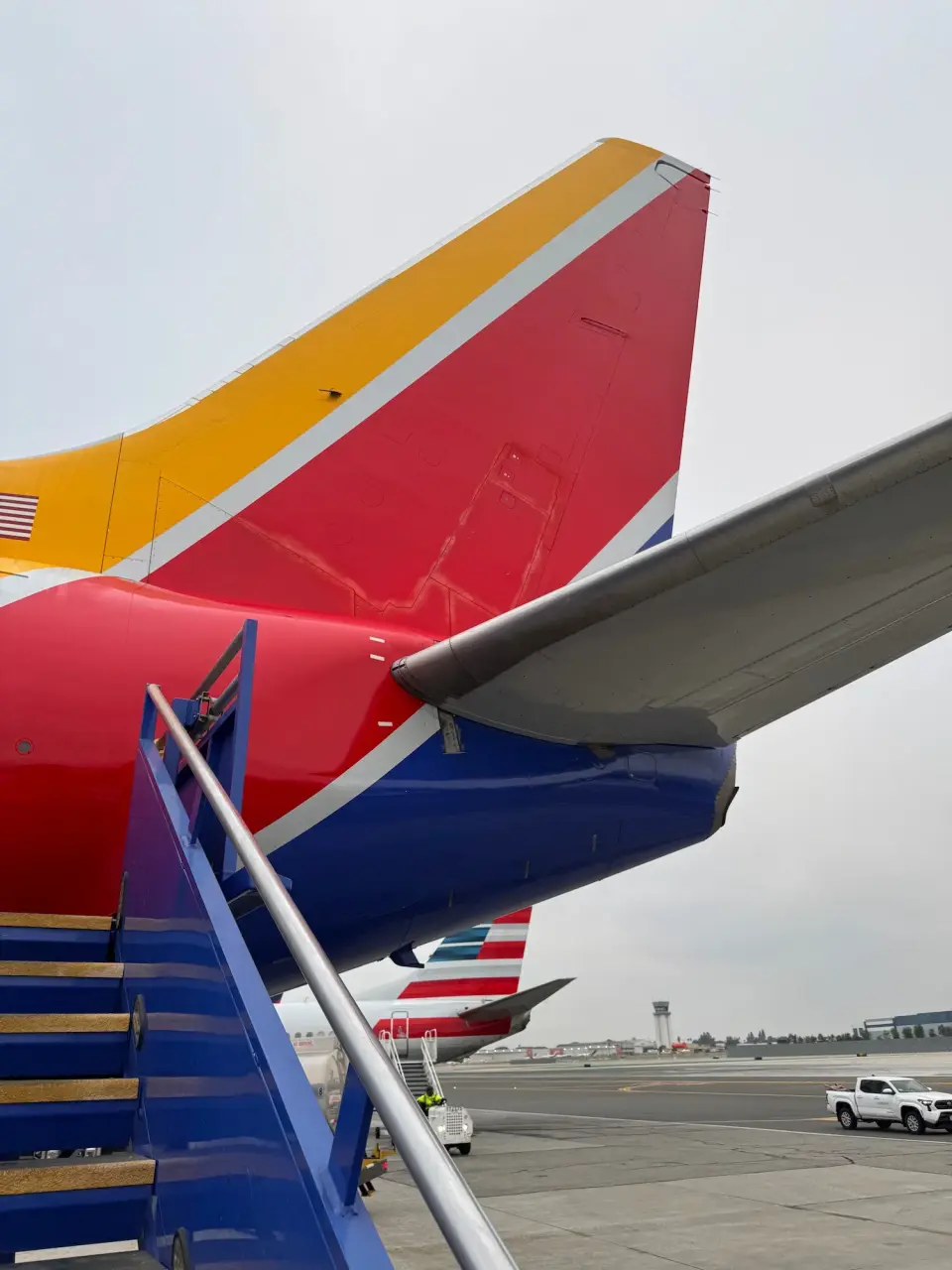
Southwest Airlines has fundamentally altered its business model under Elliott Management, ending free checked bags and open seating while raising fees. Despite a 3.3% drop in net passengers and complaints about surly service, the carrier remains profitable with record Q2 revenue. The airline is transitioning to an all-Boeing 737 MAX fleet by 2031 and expanding international reach via interline partnerships, though customer loyalty persists due to limited competition and perks like the Companion Pass.
Key points
- Southwest ended free checked bags in May 2025 and open seating in January 2026, replacing them with assigned seats and a numbered boarding system.
- Checked bag fees rose to $45 for the first bag and $55 for the second in April 2026, up from $35 and $45 previously.
- Q2 2026 operating revenue hit a record $8.4 billion, up 20.3% year-on-year, despite a 3.3% decline in net passengers.
- The airline appointed Royal Caribbean’s Jason Liberty and Rocket Companies’ Varun Krishna to its board in August 2026.
- A Singapore Airlines interline partnership began in June 2026, allowing through-checked bags at Los Angeles, San Francisco, and Seattle-Tacoma.
Background
Prior coverage noted the FAA’s clearance of the Boeing 737 MAX 7, which Southwest is set to receive as the launch customer, and a recent in-flight medical emergency on a Dallas-to-Los Angeles route. These events highlight ongoing operational and safety scrutiny alongside the broader corporate restructuring.
How outlets are covering it
Live and Let’s Fly criticizes the airline’s shift toward a 'cult' of loyalty despite deteriorating service, citing surly staff and slow Wi-Fi, while acknowledging financial resilience. Wego Travel Blog provides a neutral factual overview of the new fare structures, baggage fees, and network changes, emphasizing the removal of open seating and the introduction of paid tiers. Commenters on Live and Let’s Fly are divided, with some noting that limited route competition and perks like the Companion Pass retain customers, while others argue the airline is now indistinguishable from legacy carriers and losing market share at hubs like Denver.
Why it matters
The transformation signals a broader industry trend where low-cost carriers adopt legacy carrier fee structures and seating hierarchies. Southwest’s ability to maintain profitability despite service reductions and passenger loss suggests that brand loyalty and route exclusivity can offset customer dissatisfaction, potentially influencing competitors’ strategies in the US domestic market.
What to watch
Southwest plans to become an all-737 MAX operator by 2031 and is moving to an AI-enabled cloud architecture by 2028. The airline will continue to expand international reach through interline partnerships rather than widebody aircraft, and may introduce first-class and lounge services as hinted by recent board appointments and industry trends.
- The Cult Of LUV (Southwest Airlines) Live and Let's Fly
- Southwest Airlines Has Moved Forward With a Major Change Men's Journal
- Southwest Airlines News: Latest Updates, Routes and Fares Wego Travel Blog
- Southwest Airlines Continues Rolling Out Premium Offerings for Travelers AOL.com
- Southwest Airlines Faces Problem After Major Changes Men's Journal
Want the full story? Read the original reporting
Read on Live and Let's Fly