
Critics argue Nolan's Odyssey misrepresents the ethics of power
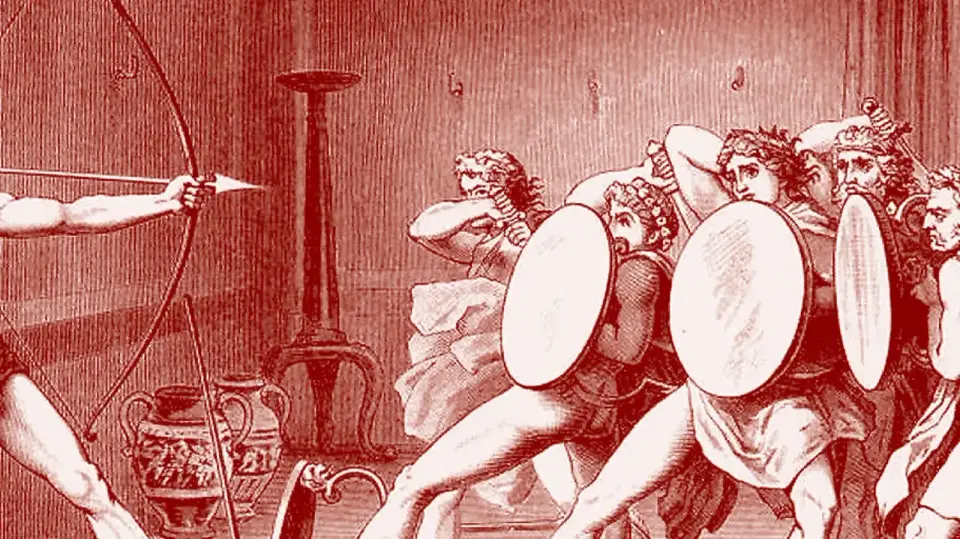
Philosopher Kathryn Lawson argues that Christopher Nolan's film adaptation of Homer's Odyssey fails ethically by giving Odysseus a modern conscience. While the film centers on hospitality and the Golden Rule, Lawson contends that this modernizes the ancient narrative, erasing the original poem's depiction of violence without guilt. She suggests this change creates a dangerous fantasy that the powerful will self-correct through understanding, ignoring the historical reality that power rarely recognizes its own cruelty without external constraint.
Key points
- Kathryn Lawson, a philosophy instructor at the University of Winnipeg, critiques Christopher Nolan's film The Odyssey for its ethical simplification of the source material.
- Lawson argues that Nolan's version imposes a contemporary moral code, specifically the 'Law of Zeus' and the Golden Rule, onto Odysseus, who in Homer's original poem feels no guilt for his violent actions.
- The critique draws on the works of Hannah Arendt, Emmanuel Levinas, and Simone Weil, who used Homer to analyze atrocity and responsibility in the 20th century.
- Lawson asserts that by making Odysseus a guilt-ridden hero, Nolan removes the story's warning that power does not inherently recognize its own cruelty and requires external forces to stop it.
- The film, which grossed over $1.35 billion globally, has faced mixed reviews from classicists and philosophers, with Emily Wilson calling it 'shamefully written' and Slavoj Zizek describing it as a 'modest chamber drama' rather than a monster blockbuster.
Background
Christopher Nolan's The Odyssey, released in July 2026, became the highest-grossing R-rated film in history, earning $1.352 billion worldwide. The film features a cast including Matt Damon, Tom Holland, and Anne Hathaway, and was noted for using American accents to subvert traditional Hollywood depictions of imperial power. The film is set for digital and 4K release in November 2026, with potential awards-season theater showings.
How outlets are covering it
The primary source, IAI TV, features Kathryn Lawson's philosophical critique, emphasizing the ethical implications of modernizing Odysseus's character. The Herald-Zeitung offers an opinion piece titled 'Homer, Nolan and the Seven Deadly Sins,' suggesting a broader cultural or moral critique of the film's adaptation. The Daily Tar Heel and TechnicianOnline provide minimal substantive content in the provided excerpts, with the former focusing on sports and the latter on a comparison between The Aeneid and The Odyssey, indicating a lack of detailed critical analysis from these student publications. The consensus among the available sources is that the film has sparked significant debate regarding its fidelity to the original text and its ethical messaging, with Lawson's critique being the most detailed and philosophically grounded.
Why it matters
The debate over Nolan's Odyssey highlights the tension between modern ethical frameworks and ancient narratives of power and violence. Lawson's argument suggests that adapting classical texts with contemporary moral sensibilities can obscure the original warnings about the nature of authority and the necessity of external checks on power. This discussion is relevant in an era of rising social polarization and xenophobia, as it questions whether media adaptations can effectively convey the complexities of historical and ethical responsibility.
What to watch
The film is scheduled for digital rental and 4K Ultra HD Blu-ray release on November 17, 2026. It may see additional theatrical showings during the awards season. Emily Wilson is set to debate the film's merits at the HowTheLightGetsIn festival in September 2026, alongside other prominent speakers. The ongoing critical discourse, particularly from philosophers and classicists, will likely continue to shape the film's reception and its place in cultural conversations about the adaptation of classical texts.
- Nolan's Odyssey is naive about the nature of guilt and power IAI TV
- MATTINGLY: Homer, Nolan and the Seven Deadly Sins Herald-Zeitung
- Column: Let the movie be its own thing The Daily Tar Heel
- “The Aeneid” or “The Odyssey?” technicianonline.com
- The Odyssey thebanner.org
Want the full story? Read the original reporting
Read on IAI TV