
Emily Wilson Criticizes Nolan's 'The Odyssey' for Lacking Depth and Ethical Consistency
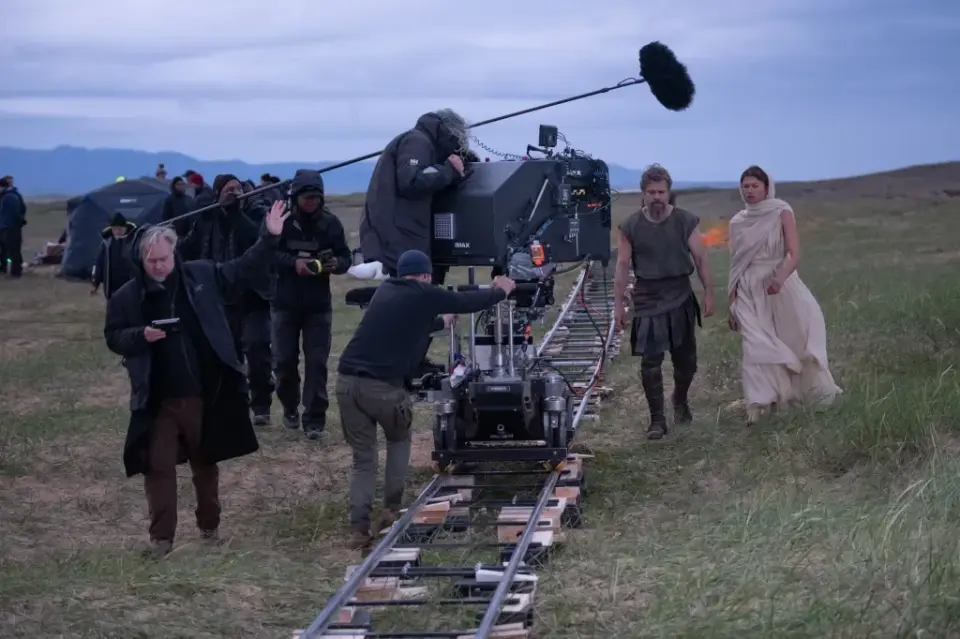
Emily Wilson, the acclaimed translator of Homer's 'The Odyssey,' published a scathing critique of Christopher Nolan's film adaptation in the London Review of Books. While acknowledging the film's commercial success and visual spectacle, Wilson argues the screenplay lacks psychological depth, ethical coherence, and respect for the source material. She specifically criticizes the simplification of characters, the absence of on-screen deities, and the film's moral contradictions. Despite the backlash, the movie continues to dominate the box office, and Wilson ultimately expressed gratitude for the film's potential to drive public interest in classical literature.
Key points
- Emily Wilson, a professor of Classical Studies at the University of Pennsylvania, published a critical review of Christopher Nolan's 'The Odyssey' in the London Review of Books.
- Wilson stated she would be 'ashamed' to have written any part of the screenplay, citing a lack of psychological, emotional, and ethical depth.
- The film, which cost $250 million to produce, is described by Wilson as a 'family-friendly audiovisual spectacle' with the narrative depth of a fireworks display.
- Wilson criticized the casting choices, noting that non-white actors often play supportive roles, and that the depiction of violence dehumanizes victims.
- The film has achieved record-breaking box office results, including a $90 million second weekend, despite the critical controversy.
- Wilson raised ethical concerns about filming in the occupied territory of Western Sahara without the consent of the indigenous Sahrawi people.
Background
This controversy follows earlier coverage from July 27, 2026, which reported that Emily Wilson had already begun criticizing Nolan's adaptation for being shallow and superficial. Previous reports noted that Nolan had cited Wilson's 2017 translation as an influence during his press tour, a claim Wilson disputed in her subsequent review. The film has been a major commercial success, with Universal Pictures recently activating takedown protocols for online leaks while the movie continued to dominate the box office with large-format IMAX and 70mm screenings.
How outlets are covering it
The primary source, Deadline, highlights the contrast between Wilson's academic background and her modern, accessible style, noting her tattoos and ability to discuss pop culture alongside classical texts. The London Review of Books, where the review was published, provides the full text of Wilson's critique, emphasizing her argument that the film's 'big bangs' drown out the story. IndieWire frames the controversy as a clash between a 'decorated scholar' and a 'Oscar-winning filmmaker,' noting that while the film has 'sailed through' critical reception generally, Wilson's piece has 'riled up Film Twitter.' Yahoo focuses on the commercial dominance of the film, suggesting that the negative reaction is unlikely to impact its box office trajectory. The sources agree on the film's commercial success but differ in emphasis: Deadline and IndieWire focus on the cultural and academic implications of the critique, while Yahoo focuses on the financial performance.
Why it matters
The controversy highlights the tension between commercial blockbuster filmmaking and academic interpretations of classical literature. It raises questions about the ethical implications of filming in occupied territories and the representation of violence and gender in adaptations. The film's success despite the criticism suggests a disconnect between critical reception and audience demand, while also demonstrating the power of a major director to drive public interest in ancient texts.
What to watch
The film is expected to continue its box office run, with potential Oscar nominations for Robert Pattinson's performance as Antinous, as predicted by Wilson. The controversy may lead to further debate about the ethics of filming in Western Sahara and the representation of non-white actors in historical epics. Wilson's critique may also influence how future adaptations of classical texts are received by both academic and general audiences.
- Famed ‘Odyssey’ Translator Rips Nolan’s Film: ” I Would Be Ashamed” Deadline
- Emily Wilson · An Uncomplicated Man London Review of Books
- The Odyssey’s Box Office Dominance Is Unmatched by Any 2026 Movie Yahoo
- It May Take More Than 10 Years for Nolan’s ‘The Odyssey’ to Impress Classicists Like Translator Emily Wilson IndieWire
- An ‘Odyssey’ for Our Own Time The Atlantic
Want the full story? Read the original reporting
Read on Deadline