
Autopsy reveals bird flu, not poison, killed California’s famous bald eagle Jackie
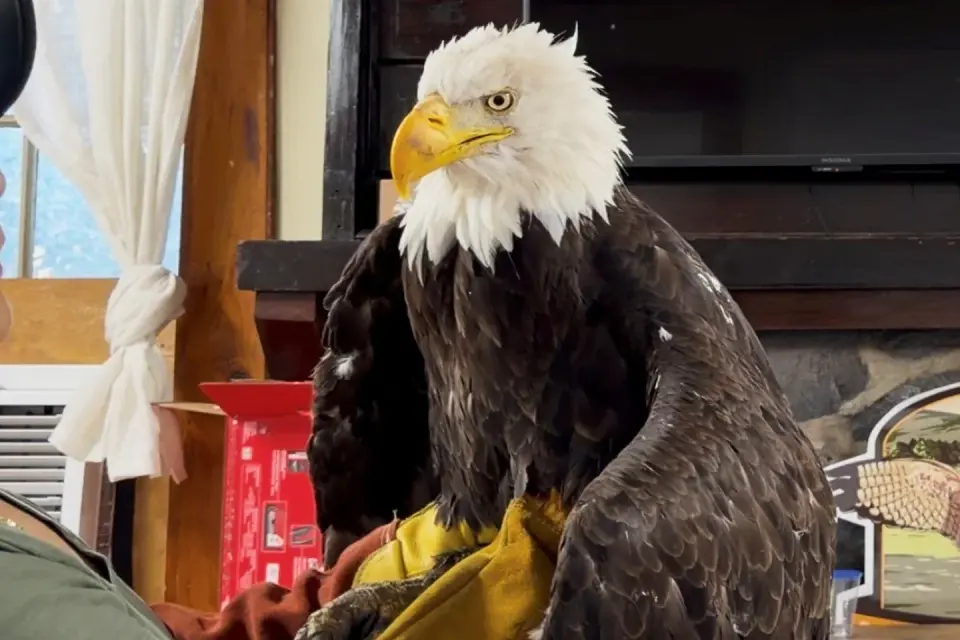
A newly released necropsy report confirms that Jackie, the widely followed bald eagle from Big Bear Lake, died from highly pathogenic avian influenza (HPAI). The virus caused severe stomach ulcers and internal bleeding, leading to her death on August 10, 2026. While toxicology tests detected rat poison, experts ruled it out as the primary cause. Her mate, Shadow, remains healthy in California.
Key points
- Jackie, a 14-year-old bald eagle famous for a decade-long livestream, died on August 10, 2026, after a weeks-long illness.
- A joint investigation by the California Department of Fish and Wildlife and the San Diego Zoo Wildlife Alliance confirmed HPAI as the primary cause of death.
- The virus caused an uncommon presentation, resulting in severe stomach ulcers, persistent internal bleeding, anemia, and secondary bacterial sepsis.
- Toxicology screens detected brodifacoum (rat poison) and environmental contaminants, but these were not identified as the primary cause of her decline.
- Jackie’s remains were cremated by the U.S. Fish and Wildlife Service to prevent the spread of the virus to other wildlife or humans.
Background
Jackie rose to international fame in 2016 when a webcam was installed in her nest near Big Bear Lake, approximately 75 miles east of Los Angeles. Millions of viewers followed her relationship with her mate, Shadow, and their efforts to protect their chicks from predators and harsh weather. Jackie was removed from the wild in July 2026 after being found weak and undernourished on the shoreline. She was treated at the Ojai Raptor Center but died on August 10. Her mate, Shadow, remains in Big Bear Valley, and camera data indicates he and their eaglets are not showing signs of illness.
How outlets are covering it
The Washington Post and the California Department of Fish and Wildlife (CDFW) align on the primary cause of death, citing HPAI as the driver of Jackie’s decline. The CDFW report details the specific medical progression, noting that the virus caused a severe ulcer in the ventriculus (gizzard), which led to anemia and sepsis. USA Today highlights the scientific surprise surrounding the diagnosis, noting that experts were initially baffled because HPAI was not widely circulating in Southern California at the time. Dr. William Bowerman, a wildlife ecology professor, described the case as a 'scientific mystery' because Jackie’s symptoms did not match typical HPAI presentations, such as walking in circles or head tremors. While the Washington Post notes the presence of rat poison, the CDFW and USA Today clarify that the poison was not the primary cause, emphasizing the unusual nature of the viral infection.
Why it matters
This case provides critical data for wildlife conservation and veterinary medicine. Because Jackie’s illness was atypical, her medical team performed extensive testing that would not have been conducted in a standard HPAI case. This has provided scientists with new insights into how the virus can manifest in raptors. Additionally, the case underscores the importance of monitoring avian influenza in wild bird populations, as the virus can spread through water, close contact, or the consumption of infected prey. Jackie’s death also highlights the emotional connection the public has with wildlife, as her story brought unprecedented attention to the conservation of bald eagle habitats.
What to watch
Researchers will continue to analyze the data from Jackie’s necropsy to better understand the transmission and progression of HPAI in raptors. The California Department of Fish and Wildlife and the San Diego Zoo Wildlife Alliance will use these findings to inform the care and treatment of other eagles and wildlife. Conservationists will also monitor the health of Shadow and other bald eagles in the region to ensure the virus does not spread further.
- Jackie, the famous the bald eagle mama in California, died of bird flu The Washington Post
- Jackie the Big Bear bald eagle’s cause of death revealed in necropsy KTLA
- CDFW News | Necropsy Provides New Information About Beloved Bald Eagle Known as Jackie California Department of Fish and Wildlife (.gov)
- 2 months ago, famous Calif. eagle Jackie died. Now we know why. SFGATE
- Scientists stunned by Jackie the bald eagle's cause of death USA Today
Want the full story? Read the original reporting
Read on The Washington Post