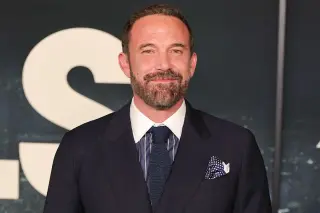
Ben Affleck prioritizes family and work over dating after Lopez split
Ben Affleck stated he is happy being single and focused on his children and career, dismissing rumors of a relationship with Shakira.

All articles tagged with #animals
Ben Affleck stated he is happy being single and focused on his children and career, dismissing rumors of a relationship with Shakira.
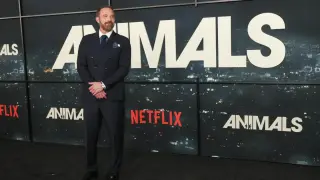
Ben Affleck confirmed that artificial intelligence was used for unspecified post-production tasks in his new Netflix film, 'Animals,' which premieres on October 9. He emphasized that the technology was applied ethically to enhance a human-centric drama without replacing actors or using copyrighted material. This disclosure follows his March 2026 sale of his AI company, InterPositive, to Netflix for $587 million.

Ben Affleck has confirmed that artificial intelligence was utilized for various post-production tasks in his new Netflix film, 'Animals,' which premieres on October 9. While he declined to specify the exact applications to preserve the 'illusion of reality,' Affleck emphasized that the technology was used to accelerate the workflow in a human-centric drama without replacing actors or creating synthetic characters. The disclosure follows the March 2026 acquisition of his AI company, InterPositive, by Netflix for $587 million. Affleck framed the usage as an ethical integration of tools within the traditional filmmaking process, distinguishing it from generative AI that relies on copyrighted material or replaces human performance.

Netflix launches a dense October 2026 slate featuring the Florence Pugh-led 'East of Eden,' Ben Affleck's 'Animals,' and returning hits like 'The Diplomat' and 'Nobody Wants This.'
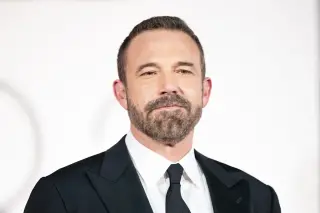
Ben Affleck confirmed at the Bloomberg Screentime event that he used AI tools from his acquired startup InterPositive in his upcoming Netflix thriller 'Animals,' which premieres October 9. While he declined to specify which scenes utilized the technology to preserve the 'illusion of reality,' he argued that AI is a standard technological advancement rather than a threat to the industry. Affleck dismissed fears of AI replacing human filmmakers, stating that the complexity of cinema makes full automation unlikely. He also corrected a viral claim by Matt Damon, asserting that Netflix did not demand plot repetition in their film 'The Rip' to retain distracted viewers.

Ben Affleck confirmed using artificial intelligence for unspecified aspects of his upcoming Netflix thriller 'Animals,' which premieres on October 9. Speaking at Bloomberg's 2026 Screentime event, Affleck declined to detail the specific applications, citing the need to preserve the 'illusion of reality' in filmmaking. He described the technology as a standard computational advancement rather than a threat, noting that his recent $600 million sale of his AI company, InterPositive, to Netflix has made him a strong advocate for the tool. The film stars Gillian Anderson, Steven Yuen, and Kerry Washington. Affleck also addressed rumors regarding Netflix's creative control, denying claims that the streamer forced him and Matt Damon to reiterate the plot of their previous film, 'The Rip,' calling such notes 'idiotic' and contrary to his experience.
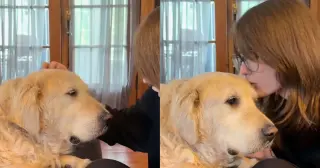
A woman shared a video on Instagram narrating the adoption story of her senior rescue Golden Retriever, Bruce. She recounts falling in love with him after seeing his photos online and visiting the shelter during a lunch break. She took a half-day off work to complete the adoption paperwork, stating that bringing him home was the best decision she has made. The clip, which shows Bruce listening attentively, has received over 14,000 likes and comments from viewers who believe the dog understands the story. The pair is set to celebrate their two-year adoption anniversary in two weeks.
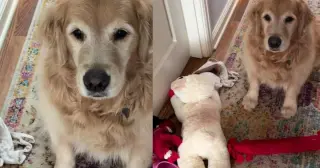
A Golden Retriever responded to the distress of foster puppies by collecting and delivering a variety of items, including toys, a shoe, and a bra, to the door where the puppies were crying. The dog’s actions, captured in a viral video, suggest an instinctive desire to comfort distressed animals through the provision of familiar objects.
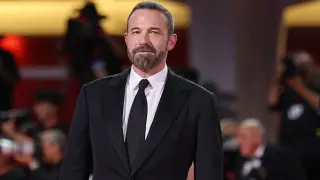
Ben Affleck revealed on 'Jimmy Kimmel Live' that his three children frequently mock his extensive dating history. He described how his 17-year-old son challenged his relationship advice, while another child joked that a book titled 'I'm Sorry for Everything' was his autobiography. Affleck acknowledged that he is now the 'caricature' in his family's eyes, a shift from his previous expectation of being the 'cool dad.'
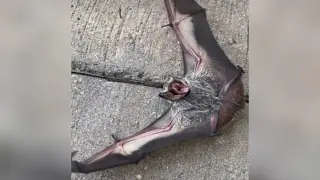
A juvenile hoary bat in southern Pennsylvania was found injured after a thunderstorm and initially faced online calls for euthanasia due to perceived rabies symptoms. Wildlife experts identified the behavior as a natural defense mechanism, rescued the bat, and named him Nibbles. After months of care for severe head trauma, Nibbles bonded with another rescued bat named Clover, aiding his recovery as he continues to work on flight skills.
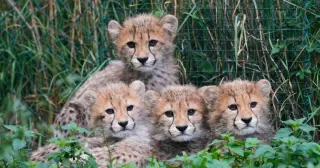
Five cheetah cubs born at Prague Zoo in June 2026 have survived severe weather and their mother's illness, though curators warn that survival is not guaranteed for another year. The quintuplets, consisting of four males and one female, were born to Daenerys, a first-time mother who arrived from France in poor condition. Despite facing torrential rains shortly after birth and an intestinal infection in August, Daenerys kept the cubs dry by licking their fur. The zoo reported that all five appear healthy as of September 25, 2026, but curator Pavel Brandl noted that the critical survival period extends up to a year. This success is significant for conservation efforts, as wild cheetah populations have declined to fewer than 7,000, and European zoo populations have dropped by 25% since 2020.
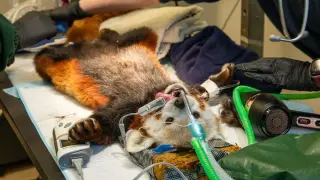
Eleven-year-old red panda Bruce at Edinburgh Zoo underwent dental surgery to address a toothache. The procedure was performed by veterinarians from the Royal Zoological Society of Scotland, who also conducted a full health check. Bruce was kept under general anaesthesia and has since been cleared to return to his habitat. He remains the only red panda at the zoo, having lost his daughter Roxie and mother-in-law Ginger in 2024. His granddaughter, Priya, relocated to the Highland Wildlife Park earlier this year. This recent medical attention highlights the ongoing care provided to the zoo’s sole red panda, ensuring his well-being and continued presence at Edinburgh Zoo.
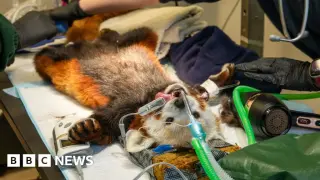
Eleven-year-old red panda Bruce at Edinburgh Zoo underwent dental surgery to remove a problematic tooth after displaying signs of toothache. Kept under general anaesthesia by Royal Zoological Society of Scotland vets, Bruce received a full health check and was cleared to return to his habitat. He is currently the only red panda at the zoo, having lost his daughter Roxie and mother-in-law Ginger in 2024, and is the grandfather of Priya, who relocated to the Highland Wildlife Park earlier this year.
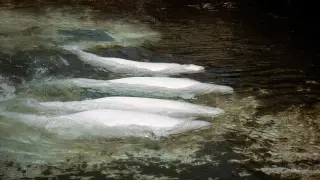
Osiris, a 26-year-old beluga whale, died at Chicago's Shedd Aquarium on Sept. 21, marking the fourth beluga death in recent weeks. Three of the four whales died after being relocated from the closed Marineland park in Canada. While aquariums stress the animals arrived with complex health issues, critics argue the rapid transfer lacked proper veterinary oversight.
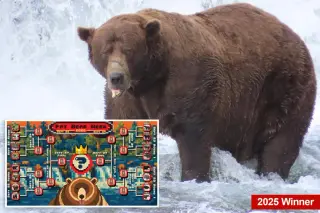
Fat Bear Week, a bracket-style competition at Katmai National Park in Alaska, kicks off with 16 brown bear contenders; voting runs Sept. 22–29 to crown the fattest bear, based on before/after photos from spring to fall. Last year’s champion was 32 Chunk, weighing over 1,200 pounds. The event originated as a ranger-led Facebook poll and has become a global online sensation, with donations to Katmai Conservancy’s Otis Fund, and live streams via explore.org encouraging support.