animals1.705 min read
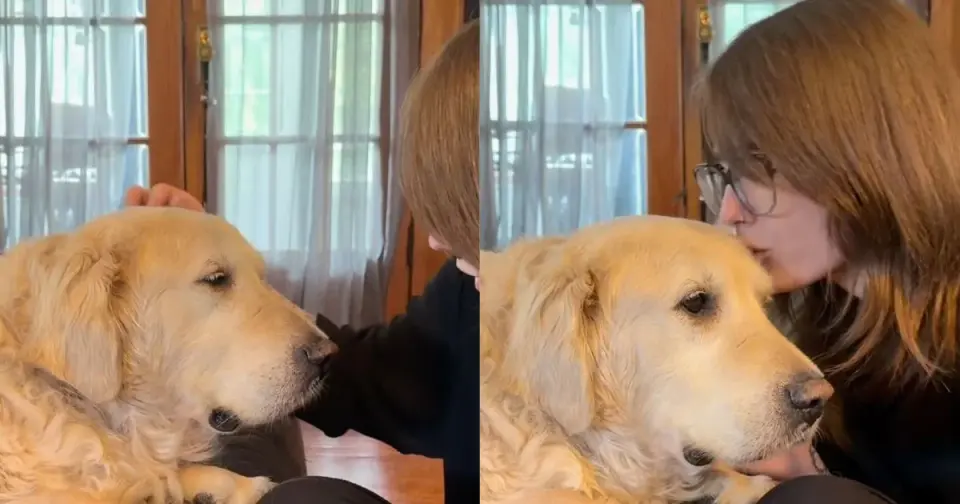
Owner Narrates Adoption Journey of Senior Rescue Golden Retriever Bruce
12 days ago•Source: DogTime

The latest animals stories, each synthesized from multiple sources with added background and context.

A Golden Retriever responded to the distress of foster puppies by collecting and delivering a variety of items, including toys, a shoe, and a bra, to the door where the puppies were crying. The dog’s actions, captured in a viral video, suggest an instinctive desire to comfort distressed animals through the provision of familiar objects.
CBS News•15 days ago
yahoo.com•15 days ago
Eleven-year-old red panda Bruce at Edinburgh Zoo underwent dental surgery to remove a problematic tooth after displaying signs of toothache. Kept under general anaesthesia by Royal Zoological Society of Scotland vets, Bruce received a full health check and was cleared to return to his habitat. He is currently the only red panda at the zoo, having lost his daughter Roxie and mother-in-law Ginger in 2024, and is the grandfather of Priya, who relocated to the Highland Wildlife Park earlier this year.

Osiris, a 26-year-old beluga whale, died at Chicago's Shedd Aquarium on Sept. 21, marking the fourth beluga death in recent weeks. Three of the four whales died after being relocated from the closed Marineland park in Canada. While aquariums stress the animals arrived with complex health issues, critics argue the rapid transfer lacked proper veterinary oversight.
A Jersey hedgehog stuck in a wall was rescued in what observers describe as a miracle, while a duck near Ringwood recovered from a beak injury and was released after treatment.
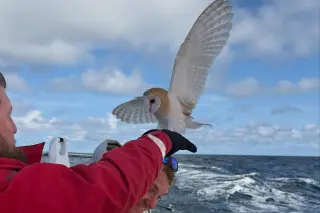
A barn owl named Little Reg, stranded about 70 miles from shore during the Round Britain and Ireland Race, was rescued by British Army crew aboard a racing boat after repeatedly falling into the sea. The emaciated bird was cared for on the boat, then taken to land for veterinary care, with conservationists calling the rescue a miracle. Little Reg is now at the RSPCA East Winch Wildlife Centre in England, where staff say it’s improving and donors are being asked to help with supplies.
A World Population Review analysis maps the deadliest animal for each US state, revealing snakes as the single greatest danger in 14 states, whitetail deer in four, rattlesnakes in three, and unusual leaders like dogs in Illinois, coyotes in Minnesota, and black bears in Kentucky.
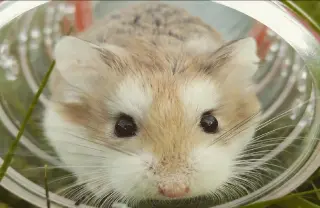
Dutch researchers placed a 24-cm wheel in a natural urban area and found wild mice were the main users (88% of wheel events), with rats, shrews, frogs, and even slugs also using it. Over more than three years they logged over 200,000 visits and 12,000 video clips, showing wheel running occurs in the wild and isn’t merely a captivity artifact. The study suggests wheel-running may reflect natural motivation—possibly metabolic reward, play, or exploration—and varies with season, with implications for how we view lab mice and animal welfare.

A stray cat at PurrfectlyFeral in Llangedwyn, Powys, gave birth to Gemini, a kitten with diprosopus (two noses and two mouths). The rare condition, also known as a Janus kitten, usually results in stillbirth or short survival, but Gemini is being bottle-fed hourly and monitored around the clock as rescuers call it a tiny miracle; the mother rejected the firstborn, and the eight-kitten litter is being cared for with donations.

A stray mother cat at PurrfectlyFeral in Llangedwyn, Powys, gave birth to eight kittens, including Gemini, a rare diprosopus (Janus) kitten with two noses and two mouths. Rejected by its mother, Gemini requires hourly bottle feeding and is being monitored around the clock as the rescue, funded by donations, cares for the fragile litter.
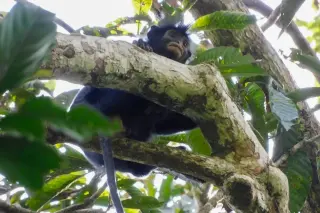
Scientists have identified a new monkey species, Colobus congoensis, locally known as Likweli, in the Congolese Lomami rainforest. The elusive primate weighs about 15 pounds, spans roughly four feet from nose to tail, sports a dramatic black coat with a pink/orange mouth, and emits a low roar. Its range covers about 650 square miles, and genetic analysis suggests it diverged from its closest relative around 5 million years ago.
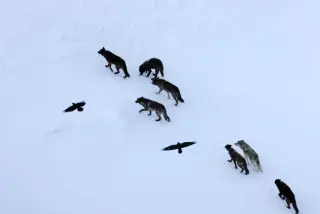
Two-and-a-half years of GPS tracking across Yellowstone show ravens rarely follow wolves long distances; instead, they use a strong memory to repeatedly visit areas where wolf kills are likely, effectively building a mental map that guides scavenging across the landscape.