
Fred Pearce's 'Despite It All' Argues Renewables and Population Trends Offer Climate Hope
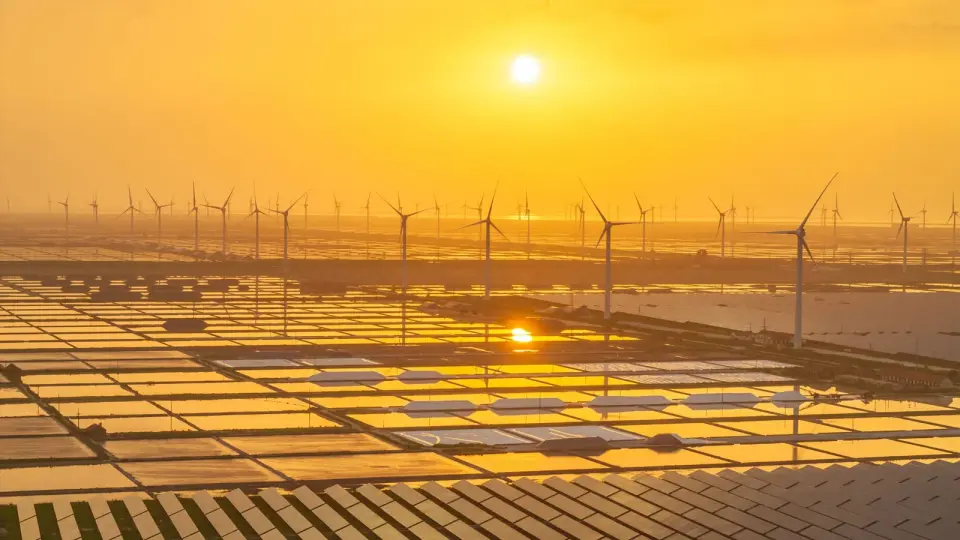
Author Fred Pearce argues in his new book 'Despite it All' that while climate challenges remain severe, significant progress in renewable energy adoption and shifting population trends offer grounds for cautious hope. Pearce highlights how solar power costs have plummeted due to Chinese industrial investment, making renewables cheaper and faster to deploy than fossil fuels globally. He also notes that global fertility rates have stabilized near replacement levels, defusing the 'population bomb' fears of the 20th century, though he emphasizes that consumption in wealthy nations now poses a greater environmental strain than population growth in poorer regions. Pearce advocates for a balanced approach that combines technological fixes with allowing nature to recover, while warning that rising inequality undermines global stability and climate action.
Key points
- Renewable energy is now cheaper and faster to install than fossil fuels, driven largely by Chinese industrial investment over the past three decades.
- Global fertility rates have declined to near replacement levels, defusing previous fears of a population explosion, though consumption in wealthy nations remains a primary environmental stressor.
- Pearce advocates for 'rewilding' by allowing nature to recover and evolve naturally, rather than attempting to restore pristine pre-industrial ecosystems.
- The book 'Despite it All' was shortlisted for the 2026 Royal Society Trivedi Science Book Prize and emphasizes that while climate damage is severe, technical solutions and policy shifts are making progress.
- Pearce warns that rising global inequality threatens political stability and the ability to manage climate change, suggesting that wealth accumulation by a small elite must be addressed alongside environmental issues.
Background
This interview follows earlier coverage of renewable energy transitions, such as Iceland’s shift to geothermal power, which demonstrated how specific regions can leverage natural resources for clean energy. It also aligns with broader discussions on population dynamics, including historical studies on population shifts in Europe, though Pearce’s focus is on contemporary fertility trends and consumption patterns rather than historical demographic events.
Why it matters
Pearce’s argument challenges the prevailing narrative of climate doom by highlighting tangible progress in renewable energy and population stabilization. His emphasis on addressing inequality and consumption in wealthy nations offers a practical framework for policy, suggesting that climate solutions must be paired with social equity to ensure global stability and effective environmental management.
What to watch
The next decade will likely see continued rapid growth in renewable energy adoption, particularly in Asia and Africa, as costs continue to fall. Policy debates will focus on balancing AI data center energy demands with grid capacity, while international efforts may shift toward addressing consumption patterns in wealthy nations and supporting reproductive rights to stabilize population growth.
Want the full story? Read the original reporting
Read on Live Science