
Rising CO2 is draining nutrients from staple foods, threatening global health
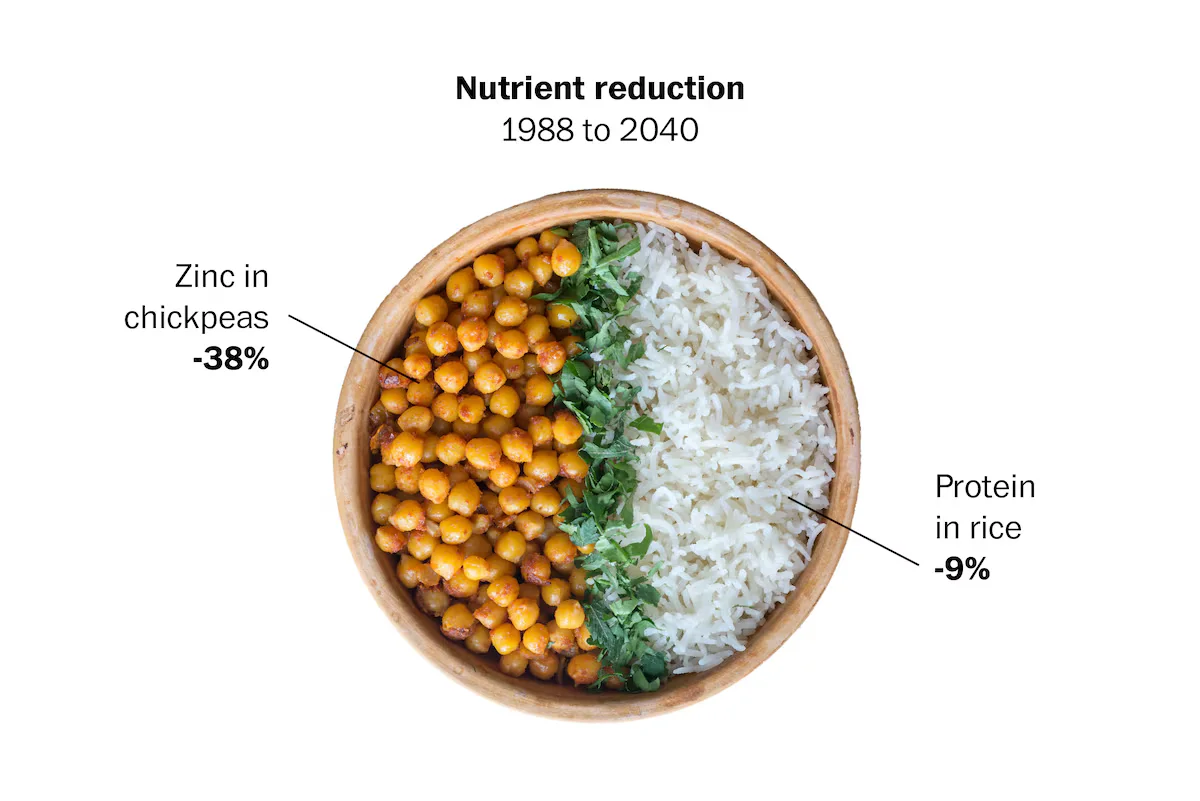
Rising atmospheric CO2 concentrations are diluting nutrient density in common crops, lowering minerals like zinc and iron in staples such as chickpeas, rice, and wheat. A Leiden University meta-analysis finds nutrient declines since the 1980s with projections showing billions could face hidden hunger and anemia by 2040, especially in low-income regions. The so-called dilution effect occurs as plants accumulate more sugars under higher CO2 but uptake of minerals lags, a problem compounded by soil and temperature changes. Fortification alone isn’t a cure; experts urge diverse diets, nutritious crop varieties, and aggressive emission reductions to protect global health.
- The invisible force making food less nutritious The Washington Post
- Biofortifying grains for nutritious diets and climate-smart food systems Nutrition Insight
- The hidden hunger crisis: how rising CO2 levels are diminishing the nutritional value of staple crops IOL
- Protein-boosted rice could tackle hidden hunger and cut emissions, review argues Phys.org
- Reevaluating Staple Food Crops: Balancing Human Nutrition, Climate Impact, and Sustainability Bioengineer.org
Reading Insights
1
40
17 min
vs 18 min read
97%
3,409 → 97 words
Want the full story? Read the original article
Read on The Washington Post