
Congo Ebola Toll Passes 5,000 as Bundibugyo Strain Spreads to Four Nations
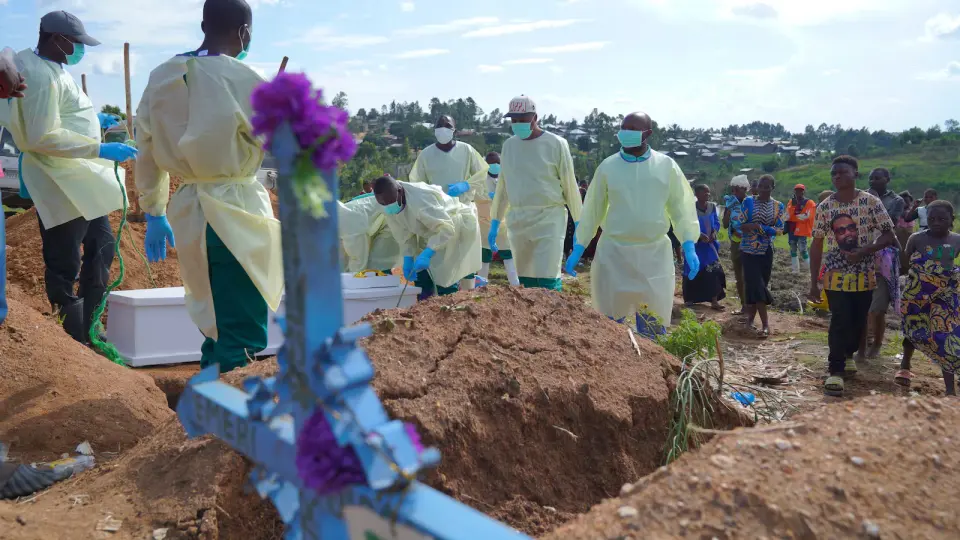
The Democratic Republic of Congo’s Ebola outbreak has surpassed 5,000 deaths and 10,351 confirmed cases, marking the country’s deadliest epidemic and the second-largest in history. Caused by the Bundibugyo virus, which lacks an approved vaccine or treatment, the crisis has spread to eight provinces and neighboring nations including Kenya, Uganda, and Nigeria. Containment efforts are severely hampered by armed conflict, community mistrust, and unpaid health workers, prompting international warnings of potential cross-continental spread.
Key points
- The outbreak has killed 5,026 people out of 10,351 infected, with a lethality rate of nearly 50%.
- The Bundibugyo virus has no known vaccine or treatment, though clinical trials are underway with results expected in three to six months.
- The disease has spread to 67 of 178 health zones in eight of Congo’s 26 provinces, with Ituri and North Kivu serving as the primary epicenters.
- Cases have been confirmed in Kenya, Uganda, and Nigeria, making this the first Ebola outbreak to affect three distinct African regions.
- Approximately 80% of new cases in Congo originate from unknown transmission chains, complicating contact tracing efforts.
Background
This outbreak, declared in mid-May 2026, is the 17th Ebola epidemic in DR Congo’s history. It surpassed the 2018-2020 outbreak as the country’s deadliest in August. The current crisis is the second largest globally, trailing only the 2014-2016 West Africa outbreak that killed over 11,000 people. Previous archive coverage noted that case numbers had plateaued at 400-500 new infections weekly, but recent data indicates a resurgence in community transmission.
How outlets are covering it
While ABC News and BBC focus on the grim mortality statistics and the lack of medical countermeasures, The Guardian and CBC emphasize the geopolitical implications. Dr. Jean Kaseya of the Africa CDC warned that the outbreak could reach the UK and other continents, comparing the risk to the early stages of the COVID-19 pandemic. CBC highlighted Canada’s $8 million contribution and border restrictions, while The Guardian noted that over $2 billion of the pledged $3 billion in international funding remains outstanding. All sources agree that armed conflict, particularly involving the M23 rebel group, and community mistrust are critical barriers to containment.
Why it matters
The rapid spread of the Bundibugyo strain across multiple African regions raises fears of a pan-African or global pandemic. The lack of an approved vaccine and the high rate of undetected community transmission suggest that current containment measures are insufficient. International funding gaps and political instability in affected areas threaten to prolong the crisis, potentially leading to a larger global health emergency if the virus reaches new continents.
What to watch
The Africa CDC is convening a meeting of African health ministers to urge greater cross-border cooperation and border screening. Clinical trials for a Bundibugyo vaccine are ongoing, with results expected in three to six months. Health officials are calling for a 'corridor of peace' in conflict zones to allow medical teams access. International donors are expected to provide the remaining $2 billion in pledged funding to support the response.
- Congo's Ebola deaths top 5,000 as fear of continent-wide spread mounts ABC News - Breaking News, Latest News and Videos
- More than 5,000 die from Ebola in DR Congo's deadliest outbreak BBC
- Congo Ebola outbreak kills more than 5,000 Reuters
- Africa’s ‘unprecedented’ Ebola outbreak could reach UK, says top health official The Guardian
- 'No one is safe' as Ebola outbreak surges to more than 10,000 cases, Africa's top doctor warns Canada CBC
Want the full story? Read the original reporting
Read on ABC News - Breaking News, Latest News and Videos