
Congo's Ebola Crisis Surpasses 2,600 Deaths as Bundibugyo Strain Defies Containment
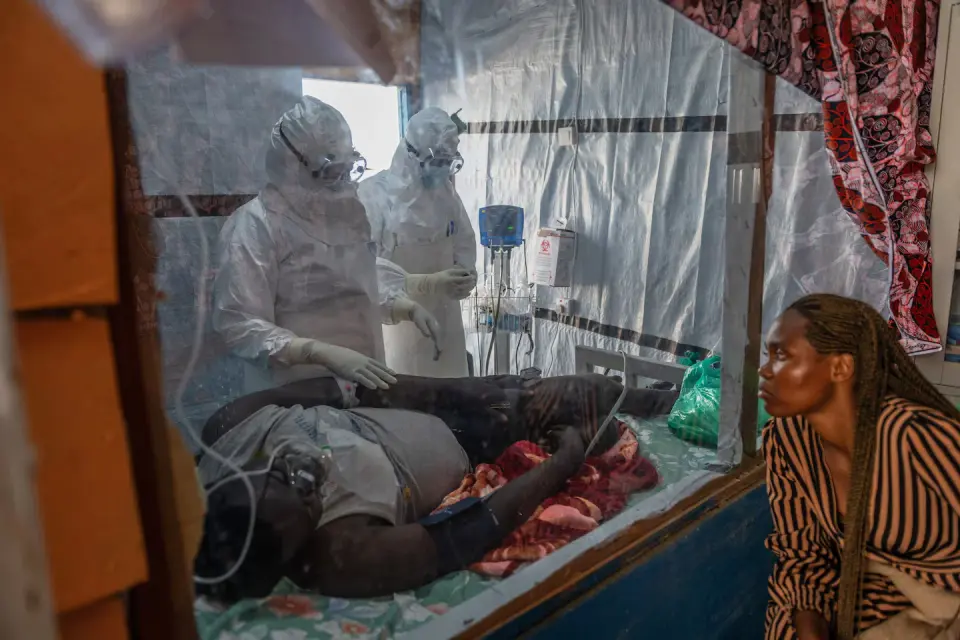
The Ebola outbreak in the Democratic Republic of Congo (DRC) has become the deadliest in history, with over 2,642 deaths and 5,514 confirmed cases as of August 24, 2026. Caused by the rare Bundibugyo strain, which lacks an approved vaccine or treatment, the epidemic is spreading faster than containment measures can address. The crisis is compounded by funding shortages, misinformation, and armed conflict in eastern DRC, particularly in Ituri province, which accounts for 85% of cases. While the World Health Organization (WHO) has expanded testing and treatment capacity, nearly 60% of deaths occur outside treatment centers, highlighting severe gaps in early detection and access to care.
Key points
- The DRC outbreak has recorded 5,514 cases and 2,642 deaths, with a mortality rate of 47.9%, surpassing the 2014-2016 West Africa outbreak in speed and lethality.
- The Bundibugyo strain has no approved vaccine or treatment; the Ervebo vaccine, effective against other Ebola strains, is being tested for efficacy against Bundibugyo but its effectiveness remains unconfirmed.
- Ituri province is the epicenter, accounting for 85% of cases and 79% of deaths, while North Kivu has a higher fatality rate of 68.6% due to limited access to care.
- The WHO has expanded testing to 19 laboratories and treatment capacity to over 1,300 beds, but 60% of deaths occur outside treatment centers, indicating poor early detection and referral.
- Armed conflict, displacement, and misinformation in eastern DRC hinder response efforts, with 50 healthcare workers killed and 155 infected since the outbreak began.
Background
The DRC has faced multiple Ebola outbreaks, including the 2018-2020 epidemic, which was the second-deadliest in history. The current outbreak, declared on May 15, 2026, is the fastest-growing on record, with cases confirmed in six provinces. Previous outbreaks, such as the 2014-2016 West Africa epidemic, had over 11,000 deaths but spread more slowly. The Bundibugyo strain, first identified in 2007, is rare and lacks approved medical countermeasures, making containment more challenging than in previous outbreaks caused by the Zaire strain.
How outlets are covering it
The Washington Post emphasizes the lack of funding and rampant misinformation as key barriers to containment, citing doctors and relief organizations. ABC News highlights the high weekly death toll and the absence of approved treatments for the Bundibugyo strain, noting that many deaths occur outside treatment centers. UN News focuses on the WHO's expanded response, including testing and treatment capacity, but stresses that 60% of deaths occur outside facilities, indicating gaps in early detection. NewsForKids.net provides a simplified overview, noting the lack of vaccines and the role of armed conflict in hindering response efforts. All sources agree that the outbreak is the deadliest and fastest-growing in history, but they differ in emphasis: The Washington Post and ABC News focus on the challenges of containment, while UN News highlights the progress made by the WHO and the need for scaled-up action.
Why it matters
The DRC Ebola outbreak is a global health emergency, with the potential to spread to neighboring countries, including Uganda and South Sudan. The lack of an approved vaccine or treatment for the Bundibugyo strain, combined with funding shortages and armed conflict, poses a significant risk to regional and global health security. The outbreak also highlights the importance of early detection, community engagement, and cross-border preparedness in containing epidemics. The WHO's call for scaled-up action and the need for humanitarian aid alongside the Ebola response underscore the interconnectedness of health and humanitarian crises.
What to watch
The WHO is calling for scaled-up action, including strengthening community engagement, improving surveillance and contact tracing to 95%, and expanding treatment capacity to 3,000 beds. The Ervebo vaccine is being tested for efficacy against the Bundibugyo strain, but its effectiveness remains unconfirmed. Cross-border preparedness efforts are underway in South Sudan, with surveillance and screening at points of entry. The WHO and UN agencies are also working to counter misinformation and provide humanitarian aid alongside the Ebola response. The next few weeks will be critical in determining whether the outbreak can be brought under control, with the WHO emphasizing the need for resolute action and community-led response.
- Fastest-growing Ebola outbreak on record threatens to become worst in history The Washington Post
- Congo Struggles with Ebola; US & Canada in Trade Fight NewsForKids.net
- Second meeting of the IHR Emergency Committee on the epidemic of Ebola Bundibugyo virus disease in the Democratic Republic of the Congo – Temporary recommendations World Health Organization (WHO)
- Congo's Ebola outbreak records one of its highest weekly death tolls yet ABC News - Breaking News, Latest News and Videos
- 100 days of Ebola and the race to stop the spread UN News
Want the full story? Read the original reporting
Read on The Washington Post