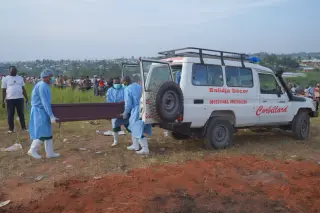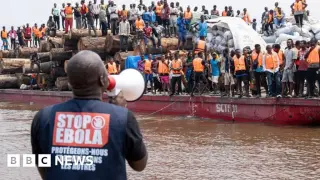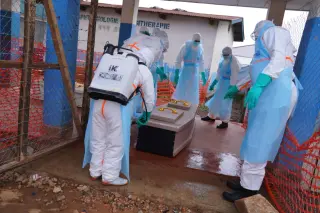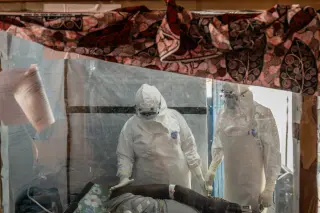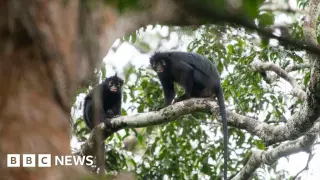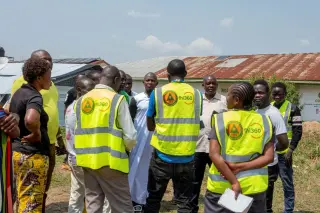
Experts warn that Congo's Ebola outbreak may be linked to contact with wild animals through hunting and consumption of bushmeat, underscoring the need for stronger surveillance, vaccination efforts, and community education to curb spillovers and spread.
ICE temporarily released Jose Yugar-Cruz, a South American man slated for deportation to the Democratic Republic of Congo amid Congo’s Ebola outbreak; after a judge ruled his detention unlawful and Congo had agreed to accept him, authorities paused the removal as health concerns escalated, highlighting ongoing debates over third-country deportations that have included several recent Congo removals and a push to curb asylum claims.
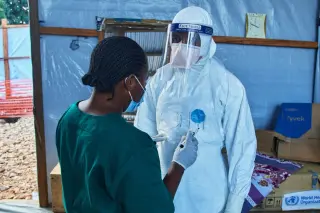
EU health authorities are boosting screening for Ebola symptoms among travelers from the Democratic Republic of Congo as the outbreak widens, with the ECDC modeling import risk and coordinating with airlines; suspected cases have appeared in Europe while vaccines remain experimental and ongoing conflict and the Bundibugyo strain complicate containment, prompting a broader European response and enhanced exit/entry screening.
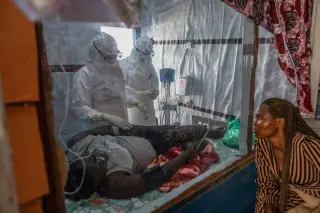
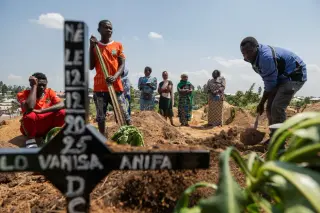
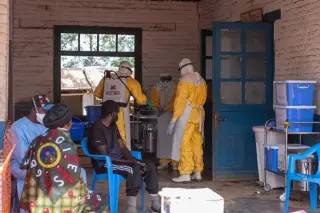
Ebola in DR Congo’s Ituri province has risen to roughly 750 cases and 177 deaths, making it the third-largest outbreak on record and spreading rapidly; WHO has raised national risk to very high as authorities race to scale detection, isolation, and contact tracing amid conflict and weak health systems.
A New York Times graphics-backed report shows how the eastern Democratic Republic of Congo’s Ebola outbreak, centered in Ituri Province, has spread in a region wracked by conflict, displacement and weak health capacity, with the virus circulating undetected for weeks and now crossing borders into neighboring East African countries. Officials warn the death toll is already among Congo’s worst for a major Ebola outbreak and containment is hampered by continued violence and large population movements, while the World Health Organization says regional risk is high but not a global threat.
A Paris-to-Detroit Air France flight was diverted to Montreal at the request of U.S. authorities after a passenger from the Democratic Republic of Congo triggered Ebola-related entry restrictions; there was no medical emergency, health screenings were conducted, and the remaining passengers ultimately continued to Detroit from Montreal on the same aircraft.
Hundreds of Afghan evacuees at Camp As Sayliyah in Qatar, who have been vetted for U.S. resettlement, are reportedly being considered for relocation to the Democratic Republic of Congo instead of being brought to the United States, a plan critics say risks persecution and ignores safer options; Congo’s refugee crisis and the sensitivity of discussions raise questions about protections and viability as negotiations continue.
More than 200 people were killed when a coltan mine in Rubaya, North Kivu, collapsed after heavy rains. The site is under M23 rebel control and has been poorly maintained, hindering rescue efforts. Among the dead were women and children, with about 20 survivors hospitalized. The mine holds a large share of the world’s coltan, and governance in the area is complicated by rebel taxation and international concern over conditions and accountability.
Africa CDC has deployed experts to the Democratic Republic of Congo to investigate an outbreak of an unknown disease, referred to as "Disease X," which has a high mortality rate among children. The agency is collaborating with local health authorities and international partners to enhance disease monitoring and laboratory capabilities, focusing on genomic surveillance and decentralized infrastructure. This effort aims to improve outbreak response and preparedness, with Africa CDC providing advanced diagnostic tools and expertise to support the investigation and control measures.
A mysterious illness, dubbed Disease X, has emerged in Kwango Province, Democratic Republic of Congo, with nearly 400 cases and 79 deaths reported. The disease, which presents symptoms like fever and cough, is under investigation by local and international health authorities, including the WHO and Africa CDC. While the disease's nature and transmission method remain uncertain, preliminary tests suggest it may be airborne. The delay in alerting national authorities highlights the need for improved disease surveillance. International teams are actively involved in containment efforts.
A mystery flu-like disease in Congo has killed 71 people, nearly half of whom were children, prompting the government to be on high alert. The disease, which presents symptoms such as fever, headache, cough, and anemia, has led to deaths primarily due to respiratory issues and lack of blood transfusions. Epidemiologists are investigating the outbreak in the southern Kwango province. This health crisis comes as Congo is already dealing with a significant mpox epidemic, with over 47,000 suspected cases and more than 1,000 deaths, leading to a vaccination campaign initiated in October.
Scientists have discovered a new strain of monkeypox, officially known as mpox, with "pandemic potential" in a mining town in the Democratic Republic of Congo. The mutated version, named "clade 1b", is thought to be better at spreading and has raised concerns about the potential for national and international spread. Health ministers have called for swift action to avert another global outbreak, as the virus has a history of causing mild illness but can lead to serious cases and has already resulted in deaths.
A new strain of mpox with "pandemic potential" has been discovered in the Democratic Republic of Congo, specifically in the mining town of Kamituga. Named "clade 1b," this mutated virus is better at spreading between people, particularly through sexual contact, and has mutations that evade some existing tests. The outbreak raises concerns due to its potential to spread nationally and internationally, especially given the highly mobile population in the area. Urgent action, including surveillance, contact tracing, and targeted vaccinations, is recommended to halt the spread of the new strain, as it poses a substantial risk of escalation beyond the current area and across borders.
The genocide against the Tutsi in Rwanda in 1994 has had a profound impact on the Democratic Republic of Congo (DRC), particularly in the eastern regions where Congolese Tutsi communities reside. The involvement of these communities in the Rwandan civil war and subsequent conflicts has shaped regional dynamics, with both Rwanda and the DRC using Tutsi populations to justify their military involvement. The fallout from the genocide continues to fuel tensions and conflicts in the DRC, highlighting the need for political solutions and international support to address the lasting impact of these historical events.