
DRC Ebola Crisis Worsens: 11,000 Cases, Funding Gaps, and Violence
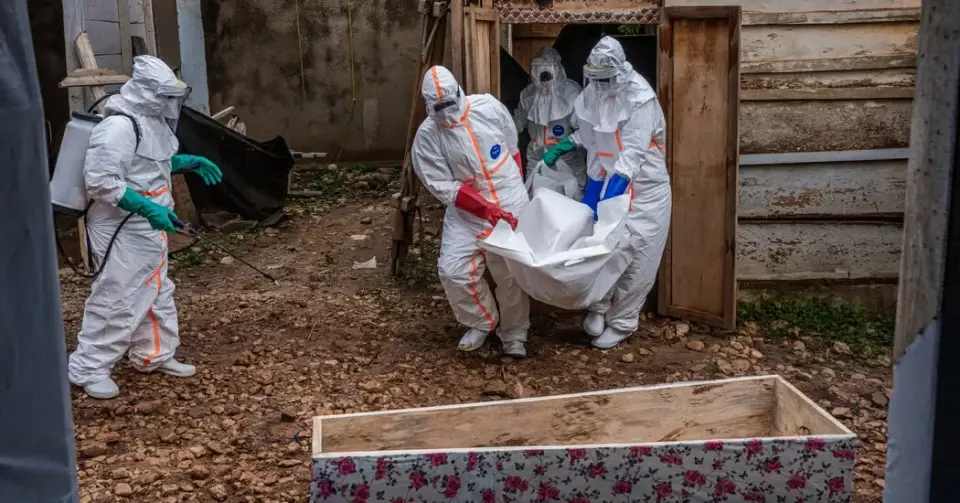
The Democratic Republic of Congo’s Ebola outbreak has surpassed 11,000 cases and 5,387 deaths, making it the second deadliest in history. Caused by the rare Bundibugyo strain, which lacks an approved vaccine, the crisis is exacerbated by armed conflict, poor infrastructure, and significant funding mismanagement. While the virus has spread to eight provinces, including Ituri and North Kivu, international aid is failing to reach frontline workers, and violence against health personnel continues to hinder containment efforts.
Key points
- As of November 11, 2026, the DRC health ministry reported 11,042 confirmed cases and 5,387 deaths, with nearly half of infected individuals dying.
- The outbreak, caused by the Bundibugyo strain, has spread to eight of the country’s 26 provinces, with Ituri accounting for nearly 70% of total cases and North Kivu emerging as the primary site for new transmission.
- Médecins Sans Frontières (MSF) warns that hundreds of millions of dollars in aid are not reaching patients or frontline workers, citing a 'considerable disconnect' between disbursed funds and actual resources on the ground.
- Armed conflict and community violence have disrupted contact tracing, leading to over 1,000 lost contacts and three unconfirmed cases, while attacks on health workers have killed at least four staff members recently.
- The outbreak has crossed borders into Uganda, Kenya, and Nigeria, though Kenya recently discharged its last patient, marking a milestone in containment efforts in that region.
Background
This crisis follows a previous archive report from November 2, 2026, which noted the outbreak had already killed 5,376 people and infected over 10,000. At that time, officials warned of potential global spread due to the lack of a vaccine for the Bundibugyo strain. The current situation reflects a rapid escalation in both case numbers and logistical failures over the past two weeks.
How outlets are covering it
The New York Times highlights the physical devastation in towns like Biakato, where bodies are stacked on racks due to cemetery saturation, and notes the virus's spread into remote rainforest areas. BBC and MSF focus on the financial and operational failures, with MSF criticizing the 'empty hands' of frontline workers and Africa CDC previously flagging $700 million in unaccounted funds. NBC News emphasizes the scale of the mortality rate and the impact of violence on schools and health workers, citing WHO Director-General Tedros Adhanom Ghebreyesus. While all sources agree on the severity, they differ in emphasis: NYT focuses on the human toll and geography, BBC on funding transparency, and NBC on the systemic collapse of health infrastructure and community trust.
Why it matters
The DRC outbreak is now the second deadliest in history, surpassing the 2014-2016 West Africa crisis in speed and mortality. The lack of a vaccine for the Bundibugyo strain, combined with funding mismanagement and armed conflict, creates a high risk of further international spread. The failure to effectively utilize allocated funds and the violence against health workers threaten to prolong the outbreak for another year, as predicted by epidemiologist Neil Ferguson.
What to watch
MSF and the Africa CDC are urging the Congolese government and UN agencies to strengthen oversight and accountability for aid funds. Health authorities are calling for a halt to fighting in Ituri and North Kivu to allow unhindered access to the sick. Kenya has begun a 42-day countdown to being declared Ebola-free, provided no new cases arise. Continued surveillance and funding transparency are critical to preventing further spread into neighboring countries.
- Caught Between Killers: Ebola on One Side, Islamic State on the Other The New York Times
- Ebola in DR Congo: Millions of dollars going missing as virus spreads, MSF warns BBC
- Ebola tops 11,000 cases in Congo’s deadliest outbreak NBC News
- Monessen School District superintendent responds to report on mold issues Mon Valley Independent
- Trump Gutted USAID. Congo Pays the Price in an Ebola Epidemic Time Magazine
Want the full story? Read the original reporting
Read on The New York Times