
Parents Funded and Administered First-in-Human Gene Therapy for Their Son with Cockayne Syndrome
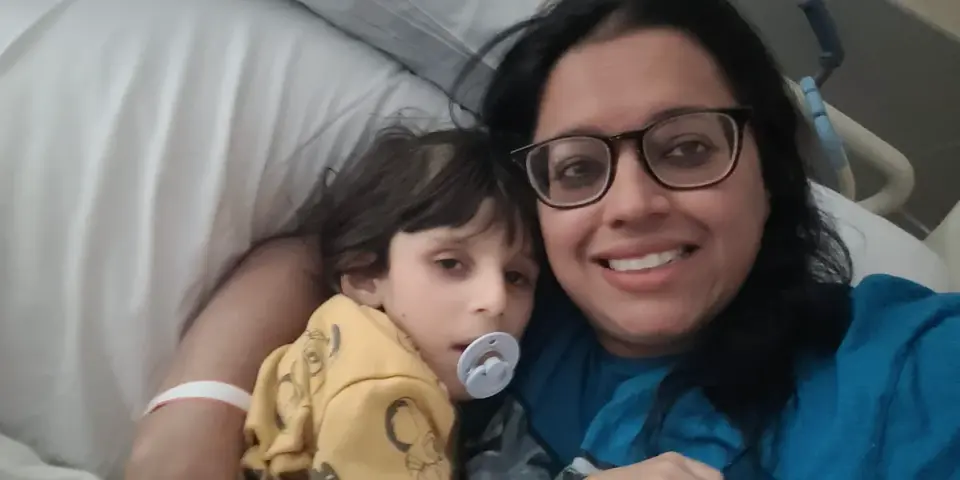
Jo Kaur, a civil rights attorney, founded the Riaan Research Initiative to develop a gene therapy for her son Riaan, who has Cockayne syndrome. The family raised $4 million to fund the drug's development, navigating FDA regulations to secure approval for a first-in-human trial. On April 21, 2026, Riaan became the first child to receive this therapy, a decision the parents agonized over due to the risks of anesthesia and immunosuppression. Three months post-treatment, Riaan remains clinically stable, and the family is now seeking FDA approval to treat other children with the same condition.
Key points
- Cockayne syndrome is an ultra-rare genetic disorder caused by a malfunctioning CSA gene, leading to progressive disease and early death; it was not detected in prenatal screenings.
- Jo Kaur and her husband Richie raised $4 million through advocacy and donations to fund the development of a gene therapy that delivers a healthy copy of the CSA gene to the brain.
- The therapy was approved by the FDA for a first-in-human trial after a rigorous 30-day review period of the Investigational New Drug application.
- Riaan, diagnosed at 15 months with a life expectancy of five years, received the therapy on April 21, 2026, at Weill Cornell in New York City.
- The procedure involved a neurosurgical incision, a week-long hospital stay, and months of immunosuppression, which the parents feared could be fatal or cause severe side effects.
- Three months after treatment, Riaan is clinically stable and showing encouraging changes, though long-term benefits remain uncertain.
Background
This story highlights the extreme measures some families take when rare diseases are deemed unprofitable for pharmaceutical companies. Unlike the earlier archive articles on menopause therapy or political controversies, this case focuses on the intersection of personal advocacy and regulatory science. The lack of prior coverage in the archive on gene therapy for Cockayne syndrome underscores the novelty of this first-in-human trial. The family’s journey mirrors the broader trend of patient-led drug development, where parents must navigate complex regulatory and financial hurdles to secure treatments for their children.
Why it matters
This case illustrates the gaps in the pharmaceutical industry for ultra-rare diseases, forcing families to become drug developers and financiers. It raises ethical questions about the risks of first-in-human trials, particularly for children who cannot consent. The success of this therapy could provide a proof of concept for future treatments, potentially saving other lives. It also highlights the need for systemic changes to ensure that rare disease treatments are accessible without requiring families to raise millions of dollars and navigate regulatory processes alone.
What to watch
The family is re-engaging with the FDA to gain approval for treating other children with Cockayne syndrome. They are also raising funds to cover the clinical costs of these treatments. Long-term monitoring of Riaan will continue to determine the durability and efficacy of the gene therapy. The outcome of this case may influence future regulatory decisions and funding models for rare disease treatments.
Want the full story? Read the original reporting
Read on aol.com