
Study Links B12 Absorption Capacity to Long-Term Supplementation Success in Rural India
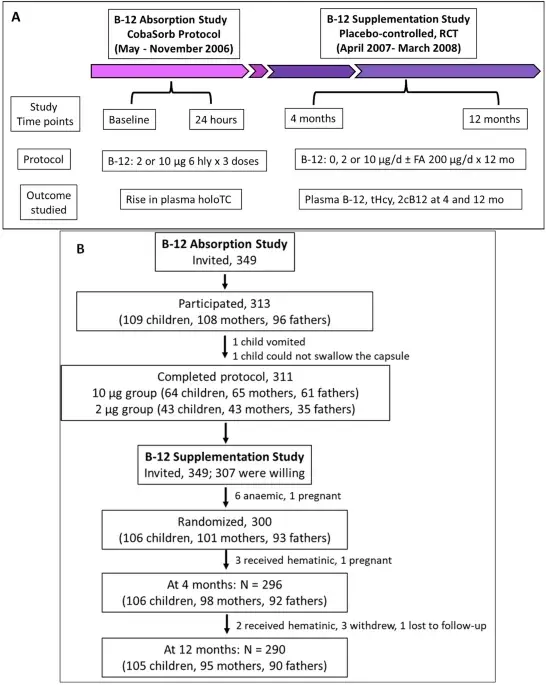
A secondary analysis of the Pune Maternal Nutrition Study reveals that initial absorption capacity, measured via holotranscobalamin (holoTC) levels, predicts how well individuals respond to long-term oral vitamin B12 supplementation. In a B12-deficient rural Indian community, higher holoTC responses during an absorption test correlated with better biomarker improvements after 12 months of daily supplementation. The study highlights that absorption variability, influenced by body weight and dose, is a key factor in treatment efficacy.
Key points
- The study analyzed data from 313 participants (children, mothers, and fathers) in a B12-deficient rural Indian community.
- Participants underwent a B12 absorption test (CobaSorb) followed by a 12-month randomized trial of oral B12 (0, 2, or 10 µg) and folic acid.
- Holotranscobalamin (holoTC) response during the absorption test was positively associated with B12 dose and negatively with body weight.
- Improvements in B12 status biomarkers (plasma B12, tHcy, 2cB12) were predicted by baseline levels, holoTC response, dose, and compliance.
- The findings suggest that absorptive capacity is a mechanistic predictor of metabolic correction during long-term oral supplementation.
Background
Previous coverage noted that B12 deficiency often stems from absorption issues rather than just dietary intake, affecting even omnivores due to factors like gut health or medications. This study adds a specific layer by quantifying how individual absorption capacity, measured via holoTC, dictates the success of oral supplementation in a high-prevalence deficiency population.
Why it matters
Understanding the link between absorption capacity and supplementation response can help clinicians predict which patients will benefit from oral B12 versus those requiring injectable forms. This is crucial for public health strategies in regions with high B12 deficiency, such as rural India, where oral supplementation is often the primary intervention.
What to watch
Researchers may use these predictive models to develop personalized supplementation protocols, tailoring doses and monitoring strategies based on individual absorption profiles to improve outcomes in B12-deficient populations.
Want the full story? Read the original reporting
Read on Nature